
As mobile phones become nearly universal, payphones are disappearing from airports. Airports are phasing out older services and technologies to better meet the needs of modern travelers.
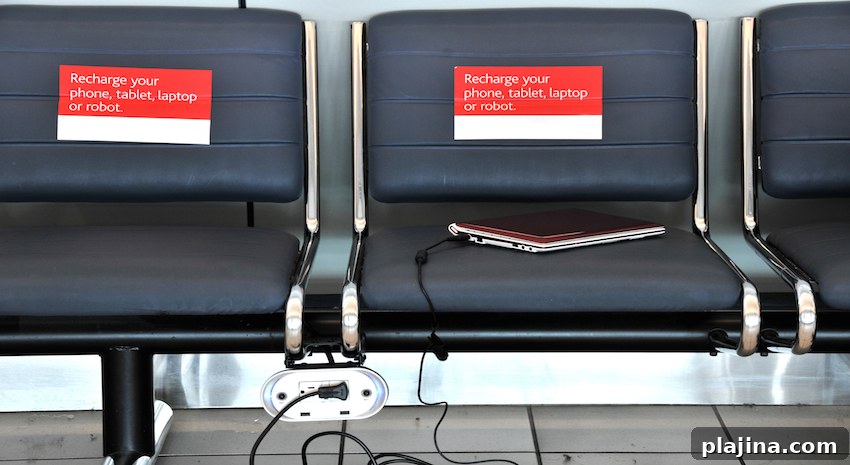
Technology continues to evolve, and airports are adapting by prioritizing amenities such as charging stations and free WiFi. Airports Council International North America (ACI-NA) surveyed airports across the continent and identified the amenities most commonly provided: ATM services; gift shops and newsstands; airport websites; electrical charging stations; restaurants and bars; lost and found; parking and ground transportation options including taxis, limousines and ride-sharing services; free WiFi; pre-security pet relief areas; and food and beverage vending machines.
ACI-NA’s report also highlights amenities expected to expand over the next three to five years. Passengers can likely see more nursing rooms and privacy pods, post-security pet relief facilities, children’s play areas, airfield observation areas, and adult changing and improved washroom facilities in North American terminals. At the same time, several older services are forecast to be reduced or eliminated, with payphones, full-service banking branches and smoking rooms among the top items likely to disappear or be replaced.
Smoking rooms have already been removed from most U.S. airports, and full-service banks have largely given way to ATMs. Payphone availability varies: for example, Chicago O’Hare International Airport still lists more than 500 payphones, while Seattle–Tacoma International Airport removed all payphones last year. Some airports maintain alternatives for travelers who lack a mobile phone—Austin-Bergstrom International Airport and Reno–Tahoe International Airport, for instance, provide free local phone calls.
The survey underscores a broader trend: airports are prioritizing connectivity, convenience and passenger comfort. Investments in charging infrastructure and WiFi reflect travelers’ reliance on personal devices, while expanded family- and pet-friendly facilities address changing passenger needs. At the same time, declining demand for legacy services such as payphones and banking branches is prompting airports to reallocate space and resources to amenities with higher usage and greater appeal.
These shifts are driven by passenger expectations as well as operational considerations. Airports aim to improve the overall travel experience while maximizing the utility of terminal space. As a result, terminals are evolving into more connected, convenient and service-oriented environments designed around how people travel and use technology today.
For travelers, the changes mean easier access to power and internet, more options for families and pets, and fewer remnants of older communication and banking infrastructure. Airports will likely continue to introduce new services and phase out those that no longer meet passenger needs, shaping terminals that reflect contemporary travel habits and preferences.