
The presence of painter Paul Cezanne in his hometown of Aix-en-Provence, France, is reflected in a network of remarkable sites where he lived and worked. This trail offers visitors a coherent, immersive view of his life, environments and artistic development.
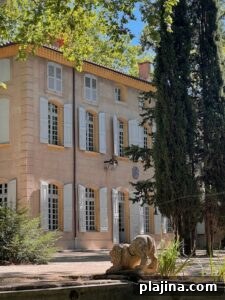
This year marks a renewed focus on Cezanne in Aix-en-Provence with the June reopening of La Bastide Jas de Bouffan, the artist’s family home, which has been fully restored for public visits. At the same time, the Granet Museum in Aix will stage a major exhibition running for nearly four months, while Granet XXth, the museum’s annex dedicated to 20th-century art, will host the Jean Planque Collection along with an exceptional loan from the Pearlman collection from June 28 to Oct. 12.
© Office de Tourisme d’Aix-en-Provence
With La Bastide Jas de Bouffan open to the public, visitors will have the summer to explore about 100 works—paintings and drawings—that illustrate four decades in which the villa played a central role in Cezanne’s life. The exhibition includes notable loans such as Maison et ferme du Jas de Bouffan and Portrait of Joachim Gasquet (1896), arriving for the first time in Aix from the Narodni Galerie in Prague. Musée d’Orsay is also contributing one of Cezanne’s most famous works, Joueurs de Cartes (The Card Players).
Granet XXth will host the Pearlman collection from Princeton University Art Museum for a three-year period beginning this June. Pearlman’s taste encompassed Manet, Toulouse-Lautrec, Modigliani and Soutine, but his deepest passion was Cezanne: the loan includes six paintings and sixteen exceptional watercolours that highlight the artist’s range and significance.
© OT Aix/Thomas Luppor
La Bastide Jas de Bouffan holds particular importance for understanding Cezanne’s early and middle-period work. From his youth he painted directly on the walls of the grand salon—twelve compositions remain—while subjects such as Joueurs de Carte drew on peasants and farm workers from the estate. The house and its surroundings were a primary source of inspiration throughout much of his career.
After two years of restoration and preparation, Cezanne’s studio on the Lauves hill will offer visitors a renewed experience focused on the works created in the final four years of his life. The studio, built in 1901 to Cezanne’s own plans and situated against the slope of the Lauves, was acquired by the Cezanne Memorial Committee in 1954 under the direction of John Rewald and was entrusted to the University of Aix-Marseille the same year. It opened to the public as a museum in 1954 and has since been preserved as a vital link to the artist’s practice.
The restored studio aims to recreate the feel of the workspace with simplicity and fidelity to the layout that experts believe Cezanne maintained. The atmosphere is designed to emphasize the materials, light and spatial relationships that shaped his late paintings.
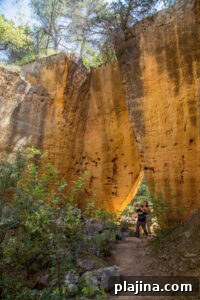
Bibemus quarries © OT Aix/Sophie Spiteri
Another essential Cezanne site is the Bibemus quarries, an open-air landscape that served as both studio and subject for the artist. From there visitors enjoy sweeping views toward the Sainte-Victoire mountain, a motif central to Cezanne’s oeuvre. The city has updated a discovery walking tour that guides visitors to the key Cezanne-related locations, making it easier to follow the artist’s footsteps across Aix-en-Provence and to see how the places he inhabited and painted relate to his work.