
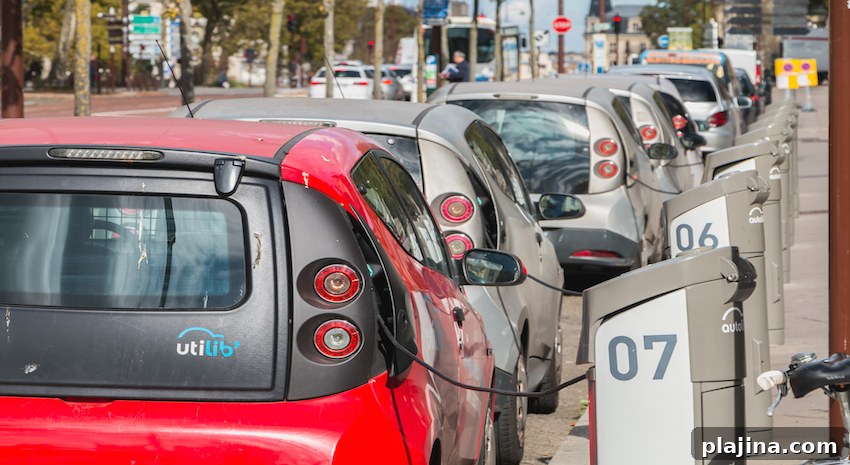
The French capital has long been a leader in climate action, notably hosting the 2015 Paris Agreement negotiations and advancing sustainability efforts well before that milestone. Paris is continuing to set an example with a new plan aimed at cutting carbon emissions and transitioning urban mobility toward cleaner alternatives.
Mayor Anne Hidalgo has unveiled an ambitious timetable: the city aims to phase out gas-powered vehicles within Paris limits by 2030, and to achieve a fully carbon-neutral city by 2050. These targets reflect a broader commitment to reduce air pollution, lower greenhouse gas emissions, and improve quality of life for residents.
Rather than imposing an abrupt ban on petrol and diesel cars, the strategy emphasizes investment in alternative transport technologies and services, while making those options more accessible to businesses and residents. The approach includes expanding electric mobility, boosting shared transport services, and improving public transit connections so sustainable choices are convenient and affordable.
The transition is expected to be manageable for many Parisians: roughly 60 percent of residents do not own a private car. The administration has also accelerated cycling infrastructure, adding new bike lanes to give commuters safer, faster routes into and across the city. Combined measures—more reliable public transit, expanded bike networks, and support for electric vehicles and car-sharing—are designed to reduce dependence on individual gas-powered cars without disrupting daily life.
Implementing this plan will require coordinated policies across transport, urban planning, energy, and business sectors. Measures under consideration include incentives for electric and zero-emission vehicles, restrictions on the most polluting vehicles in central districts, investment in charging infrastructure, and programs to help companies transition fleet vehicles. Outreach and financing programs will be important to ensure small businesses and lower-income households can access cleaner mobility options.
Success will also depend on ongoing improvements to public transport capacity and reliability. Enhancing tram, metro, and bus networks—along with integrated ticketing and last-mile solutions—can encourage more people to choose alternatives to private cars. Increased pedestrian zones and traffic-calming measures in residential neighborhoods are further steps to create healthier, quieter streets.
Paris’s plan is part of a wider urban trend: cities around the world are adopting bold targets to cut emissions and improve livability. By prioritizing accessible alternatives and phased implementation, Paris aims to balance ambitious climate goals with social equity and practical mobility needs. If executed effectively, the measures could yield long-term benefits including cleaner air, reduced noise, lower transport costs, and a more resilient urban environment.
As the city moves toward its 2030 and 2050 goals, monitoring progress and adjusting policies based on data and community input will be crucial. Transparent reporting, pilot projects, and stakeholder engagement can help ensure the transition is fair and effective, positioning Paris as a continuing example for sustainable urban transformation.