
A new cultural landmark for modern and contemporary art, Orange County Museum of Art (OCMA) in Costa Mesa, California, has opened its long-awaited new home on the Segerstrom Center for the Arts campus. After years of planning to secure a permanent location for its extensive collection, the museum’s move marks a major moment for the region’s visual arts scene.
To increase public access, OCMA is offering free admission for the next ten years thanks to sponsorship by Lugano Diamonds. The museum’s new 53,000-square-foot facility includes 25,000 square feet of dedicated gallery space for changing exhibitions and site-specific projects. A number of inaugural shows and programs are filling these galleries as the building begins operations.
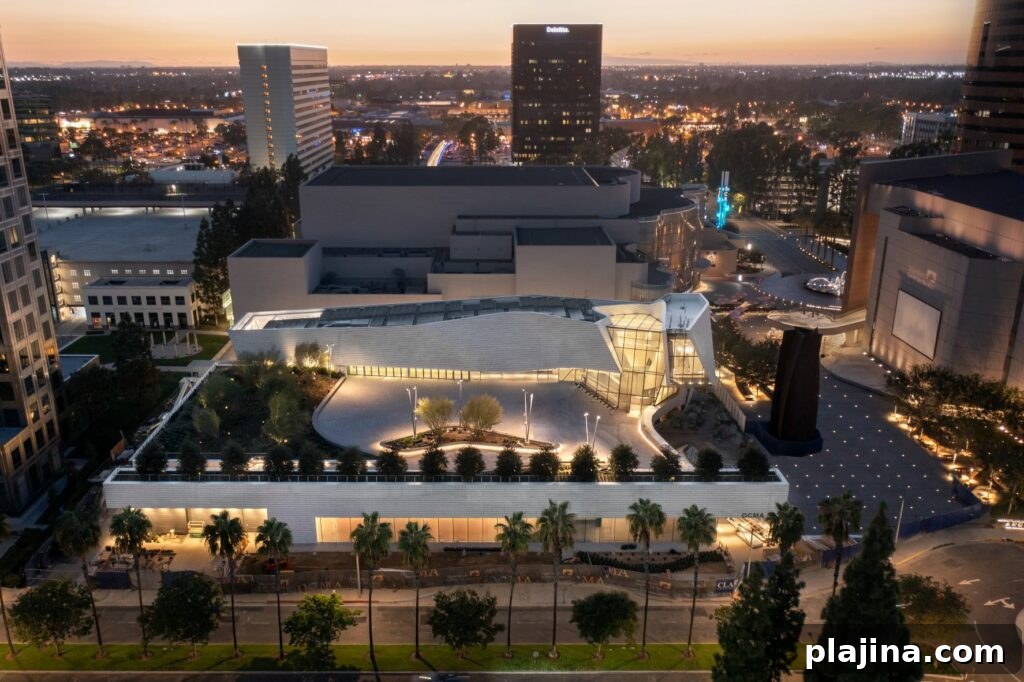
© Orange County Museum of Art Designed by Morphosis Architects
One of the opening presentations is the California Biennial 2022: Pacific Gold (on view through Feb. 26, 2023) in The Anton and Jennifer Segerstrom Permanent Collection Pavilion and The Avenue of the Arts Gallery. The Biennial surveys the state’s creative diversity with more than 60 works by 19 artists representing California’s varied regions—from high desert communities to coastal towns and dense urban centers. The exhibition spans disciplines including ceramics, painting, sculpture, textiles, mixed media, video and large-scale installations, offering a panoramic view of contemporary practices across the state.
Another highlight is the exhibition 13 Women (through Aug. 20, 2023), honoring OCMA’s 60th anniversary and the 13 women who founded the Balboa Pavilion Gallery in 1962, the museum’s earliest predecessor. Curated by Heidi Zuckerman, the show will rotate across multiple presentations during the year and features work from the 1960s to the present by artists central to OCMA’s collection. Each rotation focuses on the work and legacy of pioneering women whose vision reflects the museum’s founding spirit.
The new OCMA building was designed by Pritzker Prize–winning architect Thom Mayne, founder of Morphosis and co-founder of the Southern California Institute of Architecture. Mayne’s design creates strong connections between indoor galleries and outdoor public spaces while responding to the architectural context of the performing arts campus.
A generous set of grand stairs, inspired in part by the public steps at New York’s Metropolitan Museum of Art, functions as a social gathering place. An upper plaza equal to roughly 70 percent of the building’s footprint extends the gallery program into open-air areas for installations, public programs and events. The soaring, light-filled lobby atrium forms a dramatic focal point, with a large window that overlooks the upper plaza and grand stairs and creates an airy, theatrical space for performances and education.
Exterior circulation is carefully integrated: lower outside stairs curve toward the museum entrance and connect the building to the Segerstrom Center for the Arts, the Julia and George Argyros Plaza and adjacent venues, producing an inviting pedestrian thoroughfare and civic gathering place. The façade is clad in light-colored, undulating glazed terracotta panels that give the building a distinctive texture and rhythm, complementing nearby architectural works while establishing its own identity.
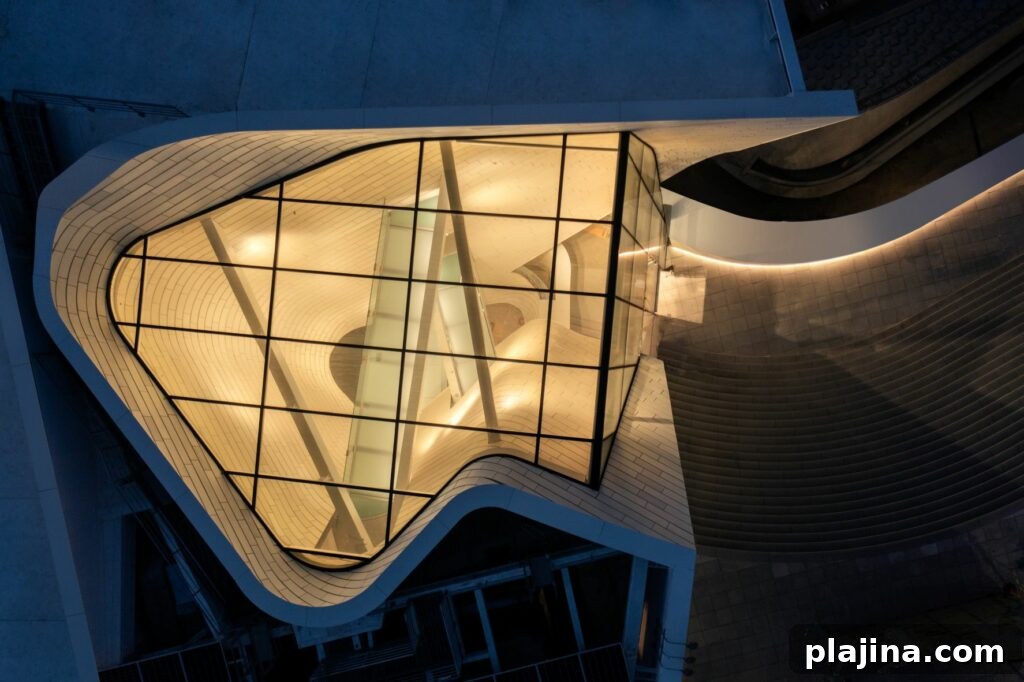
© The Orange County Museum of Art Designed by Morphosis Architects
Hospitality within the museum includes Verdant, a second-level café that seats 75 and is open for lunch six days a week (closed Monday). Verdant features plant-forward, locally inspired dishes and includes The Sweet James Bergener Bar. A first-floor coffee bar complements the café. Executive chefs Ross Pangilinan and Nick Weber, together with general manager Alyssa McDiarmid, developed the food program; Chef Pangilinan also oversees catering for events in the museum’s Chalmers Pavilion and other event spaces.
The MIND, OCMA’s museum store, is positioned in the lobby with views into the first-floor galleries and the atrium’s natural light. The shop will offer a thoughtful selection of vintage and artist-designed items that reflect the museum’s collection and exhibitions.
The Atrium is the architectural centerpiece of the new building and the main entry experience for visitors. The expansive, light-filled space showcases sky bridges and provides multiple vantage points into neighboring galleries and public areas, reinforcing the museum’s commitment to openness, education and community engagement.