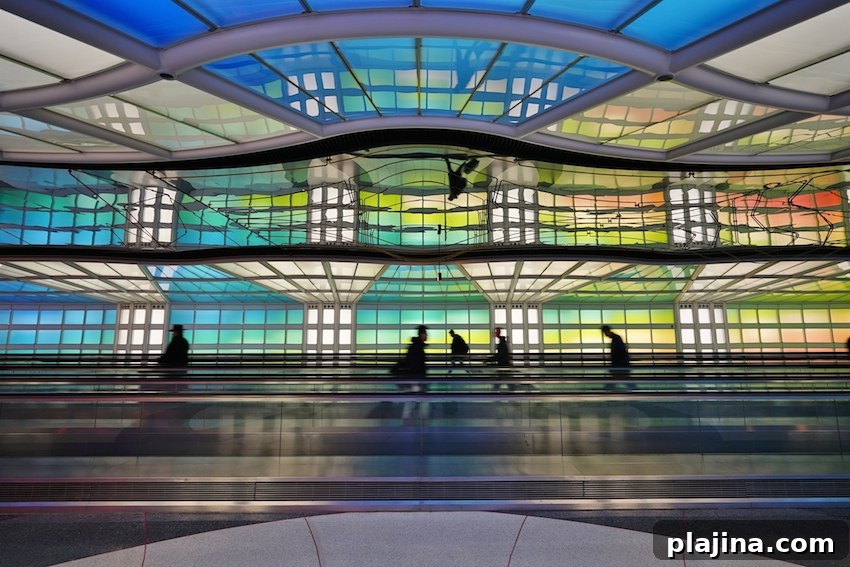
Chicago is moving forward with a major expansion of its primary international airport, a project estimated at $8.5 billion that will add a new terminal and boost the facility’s capacity. City officials, including Mayor Rahm Emanuel, say the upgrades are needed to keep the airport competitive in international air travel and to better accommodate future demand.
Preliminary plans indicate that Terminal 2 would be removed and replaced by a new Global Terminal designed for larger aircraft and long-haul routes. The Global Terminal would include wider gates capable of handling wide-body planes for nonstop service to distant destinations such as Hong Kong. In addition to the new terminal, the project envisions modernizing Terminals 1, 3 and 5 to improve passenger flow, concessions and amenities.
The expansion also calls for two new concourses connected to the rest of the airport by an underground tunnel, streamlining transfers and reducing walking distances between gates. These structural improvements aim to enhance operational efficiency, reduce congestion during peak periods, and create more flexible gate assignments for a mix of domestic and international flights.
According to reports, the overall number of gates at the airport would increase from 185 to 220, providing more capacity for airlines and more options for travelers. The draft timeline projects completion around 2026, though as with any large infrastructure program the schedule could change as design work, permitting and funding progress.
Beyond gates and terminals, the proposed program is expected to include supporting upgrades—such as improved ground transportation connections, upgraded baggage systems, and enhanced security checkpoints—to improve the passenger experience from curb to gate. Emphasis on larger gates and consolidated international facilities reflects a push to attract additional long-haul carriers and to better position the airport as a global hub.
City leaders emphasize that the expansion balances growth with operational improvements, aiming to reduce delays and create a more pleasant travel environment while supporting future airline and passenger demand. As planning advances, more detailed designs and timelines will be developed, and stakeholders will be engaged to refine scope and budget priorities for the program.