
In the decade since Hurricane Katrina’s levee failures devastated much of the city, New Orleans has staged a remarkable recovery. The city’s rebirth includes more hotel rooms, restaurants, green spaces, live music venues and transit options than before the storm, along with hundreds of new development projects. Often ranked among the nation’s top cities, New Orleans welcomed 9.52 million visitors in 2014 who spent $6.8 billion—its highest per-visitor spending on record—and more than 1.1 million business travelers attended conventions and trade shows that year.
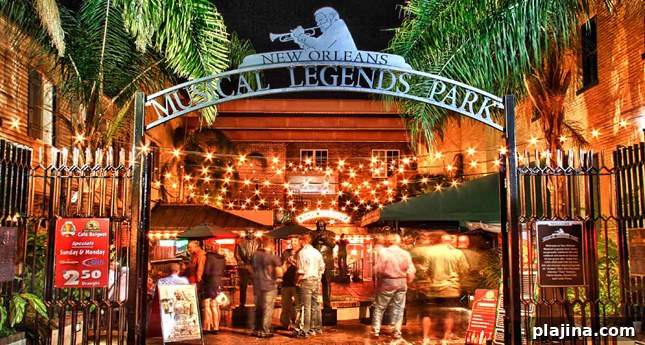
A former French and Spanish colony with strong Caribbean and African influences, New Orleans is celebrated for its distinctive culture, food and music, from blues and jazz to zydeco. The city’s architecture ranges from Creole cottages and lace-like Spanish cast-iron balconies to Greek Revival mansions and shotgun houses. Described by Forbes publisher Richard Karlgaard as “the greatest turnaround of our lifetime,” New Orleans has seen a business startup rate above the national average. Forbes also named the city the top U.S. destination for attracting college graduates under age 25.
“Katrina became a catalyst for our reinvention and growth,” says Stephen Perry, president of the New Orleans Convention & Visitors Bureau, referring to the costliest storm in U.S. history. Reform-minded leadership, substantial federal and private recovery funding, and the resilience of residents and volunteers who stayed on have driven the city’s comeback. Today’s population of roughly 384,000 represents about 79 percent of its pre-Katrina size.
Hotel options now range from national chains to boutique properties and small inns, many featuring outdoor pools suited to the steamy climate. About 22,000 downtown hotel rooms sit within a mile of major attractions and the Ernest N. Morial Convention Center; several hotels are just steps away. For example, the Hilton New Orleans Riverside offers a large fitness facility, air-conditioned tennis courts and more than 130,000 square feet of event space.
Recent openings and renovations include Le Méridien New Orleans, an arts-forward hotel that followed a major renovation and offers substantial meeting space. The city’s first Four Seasons, part of a large redevelopment at the foot of Canal Street and the Mississippi River, was planned to open in 2018, coinciding with New Orleans’ 300th anniversary.
The Ernest N. Morial Convention Center, with roughly 1.1 million square feet of contiguous exhibit space, ranks among the largest in the country. The center includes a 4,000-seat theater, a 60,000-square-foot Great Hall and about 140 meeting rooms. Ongoing improvements exceeding $90 million include plans to re-imagine the riverfront with a new hotel, a park and cultural and retail venues. For uniquely local corporate events, groups can arrange a private second-line parade with a brass band through the city’s One Stop Shop or host gatherings at Mardi Gras World, where many of the festival’s floats are built.
Po’ boy sandwich © Darryl Brooks | Dreamstime.com
New Orleans’ culinary reputation remains strong: Creole and Cajun specialties such as gumbo, jambalaya, crawfish étouffée, po’ boy sandwiches, beignets and trout amandine draw food lovers from around the world. The city has produced a dozen James Beard Best Chef: South winners, with chefs from newer restaurants like Cochon, Pêche Seafood Grill and Domenica joining long-established names such as Commander’s Palace and Galatoire’s. Today the city supports roughly 1,400 restaurants—about 600 more than before Katrina.
The city’s festival calendar reflects its celebratory spirit, hosting approximately 130 festivals each year. Highlights include the New Orleans Jazz & Heritage Festival, featuring dozens of national and regional acts across outdoor stages; the New Orleans Wine & Food Experience, whose Grand Tasting showcases scores of local chefs and winemakers; and Mardi Gras, the city’s iconic multi-week celebration.
SCENIC DRIVES
Northwest of the city, Louisiana’s Great River Road traces the Mississippi and passes many ornate antebellum plantation mansions shaded by live oaks. Once owned by wealthy sugar, cotton and indigo planters, several of these estates welcome visitors, and some offer bed-and-breakfast accommodations, restaurants and event spaces. Notable examples include Oak Alley, a much-photographed 1839 Greek Revival mansion, and Laura, a Creole plantation formerly held by a French family; both are in Vacherie. Nottoway, the largest surviving plantation home in the South, is located farther north in White Castle. From New Orleans, travelers can take I-10 west to Exit 220, follow I-310 to Highway 48 (which becomes the Great River Road), or use Highway 44; bridges connect the river’s west and east banks.