
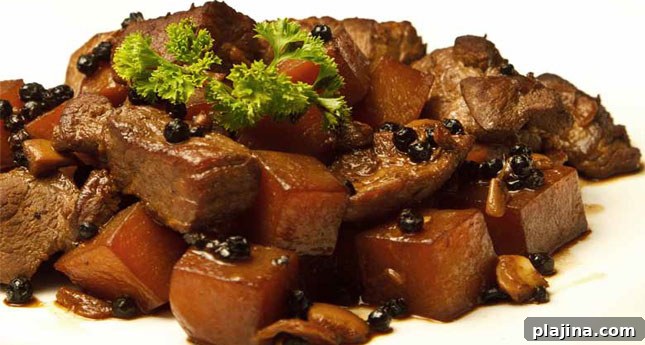
The word adobo may sound Spanish, but the cooking method is distinctly Filipino. In the Philippines’ warm climate, early communities developed ways to preserve food, and stewing meat in vinegar proved effective for extending shelf life. When the Spanish arrived in the late 16th and early 17th centuries, they applied the term adobo—a Spanish word for marinating or seasoning—to this local method.
Today, adobo remains one of the Philippines’ most beloved dishes. It describes meats, seafood and vegetables marinated and simmered in a sauce of vinegar, soy sauce (a nod to Chinese influence) and garlic. Chicken adobo, or adobong manok, is widely regarded as a national comfort food, while pork adobo (adobong baboy) is also extremely popular. Traditional aromatics such as bay leaves and whole black peppercorns are commonly used. The slow-simmering technique yields tender, flavorful meat with a tangy sauce that pairs perfectly with steamed white rice.
Over time adobo has evolved into many regional and personal variations. The core ingredients—vinegar (coconut, rice or cane), soy sauce and garlic—are typically preserved to be considered true adobo, but beyond that home cooks and restaurants adjust the recipe to suit taste. Some prefer to briefly fry pieces after stewing to add a crisp exterior. Adding coconut milk creates a creamier, milder sauce; a touch of sugar or honey introduces a sweet, teriyaki-like balance. Aromatics such as ginger and onion often join bay leaves and peppercorns, and fruits like pineapple, banana or mango are sometimes used as garnishes or accents.
Regional versions highlight local ingredients and culinary traditions, offering nutritional variety and distinct flavors. In Cavite, mashed pork liver can replace more common proteins such as chicken or pork. Batangas cooks frequently use annatto, which lends a warm orange color to the dish. Laguna variations sometimes include turmeric for earthiness and color, while southern provinces popularized the richer, coconut-milk-based adobo.
Visitors to the Philippines should sample several types of adobo to appreciate its versatility. Start with the classic chicken adobo, then explore alternatives such as adobong baka (beef), adobong pugô (quail), adobong hipon (shrimp) and adobong labong (bamboo shoots). For adventurous diners, regional specialties may use less common proteins: adobong sawâ (snake), palakâ (frog) or kamaru (crickets). These styles reflect the breadth of Filipino food culture and its willingness to adapt a simple preservation technique into countless delicious expressions.