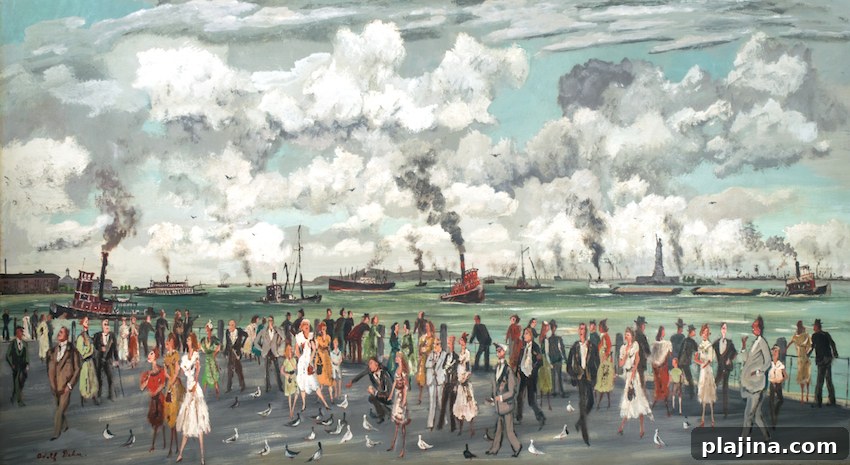
The city of Manhattan was a recurring subject for artist and National Academician Adolf Dehn (1895–1968). Through April 7, the Fairfield University Art Museum in Fairfield, Conn., is presenting a selection of Dehn’s most notable works in the exhibition Adolph Dehn: Midcentury Manhattan. Best known for his mastery of lithography, Dehn created a substantial and varied body of work that vividly captures nightclub life, burlesque scenes and moments in Central Park from the 1920s through the 1960s.
As a central figure within the American contemporary realist movement that emerged in the 1930s, Dehn earned widespread recognition during his career. He appeared in a remarkable number of prestigious exhibitions, including every Whitney Museum of American Art Annual and Biennial invitational from the institution’s first biennial in 1932 onward. The Fairfield University Art Museum’s presentation in Bellarmine Hall Galleries features pastels, ink and pencil drawings, watercolors, casein paintings and a selection of lithographs, offering a broad view of Dehn’s technique and subject range.
The exhibition coincides with the publication of the monograph Adolph Dehn: Midcentury Manhattan (The Artist Book Foundation, 2017) by Philip Eliasoph, a professor of art history at Fairfield University. Eliasoph’s book contextualizes Dehn’s urban scenes within midcentury American art, examining how the artist’s sharp observation, sense of humor and technical versatility helped him document New York’s evolving social and cultural life. Visitors to the exhibition can trace Dehn’s artistic development across media—seeing how the immediacy of his drawings complements the tonal richness of his lithographs and the vivid color sensibilities of his watercolors and casein works.
Dehn’s portrayals of Manhattan capture both the glamour and the grit of city life. Nightclub interiors and burlesque venues showcase theatrical lighting and lively crowds, while his park scenes offer quieter, reflective views amid the urban bustle. Across media, Dehn balanced detailed draftsmanship with expressive marks, rendering figures and architecture with a combination of realism and a distinctive, often wry perspective.
For those interested in mid-20th-century American art, the Fairfield University exhibition provides a focused opportunity to explore an artist whose work bridged popular and fine-art traditions. The selection on display highlights Dehn’s versatility and his consistent engagement with Manhattan as a subject—an engagement that contributed to his prominent presence in major exhibitions of his time and to his lasting reputation among collectors and scholars.
Visitors are encouraged to experience the range of works in person to appreciate the scale, texture and subtleties of Dehn’s technique. The show offers both longtime admirers and newcomers a clear sense of why Manhattan remained an enduring source of inspiration for Dehn throughout his career, and how his images continue to resonate as vivid documents of midcentury urban life.