
Every leisure traveler knows Tokyo and Kyoto, but fewer visitors discover Yokohama, Japan’s second-largest city with about 3.7 million residents. The city offers a vibrant downtown, attractive hotels, excellent restaurants and a growing arts scene. While many tourists bypass Yokohama for more famous destinations, international meeting and conference planners frequently choose it for its facilities and accessibility.
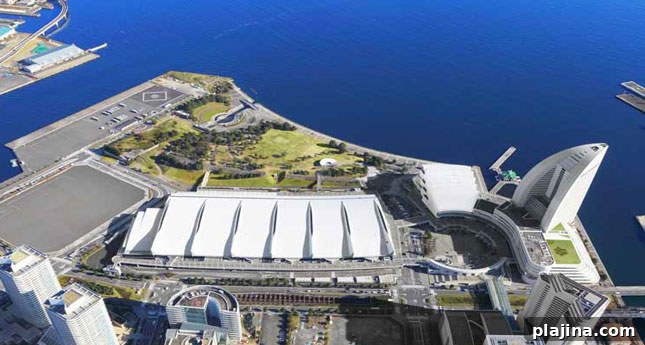
Yokohama opened its port to the world in the mid-1800s and quickly became Japan’s gateway for foreign trade. That long history of international exchange laid the groundwork for a strong hospitality sector that continues to welcome business travelers. Today, many MICE organizers book events at PACIFICO Yokohama, Japan’s largest convention complex. Built in stages in the 1990s in the Minato Mirai waterfront district, PACIFICO comprises a National Convention Hall with 5,000 theater seats, a 50-room Conference Center, an Exhibition Hall with 215,000 square feet of space, an Annex Hall with 15,000 square feet for exhibitions, and the InterContinental Yokohama Grand, a five-star hotel with 594 guestrooms, restaurants, meeting rooms and banquet halls.
The convention center’s location is a major advantage: it is a five-minute walk from a subway station and close to three large shopping malls, a concert hall, the Cosmo World amusement park and the Yokohama Museum of Art. Within easy walking distance are 13 top-rated hotels, including the 603-room Yokohama Royal Park, the 480-room Yokohama Bay Hotel Tokyu, the 136-room Yokohama Mandarin Hotel and the 240-room New Otani Inn, opened in 2010. This concentration of accommodations and venues makes the area highly convenient for large conferences and international delegations.
Vanish dive coaster at Cosmo World amusement park © Yokohama Convention & Visitors Bureau
“We know that Yokohama is not a ‘top-of-mind’ destination for leisure visitors to Japan,” says Kana Nomoto of the Yokohama Convention & Visitors Bureau’s Convention Sales Department. “However, we are only 20–30 minutes from Tokyo by train, and PACIFICO Yokohama is a major all-in-one facility. Yokohama’s reputation for hosting large congresses in life sciences, medical and environmental fields has attracted hundreds of related MICE events.”
To support international organizers, the Japan National Tourism Organization established the Japan Convention Bureau, providing information and local assistance for MICE planners. Recent currency fluctuations, including a notable decline in the value of the yen against the U.S. dollar, have also made Japan a more cost-competitive option for events, benefiting planners, business travelers and tourists alike.
Yokohama regularly hosts major scientific and professional meetings. Recent and future large-scale events include the International Congress of Chemotherapy and Infection, the World Congress of the Human Proteome Organization, the International Wheat Genetics Symposium, the World Federation of Occupational Therapists Congress, the International Stereotactic Radiosurgery Society Congress, the International Congress of Psychology and the World Conference on Lung Cancer, among others. These gatherings draw thousands of delegates and make use of PACIFICO Yokohama’s full range of facilities and nearby hotels.
“The main reason for choosing Yokohama was the fantastic international accessibility,” says Mathias Posch, president of International Conference Services, which organized the World Conference on Lung Cancer. “With the Japanese Lung Cancer Congress included, we expect around 8,000–10,000 delegates. We will use all PACIFICO facilities and most hotels within walking distance. Some groups will travel into Tokyo for tours and hospital visits, but the Yokohama CVB and local venues have been outstanding in supporting every aspect of our program.”
Yokohama will also serve as an active venue during major international events. For example, the city’s Nissan Stadium, a modern 72,000-seat soccer venue, is scheduled to host several soccer matches during the Tokyo Bay portion of the 2020 Summer Olympics. The region’s efficient rail network makes most Olympic competition sites easily reachable from downtown Yokohama.
Designated the “Cultural City of East Asia 2014,” Yokohama offers many arts, theater and cultural attractions suitable for delegates and off-site events. The Yokohama Museum of Art holds more than 9,700 works, including pieces by artists connected to the city, and an outstanding collection of Japanese photographic art. The city’s role in the history of photography in Japan makes this collection particularly significant.
Redevelopment of the Minato Mirai waterfront preserved historic landmarks such as the early-1900s customs houses. The Red Brick Warehouse, a restored three-story waterfront building that survived the 1923 Kanto earthquake and wartime damage, now hosts performances, cultural events and conference functions. Other distinctive venues include Sankeien Garden Kakushokaku, a vast traditional garden with historic buildings relocated from Kyoto and Kamakura; the Yokohama Port Opening Memorial Hall, known as “Jack’s Tower” for its illuminated clock tower; the restored 1933 Nissan Motor headquarters, open as the Nissan Engine Museum & Guest Hall; the Silk Museum with exhibits on silk production; the Kirin Brewery, the only company brewery in Japan open to the public; and the Momofuku Ando CupNoodles Museum, where visitors can learn about instant noodles and create their own cup ramen.
The Yokohama Convention & Visitors Bureau frequently provides tailored support to make each MICE event memorable. Hosting VIP visits, special receptions and unique local experiences is part of the city’s appeal. “The visit from the emperor and the empress of Japan was a highlight of our meeting that just could not be matched by any other place,” recalled Nancy Witty, CEO of the International Society for Stem Cell Research, after the society’s 2012 annual meeting in Yokohama, which drew nearly 3,900 attendees. Such distinctive moments and the city’s comprehensive event infrastructure help explain why international planners continue to select Yokohama for major conferences.