
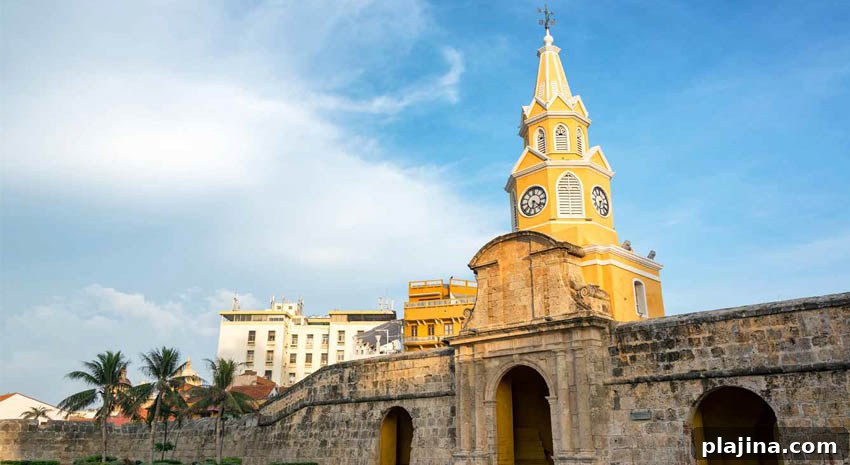
WHEN I FIRST VISITED CARTAGENA, I went from touring an exhibit hall to standing on 17th-century stone fortification walls 15 minutes later. I left my hotel tower and walked for miles on the beach the next day. Our closing party took place in the historic walled city, with a convent from 1551 on one side and a full cumbia band flanked by costumed dancers on the other.
Colombia’s largest port put the city on the map nearly 500 years ago, when it became an essential trading center in the New World. Officially known as Cartagena de las Indias, the city was named by Spanish conquistadors after Cartagena in Spain. It survived pirate attacks, a dark period as a slave-trading hub, and multiple conflicts before securing independence from Spain in 1821. Cartagena holds a special place in Colombia’s history as a base for Simón Bolívar and the home of novelist Gabriel García Márquez.
Through cycles of prosperity and hardship—civil unrest, drug-related violence and economic growth—Cartagena has preserved its reputation as one of Colombia’s jewels. Recently, the city has also become attractive for real estate investment, drawing both Colombians and international buyers. That demand reshaped parts of the skyline, with modern residential high-rises rising around the smaller colonial buildings inside the historic walls.
Today Cartagena thrives as a major meeting destination, hosting events such as the Interpol General Assembly and the Latin American Economic Forum. The UNESCO World Heritage–listed walled city and nearby Caribbean islands make it a popular choice for tourism and incentive conferences year-round.
Most large hotels cluster along the waterfront, making it easy to locate your accommodations. Properties stretch from Bocagrande—where the Hilton sits—past the centrally located Sofitel Legend Santa Clara to newer developments north of Las Américas Hotel and its convention center. The International Center of Conventions and Expositions at Las Américas sits opposite the 529-room hotel, offering numerous dining options and space for large events. This facility, conveniently close to the airport and many big hotels, can accommodate about 3,600 people. The Cartagena de Indias Convention Center, located on the edge of the old city, brings a distinct colonial atmosphere and can host several thousand attendees; its fully equipped theater seats more than 1,450.
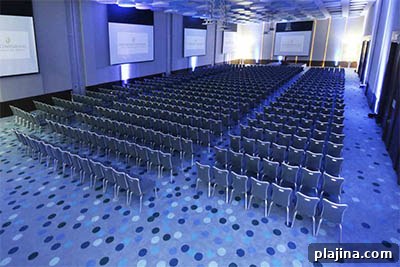
InterContinental Cartagena de Indias meeting room © INTERCONTINENTAL HOTELS GROUP
Beyond the two major centers, many hotels offer meeting facilities. The 187-room InterContinental Cartagena features eight meeting rooms, including a boardroom for ten and a grand ballroom that can host up to 500 guests. Located steps from the beach, the hotel is part of a development that includes shopping and gaming options.
The nearby 341-room Hilton Cartagena provides panoramic water views from select dining areas and breakout spaces. It offers an exhibition hall and 15 meeting rooms, with a ballroom sized for as many as 750 attendees.
For organizations seeking a golf retreat, the Conrad Cartagena brings new resort amenities and an 18-hole Jack Nicklaus–designed course. With seven dining outlets, a full spa, four pools and 268 rooms, it balances leisure and business well. The resort includes five meeting rooms, a beach lounge and a banquet-capable ballroom for more than 750 guests.
Hotel construction incentives that spurred development through 2017 helped trigger a wave of new properties. Recent and upcoming additions include a Hyatt Regency and Sheraton, along with additional Marriott-branded hotels, reflecting Cartagena’s growing international appeal.
Cartagena has long been a cosmopolitan port city, shaped by Jewish, Italian, French, Turkish, Lebanese, Syrian and Spanish settlers, as well as freed slaves, Caribbean sailors and merchants. More recently, residents from Argentina, Venezuela and Canada have made the city their home. Cartagena is well connected: Rafael Núñez International Airport receives flights from North America, South America and Europe, served by multiple airlines. With major carriers based in Colombia and budget airlines operating routes, fares remain competitive year-round.
Exotic and historic yet equipped with modern technology, Cartagena offers a distinctive combination of heritage, beaches and meeting infrastructure, making it an outstanding location for conferences and events.
UNIQUE VENUES
Cartagena offers many memorable venues for special events. Public plazas within the city walls can host full-band stages, while intimate gatherings may take place at sunset on the ramparts. The Castillo de San Felipe de Barajas and the 17th-century Plaza de la Proclamación in the old city provide atmospheric settings for evening receptions. With extensive sandy beaches nearby, barefoot cocktails and beachfront receptions are easy to arrange, and small incentive groups often enjoy island excursions or sunset cruises.
As new skyscrapers appear, roof-deck venues with striking views have become common, and many hotels feature terraces overlooking the sea or skyline. Colombia is known for its coffee, while local spirits include beer, rum and aguardiente, an anise-flavored liquor. Though vineyards are limited and typically at high altitude, visitors can find a good selection of South American wines at the city’s top luxury hotels. Sofitel Legend Santa Clara Cartagena, for example, showcases fine wines at Restaurant 1621 and the El Coro lounge, and frequently hosts tastings and wine events.