
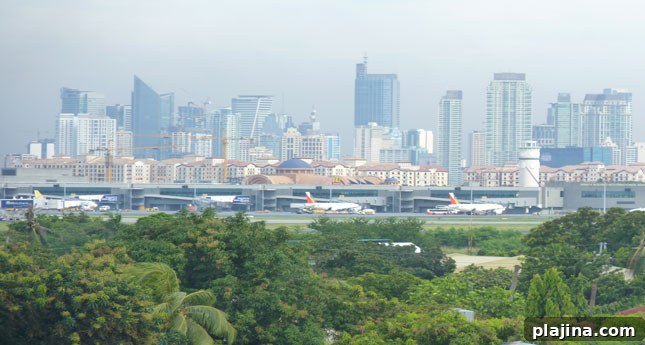
One of the oldest capital cities in Southeast Asia, Manila has been notable since June 1571, when a Spanish viceroy established authority within the fortified district still known today as Intramuros (“inside the walls”). Over the centuries, Manila and its surrounding metropolitan area have served as the seat of government for various occupying powers and, after World War II, for the independent Republic of the Philippines. Although the name Manila technically refers to one city within the larger Metro Manila region, most visitors use “Manila” to describe the entire urban area.
Even on a first visit, clear contrasts emerge between parts of the metro area. Manila grew up along the shores of Manila Bay, prospering from the sheltered anchorage and the maritime trade it supported. In contrast, Makati — located southeast of the historic core — rose to prominence in the 1960s as the nation’s financial and business center. While Manila retains the layered charm of a colonial capital with its historic walls and old neighborhoods, Makati presents a modern skyline of glass and steel, a bustling commercial district that feels newly developed and efficiently designed.
Despite their differences in character and architecture, both Manila and Makati reflect the Filipino spirit of hospitality, commonly expressed with the greeting mabuhay — a warm welcome that visitors encounter throughout the region.
You may also like:
Support Typhoon Haiyan Relief Efforts
Manila: Mix and Match