
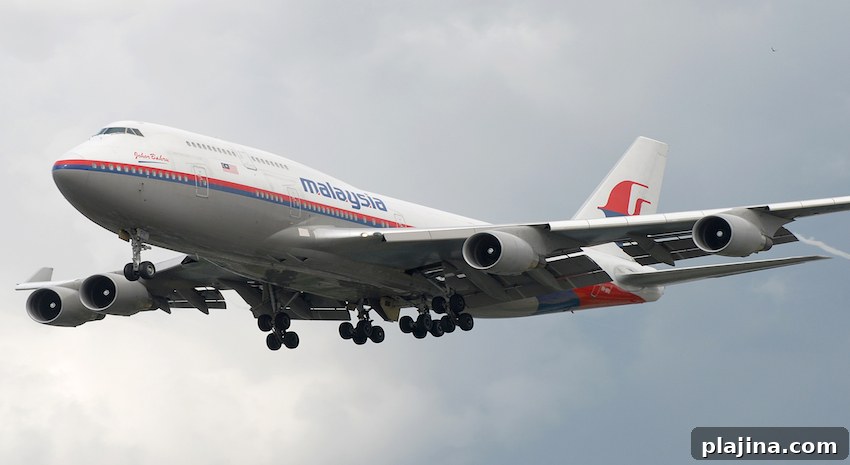
Malaysia Airlines has announced the roll-out of a new global flight-tracking system that will monitor the location, heading, speed and altitude of every aircraft in its fleet in real time.
The technology is delivered through a partnership with Sitaonair, Aireon and FlightAware, giving Malaysia Airlines access to continuous, minute-by-minute global tracking data. According to the airline, this represents the first deployment of its kind by an airline and closes previous surveillance gaps.
Aireon’s space-based ADS‑B (Automatic Dependent Surveillance–Broadcast) service provides coverage in areas that lack traditional radar or ground-based surveillance, particularly over oceanic and remote airspace. This capability fills existing data feed gaps and enables consistent, worldwide aircraft monitoring.
“Real-time global aircraft tracking has long been a goal of the aviation community. We are proud to be the first airline to adopt this solution using space-based ADS‑B data as part of Sitaonair’s Aircom FlightTracker,” said Captain Izham Ismail, COO of Malaysia Airlines.
The announcement follows increased focus on tracking and safety systems since 2014, when Malaysia Airlines flight MH370 disappeared while en route from Kuala Lumpur to Beijing. The incident prompted industry-wide efforts to improve real-time tracking and transparency for commercial flights.
With the new system, Malaysia Airlines expects enhanced situational awareness for operations and safety teams, more reliable flight monitoring across all routes, and improved response capabilities in the event of an incident. The space-based ADS‑B data stream, combined with Sitaonair’s FlightTracker platform and FlightAware’s data services, provides operators and regulators with a robust, continuous picture of aircraft movements worldwide.
By adopting this end-to-end tracking solution, the airline aims to deliver greater confidence to passengers and stakeholders through improved visibility of its flights and strengthened safety management practices. The move aligns with broader industry trends toward leveraging satellite-based surveillance to ensure uninterrupted tracking, even over remote or oceanic regions where traditional surveillance has been limited.