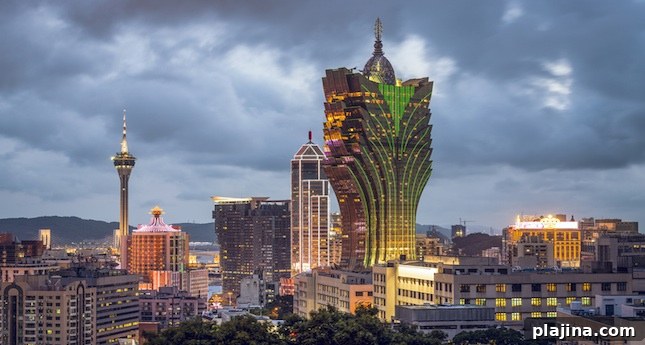
Macau’s economy is facing a slowdown, yet hotel development continues at a brisk pace. A decade ago Macau overtook Las Vegas as the world’s most lucrative gambling market. Since then, however, several factors have reduced spending by high rollers: a slower Chinese economy, currency devaluation, and a crackdown on illegal activities tied to gaming. Because Macau relies heavily on visitors from mainland China for much of its revenue, these trends have had a clear impact.
Despite the economic headwinds, developers and hoteliers are pressing ahead with major projects. Three new hotels totaling more than 4,200 rooms and representing roughly $8.2 billion in investment are scheduled to open later this year. One of the largest projects is The Parisian Macau, developed by Las Vegas Sands. The complex is expected to include about 3,000 rooms and carries an estimated price tag of $2.7 billion; a half-scale replica of the Eiffel Tower will be a signature feature of the property.
Another high-profile development is The 13, conceived by entrepreneur Stephen Hung. Marketed as potentially the world’s most expensive hotel based on per-room cost, the 200-room property is reported to have an extraordinary construction cost per suite and aims for a late-summer opening. These projects reflect confidence among investors that demand for luxury accommodations will recover or be sustained despite current pressures.
Macau’s recent visitor figures illustrate the challenges the market faces. In the past year, visitor arrivals fell by 2.6 percent to around 30.7 million. Visits from mainland China, which account for roughly two-thirds of Macau’s tourism traffic, declined by about 4 percent. Meanwhile, per-capita spending has been on a downward trajectory since peaking in 2013; last year alone, average spending per visitor dropped by approximately 15 percent.
Still, the ongoing pipeline of hotel openings underlines the territory’s long-term bet on tourism and gaming. Developers appear to be positioning Macau to capture future growth once macroeconomic conditions stabilize and regulatory pressures ease. For now, the contrast between an economy under stress and a booming construction program highlights the complex, forward-looking calculations behind large-scale hospitality investments in the region.