
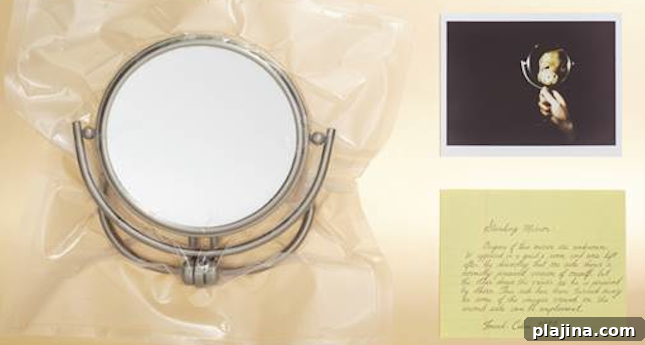
What becomes of the small, forgotten objects travelers leave behind? A favorite baseball cap tucked into a closet, a pair of fluffy socks hidden in the sheets, or a cosmetic mirror left on a bedside table — these are everyday items that slip from attention during trips and never make it back to their owners.
Valuable belongings are often reclaimed when frequent travelers call the hotel to trace and retrieve them. More ordinary items, however, frequently go unclaimed and eventually become the property of the hotel. In some cases, those neglected objects take on new meaning as everyday artifacts.
“Mythologies: Artifacts From Lost & Found” is an original art installation by New York–based artist Zach Hyman. Drawing inspiration from the thousands of items that accumulate in the lost-and-found at YOTEL New York, Hyman assembled a collection gathered over six months to examine how forgotten possessions can be reimagined.
The installation centers on 18 items that were lost or left behind by their owners. Each object is paired with a handwritten note that invents a backstory, inviting viewers to consider the people who once used them and the moments in which they were misplaced.
“The connection between the viewer and the original owner is the space in which these specific mythologies exist,” Hyman explains. He argues that refusing to project a story onto an object, or denying it special meaning, is a limitation on creativity and imagination — tendencies we often adopt as we grow used to the familiar things around us.
By attributing narratives to ordinary items, the exhibit aims to restore a sense of wonder and possibility to objects we otherwise take for granted. The project transforms the practical inventory of a hotel lost-and-found into a thoughtful reflection on memory, absence, and invention.
The result is an intimate, whimsical experience that encourages viewers to dream up lives for these small artifacts and to reconsider the quiet traces people leave behind. In doing so, the installation celebrates imagination as a way of reconnecting objects with stories they might once have carried.