
©Trekandshoot/dreamstime.com
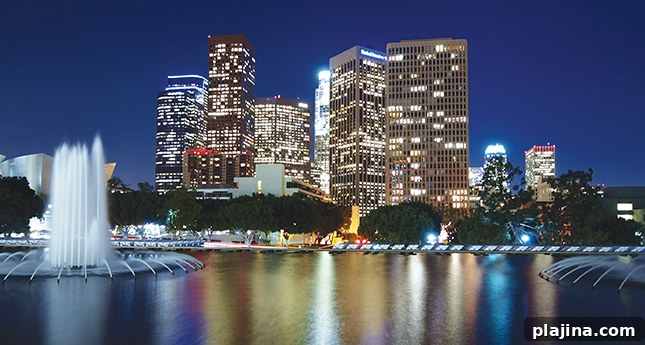
Los Angeles is a dynamic mosaic of colorful neighborhoods, towering palms, bustling freeways and neon-lit streets set across an undulating landscape. Home to about 3.7 million people, this Southern California metropolis draws visitors with its diverse communities, scenic variety and constant energy.
Spanning more than 500 square miles, the city extends from the Pacific Palisades coastline to Mount Lukens in the San Fernando Valley. Within its borders are rivers, desert edges, steep valleys, rocky canyons and verdant pockets of forest. About 80 distinct neighborhoods offer an extraordinary mix of cultures and lifestyles. With a gross metropolitan product of roughly $831 billion, Los Angeles stands among the world’s top-tier global cities alongside New York, London, Hong Kong and Tokyo.
The Port of Los Angeles is the nation’s busiest container port, and the region’s technology, aerospace and financial sectors continue to expand. Yet Hollywood’s cultural influence remains pervasive. Daily entertainment news chronicles the activities of actors, producers and executives, while major studios such as Universal, Warner Bros., Paramount, Sony Pictures, The Walt Disney Company and MGM maintain deep local roots.
America’s motion picture industry, which has deep historical ties to Hollywood dating back to the early 20th century, continues to thrive. Recent box office growth has driven demand across the city—from higher hotel occupancy in neighborhoods like Beverly Hills, Bel Air and Santa Monica to renewed investment in the downtown core. L.A. Live, a massive entertainment complex completed in 2010, added venues including the Staples Center, a large theater, the Grammy Museum, major hotels and a range of dining and nightlife options. Nearby, the Frank Gehry–designed Walt Disney Concert Hall has helped make downtown both a business hub and an evening destination.
Once described as “72 suburbs in search of a city,” downtown Los Angeles now presents a very different profile. Although national economic slowdowns have tempered some growth, new restaurants, hotels, corporate offices and residential conversions continue to reshape the Central Business District. In recent years tens of thousands of residents have moved into downtown lofts and converted office buildings, contributing to increased residential and commercial property values. Across the region, real estate activity has rebounded toward pre-recession levels, with premier neighborhoods such as Malibu and Venice commanding premium prices.
Despite the glitz of film premieres and luxury neighborhoods, the city’s fortunes are closely linked to Los Angeles County, an expansive area of nearly 4,000 square miles and almost 10 million residents. Economic conditions vary across the county: while coastal communities have fared relatively well, some inland cities have faced higher unemployment and slower recoveries. The county’s diversity—economic, cultural and geographic—remains one of its defining features.
Looking ahead, Los Angeles continues to invest in cultural and civic projects that will further transform the city. Planned and ongoing developments include new performing arts and museum spaces, proposed major sports venues, and long-term environmental and urban-revitalization efforts along the Los Angeles River. These projects aim to expand public spaces, spur economic activity and reconnect neighborhoods to natural waterways.
DIVERSIONS
More than 60 cultural institutions across Southern California collaborated on Pacific Standard Time: Art in L.A. 1945–1980, a Getty-initiated project celebrating the region’s postwar art scene. Through exhibitions, lectures, symposia, films, live performances and educational programs, the initiative highlighted a formative period in Los Angeles art history.
Pacific Standard Time: Art in L.A. 1945–1980
This multi-institutional project presented a range of exhibitions and public programs exploring the city’s artistic growth from the mid-20th century onward.
The L.A. Live complex is a vibrant downtown hub combining entertainment, sports and residential components. Its venues and public spaces attract locals and visitors year-round.
Grammy Museum
Located within L.A. Live, the Grammy Museum examines the cultural significance of music through rotating exhibits, film screenings and public programs.
The Los Angeles County Museum of Art
LACMA’s evolving campus includes contemporary galleries and sculpted public spaces. The museum presents diverse exhibitions across its collections, including focused shows on California design and modern art movements.
The Museum of Contemporary Art (MOCA) operates multiple locations in the city dedicated to modern and contemporary art, hosting major exhibitions and programs that reflect Los Angeles’s role in the art world.
The Natural History Museum of Los Angeles showcases notable collections, including an expansive dinosaur hall featuring an impressive set of specimens and educational displays.
Visitors can tour major studios to see filmmaking in action at Sony Pictures Studios, Universal Studios Hollywood and Warner Bros. Studios—offering behind-the-scenes glimpses of movie and television production.
Food enthusiasts will find innovative dining and craft beer at casual downtown spots like Public School 612, as well as waterfront dining at relaxed locations such as VŪ in Marina del Rey, where sunlit patios and California-inspired menus define the experience.
Lodging
LUXE SUNSET BOULEVARD
This Bel Air/Brentwood boutique hotel offers a luxurious urban retreat with free Wi‑Fi, a heated outdoor pool with private cabanas and a Zen-inspired spa. 11461 Sunset Blvd., tel 310 476 6571.
$$$–$$$$
THE REDBURY @ HOLLYWOOD AND VINE
Blending 1930s Hollywood style with modern comforts, The Redbury features spacious guest flats with kitchens and terraces. 1717 Vine St., tel 323 962 1717.
$$$$
SLS HOTEL AT BEVERLY HILLS
Designed by Philippe Starck, this chic hotel near Beverly Hills shopping attracts a fashionable clientele and offers upscale amenities. 465 S. La Cienega Blvd., tel 310 247 0400.
$$$$
Dining
CATCH
Perched near the Pacific with ocean views, Catch serves fresh seafood and house-made desserts—popular for sunset dinners and business lunches. Hotel Casa del Mar, 1910 Ocean Blvd., Santa Monica, tel 310 581 5533.
$$$–$$$$
DELPHINE EATERY & BAR
A Mediterranean-style brasserie led by Executive Chef Sascha Lyon, Delphine features shellfish, salads, grilled fish and a thoughtful wine list. 6250 Hollywood Blvd., tel 323 798 1355.
$$$
RAY’S & STARK BAR
Located at LACMA, Ray’s & Stark Bar offers a Mediterranean farm-to-table menu in an indoor-outdoor setting, making it a popular dining option for museumgoers and locals alike. 5905 Wilshire Blvd., tel 323 857 6180.
$$–$$$
Info To GoLos Angeles International Airport (LAX) is typically 10–15 miles from most central hotels, with travel times ranging from about 25 to 60 minutes by car depending on traffic. Many nearby airport hotels provide free shuttle service. Options to reach downtown include the LAX FlyAway bus to Union Station (approximately 30–50 minutes), a connection to the Metro Green Line via shuttle service, shared shuttles to downtown hotels and taxis. For planning, consult local transport resources and hotel concierge services.
|