
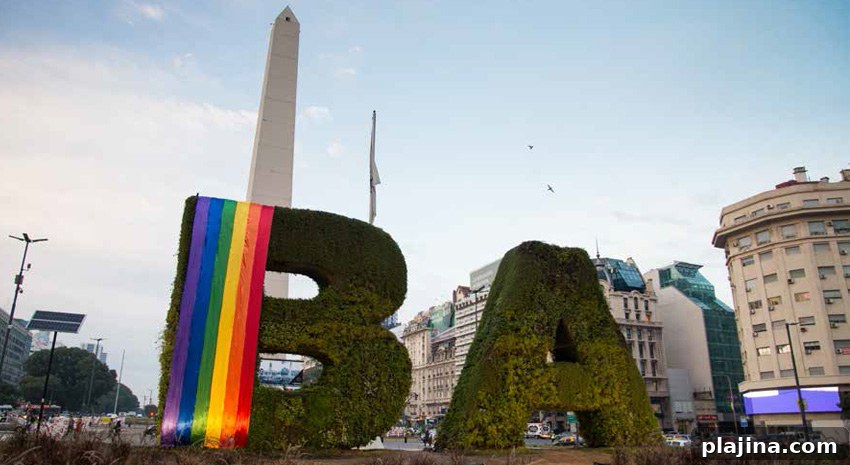
One of South America’s top vacation and business destinations is also, according to several surveys, one of the most popular LGBTQ travel spots in the Western Hemisphere. That reputation makes sense: Buenos Aires is the capital of the first Latin American country to legalize same-sex marriage nationally. Yet the city’s appeal goes well beyond legal milestones.
“There are many reasons why Buenos Aires continues to be one of the destinations for the LGBT community,” said Bryan Herb, co-owner of Zoom Vacations, which offers LGBTQ vacation packages. “Argentina delivers impeccable cuisine, designer fashion, stunning architecture, rich culture, sensational hotels and an open, welcoming atmosphere. With qualities like these, it’s easy to see why the LGBT community is drawn here.”
Many hotels combine luxury with explicit gay-friendly service. At the Alvear Palace Hotel, for instance, the concierge provides LGBTQ travel tips, while the Four Seasons gained visibility among gay travelers after Madonna stayed there while filming Evita. For a more intimate, male-focused option, El Lugar Gay is a gay-owned, men-only hotel that hosts weekly tango lessons on its rooftop patio.
Tango is a core part of Buenos Aires’s cultural identity, and visitors can experience the dance at traditional milongas—dance halls that range from formal salons to lively neighborhood gatherings. Venues such as La Marshall and Tango Queer offer beginner-friendly classes and same-sex dance instruction, making it easy for visitors of any orientation to join in.
Buenos Aires also has a legendary LGBTQ nightlife. Amerika, one of the city’s longest-running discos, draws crowds with strong DJs and a high-energy dance floor. Contramano caters to a more mature crowd, while Bach Bar has become popular with women. Across neighborhoods, bars, clubs and late-night cafés create a 24-hour social scene that suits a wide range of tastes.
November is a peak month for LGBTQ events in the city. The calendar typically includes the LGBTIQ Pride Parade, the international Asterisco film festival, and the week-long Tango Queer Festival, which highlights queer tango performances and social dancing. Earlier in the year, BA Diversa—an LGBTQ festival organized by the city government—takes place in August and often coincides with Gnetwork360, an international LGBTQ tourism conference.
For frequent visitors, Buenos Aires keeps delivering favorites: elegant architecture, vibrant neighborhoods, outstanding food and a sociable nightlife. “Buenos Aires is a beautiful, lively, 24-hour city with European architecture, fantastic nightlife, travel bargains and—my favorite—welcoming locals,” said Michael Luongo, freelance journalist and author of Frommer’s Buenos Aires.