
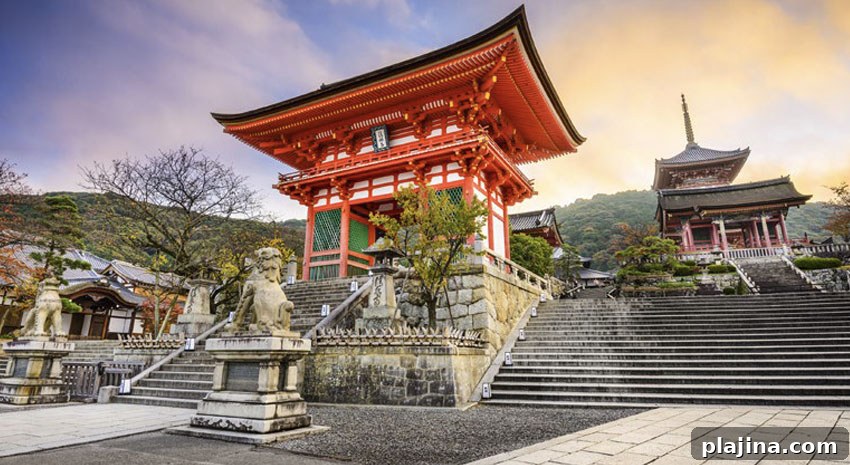
There are two Japans. One is the neon-lit, concrete-and-asphalt, high-tech nation; the other is the Japan of geishas, tea ceremonies, Zen gardens and minimalist interiors.
How far apart are these two Japans? In one sense, more than 70 years. Japan’s post–World War II economic miracle propelled the country into the modern era, transforming many cities that rose from bombed-out ruins. Yet one city founded in 794 and for centuries the imperial capital survived with its character largely intact: Kyoto. In practical terms, the divide between the two Japans can be measured in the 35 miles between downtown Osaka and Kyoto’s historic Gion district.
That separation, however, is not absolute. Kyoto blends ancient and modern so seamlessly that both worlds often overlap. In a single stroll you can pass from a futuristic hub into a lane that looks unchanged for centuries. The coexistence of eras is one of Kyoto’s defining charms.
Kyoto is also a major center of higher education and research, home to several of Japan’s top universities. Academic excellence fuels the city’s push into the future: university research frequently spins off into startups and new industries.
One example is Innovation Hub Kyoto, founded in 2017 to support medical research and regenerative medicine development. By pooling local expertise and funding young innovators, the hub aims to position Kyoto as a global center for regenerative medicine, with the potential to affect lives worldwide.
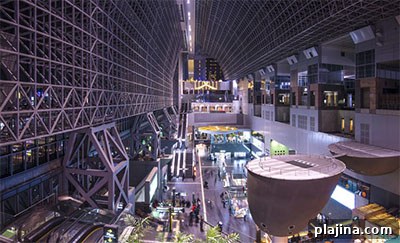
Kyoto Station © SEAN PAVONE | DREAMSTIME.COM
Kyoto has also produced companies that changed daily life worldwide. In the 19th century a local maker of hanafuda playing cards—whose name meant “leave luck to heaven”—diversified over the decades into electronic games and ultimately became the global entertainment giant Nintendo, still based in Kyoto’s Minami-ku. Other forward-looking firms in the city include GLM (electric sports cars), Kyocera (electronic components) and Omron (medical equipment).
Those businesses reflect a deep-rooted Japanese craft ethic known as monozukuri—“thing making.” In Kyoto, monozukuri has evolved into a broader “wisdom industry” that combines traditional philosophies with modern technologies. The city actively encourages international collaboration in research and entrepreneurship, and institutions such as the Kyoto Chamber of Commerce and Industry assist foreign nationals seeking to invest or work here.
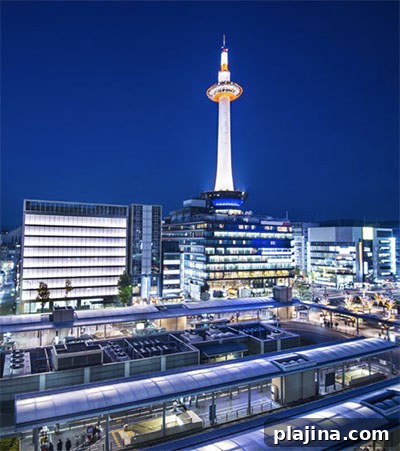
Kyoto Tower © SEAN PAVONE | DREAMSTIME.COM
Arrive by train at the futuristic Kyoto Station—most visitors come via Tokyo or Osaka—and the first impression is of modern Japan: a vaulted concourse, busy streets and the Kyoto Tower looming like a sibling to Seattle’s Space Needle. Yet a short trip north to the Gion district brings a striking change. There, narrow lanes lined with wooden buildings, teahouses and stone paths feel as if time has slowed. If you’re fortunate enough to glimpse a geisha in traditional dress, the scene reinforces the sense that Kyoto preserves living history.
Moments like a geisha pausing at a crosswalk to wait for the light are emblematic: the two Japans meet and coexist in the same city.
CHECKING IN WITH TOMOKO NAKAMURA
Owner, Ryokan Yoshida-Sanso
What opportunities does Kyoto offer Americans? Many Americans already know aspects of Japanese culture through food, anime and other media. In Kyoto visitors can participate directly in cultural practices: study Zen, practice calligraphy, learn the art of Zen gardening, explore ceramics and pottery, or take part in a traditional tea ceremony. Kyoto invites visitors to be part of the culture, not just observers.
What cultural differences should visitors be aware of when visiting Kyoto? Small formalities matter. Remove shoes when entering homes; slippers may be provided, and clean, intact socks are appreciated. Bathrooms often require switching to a separate pair of slippers for hygiene. Observing these customs shows respect and smooths interactions.
How does Kyoto differ from other cities in Japan? While many cities rebuilt and modernized rapidly, Kyoto preserved much of its heritage. Life in Kyoto tends to move at a gentler pace. For Japanese people, Kyoto holds deep cultural importance; it represents a core of identity and tradition.
What are the key developments to look for in the future? Kyoto’s future depends on balancing development with preservation. The city’s priority is protecting traditional architecture, art and craft even as it embraces innovation. The goal is careful growth that retains the qualities that make Kyoto unique.
Which local attractions do you recommend? Kyoto offers far more than can be seen in one visit. For peaceful natural scenery, walk the eastern hills—Yoshida-yama and the area around Ginkaku-ji (the Silver Pavilion). The Philosopher’s Path in Higashiyama is especially beautiful in spring when cherry blossoms bloom. Popular temples and shrines are worth visiting despite crowds, but Kyoto also has quieter sites where visitors can enjoy solitude and reflection.
Things to Do in Kyoto
Expect to visit many temples and shrines—Kyoto has more than a thousand. Fushimi Inari-taisha is among the city’s most photographed sites: a mountainside complex whose 2.5-mile trail is lined with around 10,000 vermillion torii gates. Along the route, numerous fox statues appear; foxes are regarded as messengers of the Inari deities, patrons of rice and business. For many, a visit to Fushimi Inari is both a memorable tourist experience and a symbolic pilgrimage for those interested in commerce.
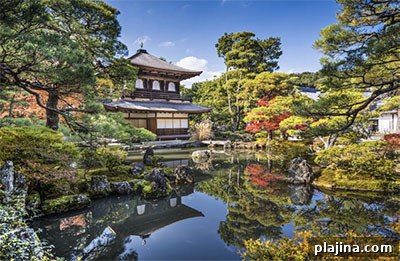
Ginkaku-ji Silver Pavilion © SEAN PAVONE | DREAMSTIME.COM
Fushimi is also Kyoto’s saké district, home to most of the city’s 46 breweries. The area’s soft water helps produce distinctive saké in traditional wooden brewery buildings where water and fermented rice transform into a potent drink. Gekkeikan, the most famous brewery, offers daily tours with tastings, so plan accordingly if you have appointments afterward.
Other must-see sites include Kinkaku-ji, the Golden Pavilion, a stunning temple clad in gold leaf that seems to float on its reflecting pond. After multiple reconstructions since its original 1397 construction, the current building dates from 1955. Kiyomizu-dera is another photogenic temple, known for its wooden main hall built on an elevated scaffold that offers panoramic views of the city and surrounding hills.
The Kyoto Imperial Palace recalls the city’s long tenure as Japan’s capital; due to preservation concerns, visitors typically view its exteriors. For contemplative Zen landscapes, Ryōan-ji’s rock-and-gravel garden provides a classic example of minimalist design intended for quiet reflection.
Gion remains Kyoto’s most evocative historic quarter. Its preserved streets and teahouses invite repeated visits: there is always another lane, another shop, or another quiet moment to discover.
Kyoto Info to Go
Most visitors arrive via Kansai International Airport, located on an island in Osaka Bay about 60 miles by road from Kyoto. The Japan Railways Haruka express is the fastest transfer and takes roughly 75 minutes. From Tokyo, take the Airport Express to Tokyo Station, then the Shinkansen (bullet train) to Kyoto; total travel time is around four hours.
Kyoto: Just the Facts
Time zone: GMT +9
Phone code: Country code: 81 City code: 75
Currency: Yen
Key industries: Tourism, retail, higher education, medicine, IT, nanotechnology
COMING AND GOING
All U.S. citizens need a passport valid for the duration of their visit and an onward or return ticket. U.S. citizens may enter visa-free for up to 90 days, but visa-free entry does not permit employment, nor can you change visa status while in Japan. If unsure, consult the Japanese Embassy before traveling.
OFFICIAL LANGUAGE
Japanese
Where to Stay in Kyoto
HOSHINOYA KYOTO A 15-minute riverboat shuttle from downtown places this resort in a serene woodland setting beside the Oi River. Rooms are traditional and tranquil. 11-2 Arashiyama Genrokuzan-cho, Nishikyo-ku $$$$
THE RITZ-CARLTON, KYOTO Opened in 2014, this hotel blends traditional and modern design with refined amenities. Kamogawa Nijo-Ohashi Hotori, Nakagyo-ku $$$$
RYOKAN YOSHIDA-SANSO A classic ryokan with an imperial past—once the residence of Emperor Akihito’s uncle—located near many attractions. 59-1 Yoshida Shimo-ojicho, Sakyo-ku $$$$
Restaurants in Kyoto
KIKUNOI A refined dining experience with an acclaimed multi-course set menu. Reservations essential. 459 Shimokawara-cho, Higashiyama-ku $$$$
YAMAMOTOMENZO A popular noodle bar with English menus; expect a line. 34 Okazaki Minamigosho-cho, Sokyo-ku $$
YONEMURA Located in Gion, this fusion restaurant blends Japanese foundations with European and Indian influences. Counter seating lets diners watch the chefs. 481-1 Kiyoi-cho, Higashiyama-ku $$$$