
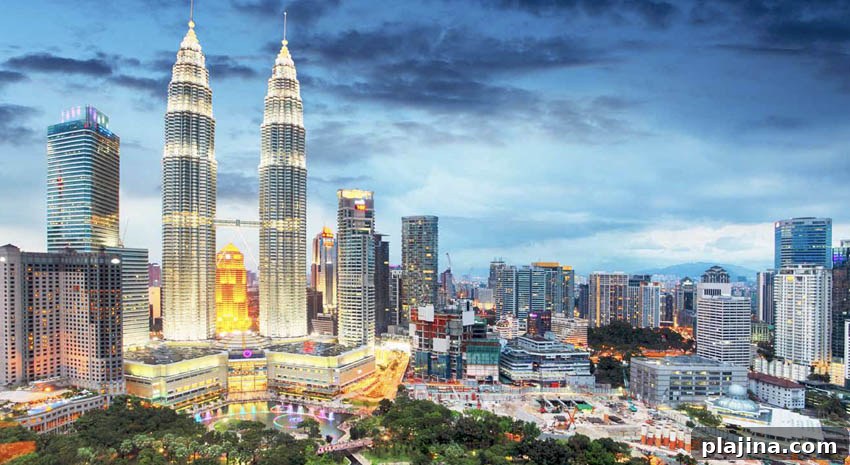
DURING MY FIRST TIME in Malaysia, I made a rookie mistake. I had a meeting scheduled across town at 5 p.m. Forty minutes sounded more than enough to get there by taxi, or so I thought. While I prepared, my hotel room was washed in afternoon sunlight; outside, Kuala Lumpur’s dense skyscrapers gleamed under a clear sky. I took the elevator down to the lobby and stepped into an apocalyptic twilight.
While I had admired the view from my room, a storm had built in the opposite direction. It broke with sudden force: thunder, lightning and torrential rain. The last taxis at the hotel rank had already gone. I had no hope of making my meeting.
Late-afternoon downpours are a fact of life here. Traffic continues, but streets quickly become rivers and pedestrians take shelter until the storm passes. If you’re not already in a taxi when it starts raining, chances are you’re stranded.
For all its modern trappings, Kuala Lumpur is a tropical city. Its rhythms — even its name — are shaped by the environment. Founded in 1857 where the Klang and Gombak rivers meet, Kuala Lumpur literally means “muddy confluence.”
From modest origins as a tin-miner settlement, the city grew into a trading hub thanks to those rivers and later became the administrative center of British Malaya. At independence in 1957 it still felt provincial in places, with social life often centered on the colonial club and its cricket field.
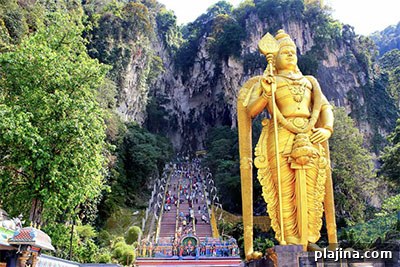
Batu Caves statue and entrance © IGORP1976 | DREAMSTIME
Since then, Kuala Lumpur has prospered. A hardworking, multicultural population — roughly 50 percent Malay, 24 percent Chinese and 7 percent Indian — embraced change and helped turn the city into a 21st-century powerhouse.
Ambition is visible across the skyline. In the 1990s that ambition went vertical: the 1,483-foot Petronas Twin Towers were the world’s tallest buildings from 1998 until 2004. The project cost was high, but the towers planted Kuala Lumpur and state oil company Petronas firmly on the global map.
In the coming decade, the city’s ambition will also be expressed in speed. Construction has begun on a new 220-mile high-speed rail link to Singapore. Estimated at around $15 billion, the line will reduce travel from four to five hours by road to roughly 90 minutes by train. At the project’s launch, Malaysian leaders called the link a potential game changer that could boost economic ties between the two cities.
Despite rapid modernization, Kuala Lumpur has preserved pockets of heritage. Kampung Baru, a traditional Malay enclave just north of the Petronas Twin Towers, remains low-rise and full of tin-roofed houses and hawker stalls, even though it sits on highly desirable land. Local elders have resisted developers, keeping the district’s character intact for now.
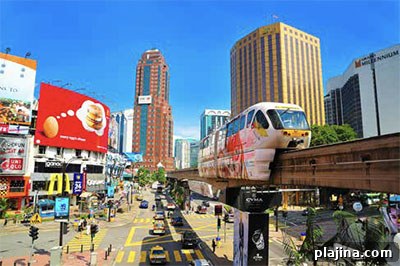
Kuala Lumpur monorail © RAVINDRAN JOHN SMITH | DREAMSTIME
Citywide development continues. The Mass Rapid Transit (MRT) system opened its first line in December 2016, with a second line planned and a third in design. The MRT integrates with the monorail, commuter rail and bus networks to improve mobility.
A new financial district, the Tun Razak Exchange, will include The Exchange 106, a 106-floor tower taller than the Petronas Twin Towers. Even taller projects are on the rise: Merdeka PNB 118 (KL118) is scheduled to surpass many existing landmarks when completed.
Other efforts focus on quality of life. Plans to clean the Klang and Gombak rivers and beautify more than 60 miles of riverbank aim to create recreational spaces and enhance the city’s environment. Project by project, Kuala Lumpur is becoming an increasingly attractive destination for business and leisure, rain or shine.
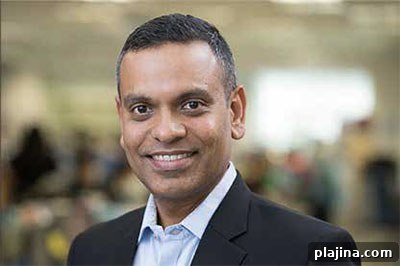
Ranga Somanathan © OMNICOM MEDIA GROUP
CHECKING IN WITH RANGA SOMANATHAN
CEO, Singapore and Malaysia, Omnicom Media Group
What is your connection with Kuala Lumpur?
Kuala Lumpur is close to our hearts. My wife and I began our married life there and our first child was born in the city. We lived in KL from 2002–2005 and again from 2009–2012. I now live in Singapore and oversee operations for Singapore and Malaysia.
What opportunities does Kuala Lumpur offer American investors?
Kuala Lumpur is an appealing place to live and work — the multicultural environment, cosmopolitan lifestyle and warm Malaysian hospitality are real draws. The government has simplified business registration, visa processes and tax incentives to support startups, and there is a ready pool of English-speaking, trained professionals for investors seeking local talent.
Compared with the United States, is it easier or more difficult to do business in Malaysia?
While I don’t have direct experience of U.S. business culture, Kuala Lumpur offers a positive environment overall. Challenges remain: consumer confidence dipped in recent years and business sentiment softened. Political developments, such as the 2018 General Elections, could reduce uncertainty and restore stronger confidence.
Are there any cultural differences American business travelers should note?
Malaysia’s multicultural makeup means people are attuned to cultural nuances. Foreigners who are unaware of those differences can unintentionally cause offense. In corporate settings, feedback and questions are often shared one-on-one rather than in large meetings, so paying attention to nonverbal cues helps build trust and relationships.
What key developments should people watch?
Major infrastructure investments, including the high-speed rail to Singapore, could position Kuala Lumpur as a twin city to Singapore. While Singapore and Japan have traditionally been large investors, Chinese manufacturing investment rose in recent years. Malaysia aims to be a gateway to ASEAN, and Kuala Lumpur is well placed to capitalize on that vision.
Which local attractions do you recommend?
The Petronas Twin Towers are iconic — a blend of modern engineering and traditional design. Petaling Street and Pasar Seni offer lively local shopping. Putrajaya showcases monumental government architecture and landscaped surroundings. For nature and adventure, the city’s surrounding trails and limestone caves make excellent day trips, while nearby beach resorts and hill stations provide varied weekend escapes.
DIVERSIONS
To get your bearings, visit the Petronas Twin Towers observation deck on the 86th floor for sweeping city views. Tours typically include the Skybridge that links the towers at the 41st and 42nd floors.
The towers anchor the Kuala Lumpur City Centre (KLCC) district. At their base is Suria KLCC shopping mall and the 50-acre KLCC Park. Nearby are the Kuala Lumpur Convention Centre and Aquaria KLCC, the city’s large aquarium.
Historic Merdeka Square showcases colonial-era architecture, including the Royal Selangor Club and the Sultan Abdul Samad Building. Chinatown centers on Petaling Street, a bustling maze of narrow lanes known for Chinese food and bargain shopping.
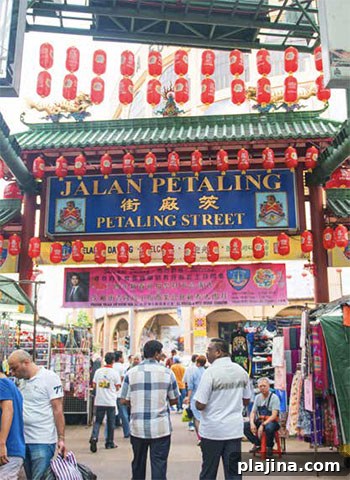
Petaling shopping street © MOSAYMAY | DREAMSTIME
Brickfields, or Little India, is the hub of the city’s Indian community and a great place for curries served on banana leaves. Bukit Bintang is the top shopping and entertainment district, lively by day and electric by night.
In the city’s center is the KL Forest Eco Park (formerly Bukit Nanas Reserve), a preserved patch of rainforest with trails and a canopy walk. For an impressive excursion, climb the 272 steps to Cathedral Cave at Batu Caves early in the day to avoid crowds and enjoy the cool interior.
Kuala Lumpur Info to Go
Most international flights arrive at Kuala Lumpur International Airport (KLIA), 28 miles south of downtown. The KLIA Ekspres non-stop rail service connects the airport to KL Sentral in about 28 minutes. Sultan Abdul Aziz Shah Airport, 18 miles west of the city, mainly handles domestic and regional flights.
Kuala Lumpur: Just the Facts
Time zone: GMT +8
Phone code: Country code: 60 City code: 3
Currency: Malaysian ringgit
Key industries: Tourism, retail, financial services, oil and gas, manufacturing
COMING AND GOING
U.S. citizens must hold passports valid at least six months beyond arrival. Visas are not required for business or tourism visits up to 90 days; extensions can be applied for at the Immigration Department.
OFFICIAL LANGUAGE
Bahasa Malaysia and English are widely used, alongside more than 100 indigenous languages.
Where to Stay in Kuala Lumpur
ALOFT KUALA LUMPUR SENTRAL Situated opposite Sentral Station, Aloft offers modern décor and quirky facilities, including public computer terminals and a food truck in the lobby. 5 Jalan Stesen Sentral $$
SHANGRI-LA HOTEL KUALA LUMPUR A five-star hotel set within tropical gardens in a central location. Upgrade to the Horizon Club for access to a private lounge and additional services. 11 Jalan Sultan Ismail $$$$
VILLA SAMADHI A boutique hotel inspired by traditional Malaysian architecture with a resort-like feel; some ground-floor rooms open directly onto the pool. 8 Persiaran Madge $$$
Restaurants in Kuala Lumpur
CANTALOUPE AT TROIKA SKY DINING Chef Christian Bauer offers an inventive European-Asian fusion menu on the 23rd floor of The Troika. 19 Persiaran, Troika Sky Dining, Tower B, The Troika $$$$
LITTLE PENANG CAFÉ Located in Suria KLCC Mall, this spot is known for authentic Penang cuisine served quickly and affordably. Level 4, Suria KLCC Mall $
OPIUM An atmospheric Asian restaurant with indoor and terrace seating; specialties include rendang made here with Angus beef. 50 Changkat Bukit Bintang $$$