
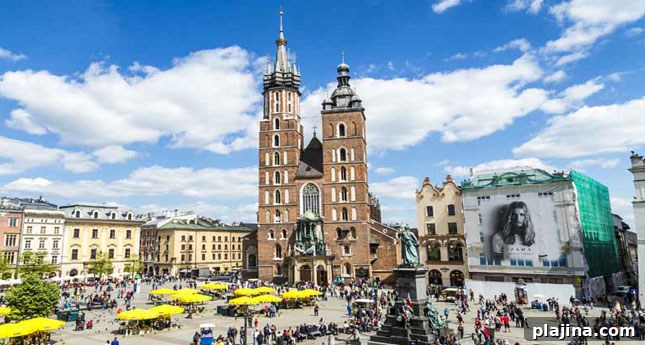
With a recorded history that stretches back to the seventh century, Krakow is a city steeped in stories, drawing visitors for both business and leisure. Situated on the scenic Vistula River, Poland’s second-largest city and home to more than 760,000 residents has served as a capital, duchy and kingdom throughout its long history. Today Krakow has also emerged as an important financial and business center.
The focal point of the southern Polish city is the Rynek Główny, one of the largest medieval market squares in Europe, covering roughly 10 acres. Laid out in the 13th century, this longstanding center of commerce and city life sits adjacent to Wawel Castle, the former seat of royal power. Locals and visitors still gather in the Rynek Główny to shop, dine and meet, preserving a lively urban tradition that dates back centuries.
As one of Europe’s most centrally located cities, Krakow is popular with international business travelers. More than 1,900 local companies have at least partial foreign ownership, and travellers from the United States, EU member states and NATO countries generally enter Poland without a visa. While Polish is the official language, German and English are widely spoken in tourism and business sectors, so communication is rarely a barrier.
Although the city lacks a metro system, Krakow offers an extensive public-transport network of trams, buses and minibuses, complemented by plentiful and reasonably priced taxis. The historic center is compact and easily explored on foot, and visitors can also enjoy unique local options such as rickshaws and horse-drawn carriages for short excursions.
For business events and conferences, Krakow provides a wide range of venues. EXPO Krakow features large halls, an auditorium that can host up to 5,000 people and multiple meeting rooms, accommodating major trade shows and corporate gatherings. ICE Krakow is a large conference center with flexible halls, exhibition space and a multi-level foyer offering views of Wawel Castle. Conveniently located about four miles from the main train station and downtown, EXPO Krakow and similar venues make it easy for delegates to combine meetings with time to explore the Rynek Główny and nearby attractions.
Located in the city’s cultural and business quarter, the five-star Radisson Blu Hotel, Krakow is an ideal base for business travelers and client entertaining. Guests can begin the day with an extensive breakfast buffet at Solfez, and host lunch or dinner meetings at Milk & Co, which offers regional and international dishes as well as a Surf & Turf buffet featuring fresh fish and seafood on selected evenings. For relaxed after-hours gatherings, the hotel’s Salt & Co serves small plates, cocktails and wines late into the night; the venue’s salt-embedded tiles pay homage to the region’s historic salt-mining tradition and the space can be reserved for private events.
The five-star Sheraton Krakow Hotel is another excellent choice for business stays, with eight meeting rooms and dining options in the Olive Restaurant’s glass-roof atrium. The hotel’s rooftop terrace, equipped with a retractable roof, serves drinks, snacks and tapas, while the sports bar SomePlace Else offers international and Tex-Mex fare. For a distinctive experience, Qube Vodka Bar & Café presents a wide selection of vodkas, some served in glasses carved from ice.
The underground Chapel of St. Kinga at Wieliczka Salt Mine © Golasza | Dreamstime.com
For truly memorable events, the Wieliczka Salt Mine, a UNESCO World Heritage site, provides unique underground spaces for up to 600 guests, set in salt-carved chambers more than 1,000 feet below ground. The elegant Bonerowski Palace, part of a restored UNESCO list area and dating back to the 13th century, offers historic charm and conference rooms for up to 120 delegates overlooking the Rynek Główny. For intimate gatherings, the VJC Versace Diamond Room, illuminated by Swarovski crystals, creates an exclusive atmosphere for small meetings.
Krakow’s dining scene accommodates a range of tastes and budgets. Around the Rynek Główny, restaurants serve traditional Polish dishes alongside international cuisine, and many atmospheric cellars offer meals at reasonable prices—lunches often cost around $15 and dinners about $25. Kogel Mogel is a distinctive, old-fashioned venue with a playful newspaper-style menu that riffs on Communist-era dishes and invites guests to interact with staff in character for a memorable, conversation-friendly setting.
For an impressive dining experience, Wierzynek—one of Europe’s oldest upscale restaurants—offers traditional Polish specialties in a richly decorated interior that dates from the 14th century. Known for hosting heads of state and celebrities, Wierzynek serves dishes such as veal shank with potato dumplings amid period art and frescoes; it provides a formal, aboveground alternative to cellar dining and remains a prime choice for special business meals.
When the occasion calls for a toast, the Wódka Cafe Bar pours more than 100 varieties of vodka, including flavored options like hazelnut and mint alongside the traditional Żubrówka bison grass vodka. It’s an ideal spot for a nightcap or a casual celebration after successful meetings.
If you have time to step away from the boardroom, the Rynek Underground exhibition—opened in 2010 beneath the Rynek Główny—offers a fascinating look at the city’s origins. The permanent display allows visitors to explore preserved archaeological remains and learn about Krakow’s development through hands-on exhibits and accessible walkways.