
A little over a year ago, Depot Boijmans Van Beuningen, designed by architectural firm MVRDV, opened to the public in Rotterdam. At the Depot, the relationship between visitors and more than 151,000 works of art takes center stage. The building is organized to reveal how art is stored, conserved and presented, creating a continuous dialogue between the public and the collection.
Visitors can explore the collection individually or as part of guided tours that pass through climate-controlled storage areas. The experience also includes a rooftop forest and the restaurant Renilde, both situated 115 feet above ground. The arts center opened in late 2021, concluding nearly a decade of planning and construction: MVRDV won the design competition in 2013 and work began in 2017. King Willem-Alexander of the Netherlands presided over the opening ceremony.
© Ossip van Duivenbode
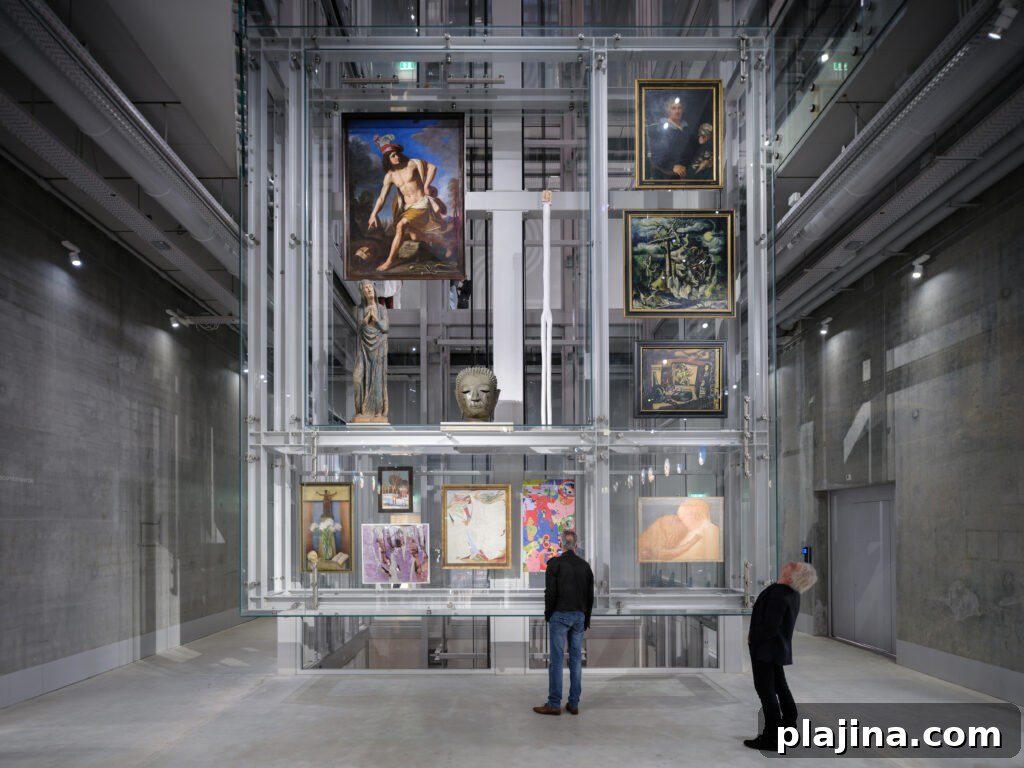
Depot Boijmans Van Beuningen is the world’s first publicly accessible art storage facility. The intention was to create an inviting building where diverse audiences feel welcome. Rather than functioning like a conventional museum that exhibits only a fraction of its holdings, the Depot exposes the operational heart of a major collection: storage, conservation and logistics. Artworks are arranged by size and climate requirements rather than by art-historical categories, placing older and contemporary pieces side by side and encouraging fresh interpretations and connections.
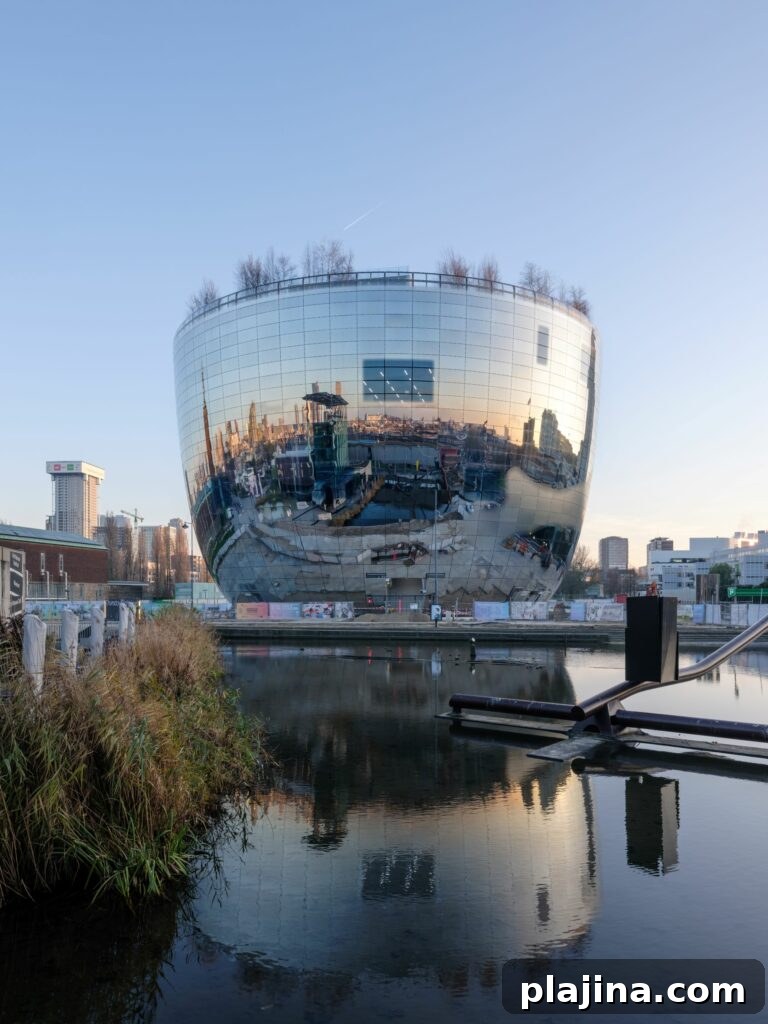
The MVRDV team, led by architect and urban planner Winy Maas, chose a round, robust form that engages with its surroundings instead of turning away. Located in Museumpark, the building establishes a new relationship with the park and the city of Rotterdam. The design aims to make the building appear to recede into its environment while securely housing a collection valued in the billions.
© Ossip van Duivenbode
The building’s distinctive silhouette responds to the need for a compact footprint. Rising from a modest base, the structure curves upward with a 32-foot overhang to accommodate storage rooms, conservation studios, catering areas, and screening and presentation spaces. Inside, five climate zones protect delicate materials ranging from prints and paintings to photographs, ensuring each work receives the conditions it requires.
A mirrored façade of approximately 21,000 square feet of glass, arranged in 1,664 panels, allows the Depot to visually merge with its surroundings. Large entrance doors are integrated seamlessly into the façade and become visible only when the building opens, creating a theatrical effect reminiscent of a cinematic gadget revealing the interior.
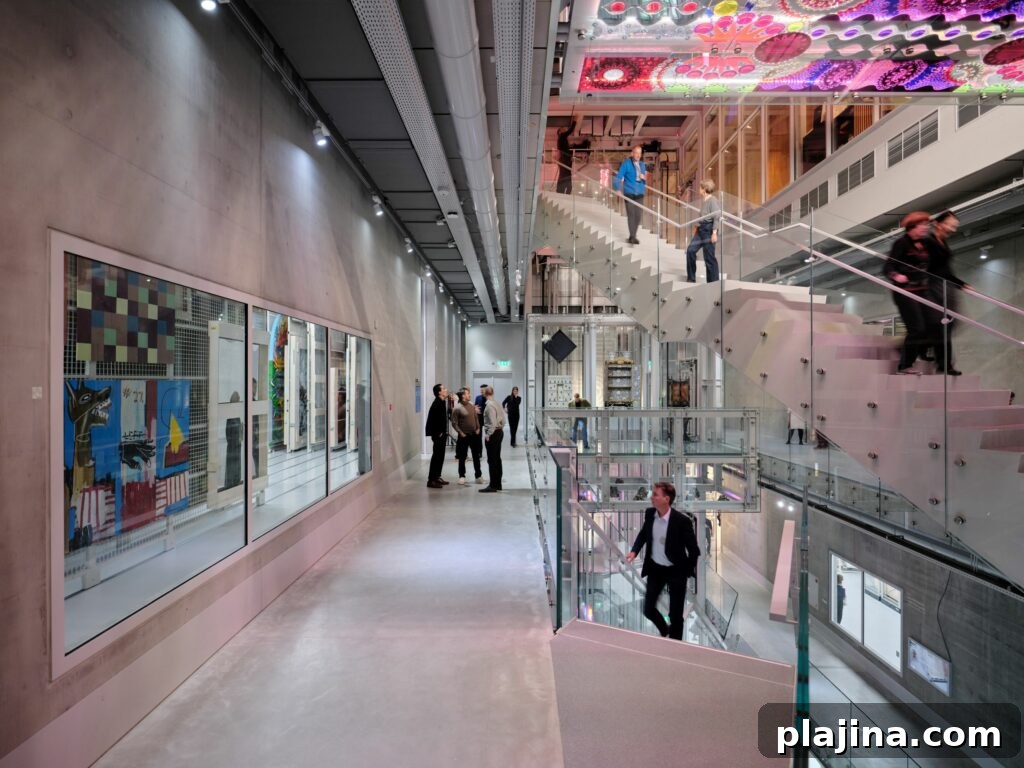
The building’s appearance changes with the weather and light, giving it the character of a living painting. The interior centerpiece is the vast atrium with its intersecting staircases and windows into storage areas, which together form a central viewing tower offering panoramic sightlines over the collection. Thirteen large display cases greet visitors upon entry, presenting a collage of collection highlights and setting the tone for an exploratory visit.
© Ossip van Duivenbode
The interior design involved a team of specialists: John Körmeling designed the entrance, Marieke van Diemen created the display cases, and artist Pipilotti Rist developed a light installation that brings the Depot to life after dark.
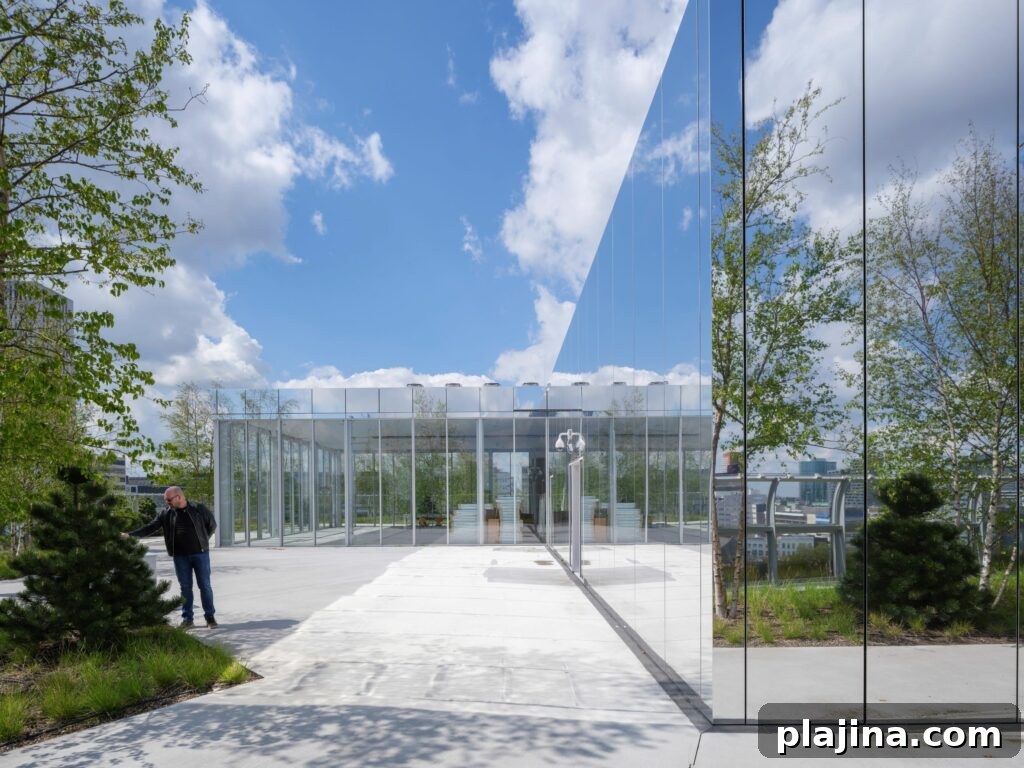
Depot also experiments with introducing nature into an urban setting through its 115-foot-high rooftop forest, which won the Best Dutch Rooftop Award in 2020. The rooftop supports 75 birches, 20 pines and native grasses, helping retain water, promote biodiversity and mitigate urban heat. The trees were prepared for three years in a nursery before planting; their roots are interconnected, and the rooftop’s windbreak and cross-shaped restaurant shelter them from strong winds. A dedicated irrigation system keeps the trees healthy at height.
“It’s wonderful to see the Depot embraced by Rotterdammers even before it opened,” said Winy Maas, founding partner of MVRDV. “The building brings joy to many people—there’s even space for skaters outside. Visitors appreciate the interior, the rooftop forest, and the direct experience of artwork without the mediation of a curator. Our aim was to add a new dimension to Museumpark.”
© Ossip van Duivenbode
Depot Boijmans Van Beuningen is the result of a partnership between Museum Boijmans Van Beuningen, the municipality of Rotterdam and the De Verre Bergen Foundation. Visitors are asked to reserve timed tickets online, with prices ranging from free to roughly $22, ensuring a managed flow and a quality experience for everyone.