
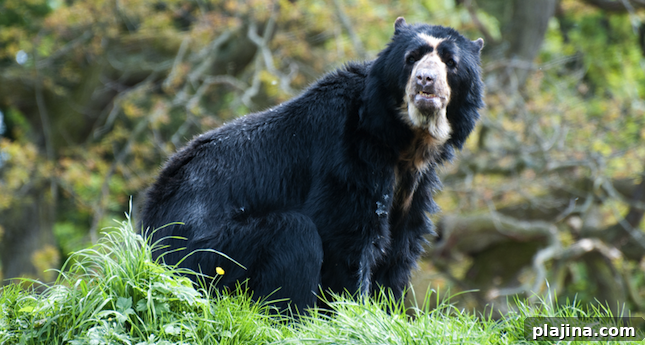
Twin female spectacled bears, Kina and Josi, have found a new home at Inkaterra Machu Picchu Pueblo Hotel. Rescued through a coordinated effort by the Inkaterra Association, Inkaterra Machu Picchu Pueblo, the Wildlife Technical Administration, the Attorney General’s Office and the Forest Police, the two bears were previously part of a small circus in Arequipa, Peru. Although authorities reported they appeared well fed, the bears had been kept chained inside a box within the circus tent, a situation that prompted their removal for welfare reasons.
At Inkaterra Machu Picchu Pueblo Hotel, Kina and Josi join an established spectacled bear sanctuary alongside resident bears Yogui, Pepe and Coco. The sanctuary provides spacious, naturalized enclosures, veterinary care and enrichment that support the bears’ physical and psychological recovery. Over time, Coco and Josi are expected to share a private area with the goal of encouraging natural social behavior and, potentially, breeding under managed, welfare-focused conditions.
Spectacled bears (Tremarctos ornatus) are the only bear species native to South America. Their populations face mounting pressure from habitat loss due to deforestation, agricultural expansion and illegal hunting. These threats not only endanger the bears themselves but also disrupt local ecosystems, where spectacled bears play a role in seed dispersal and maintaining forest dynamics.
Inkaterra’s Spectacled Bear Project is an ongoing conservation program that combines rescue, rehabilitation and long-term care with research and community outreach. The project aims to provide secure, enriching environments for rescued bears while supporting broader efforts to conserve wild populations. By improving captive welfare and working with local authorities and communities, the initiative seeks to reduce human-bear conflicts and promote practices that protect remaining forest habitat.
Rehabilitation at the sanctuary focuses on nutritionally balanced diets, medical monitoring and behavioral enrichment to encourage species-typical activities such as climbing, foraging and exploration. When appropriate, staff evaluate whether individual bears can return to protected wild areas. In cases where release is not feasible, the sanctuary provides lifetime care in settings designed to meet the animals’ physical and social needs.
Community education is another key element of the project. Local outreach helps raise awareness about the spectacled bear’s ecological role and the consequences of wildlife exploitation. By involving schools, neighbors and visitors in conservation messaging, the program works to build support for habitat protection and legal measures that reduce illegal wildlife trade and forest clearing.
Inkaterra’s collaborative rescue of Kina and Josi highlights how coordinated action among conservation organizations, government agencies and private partners can improve outcomes for individual animals and contribute to species recovery. The sanctuary offers these rescued bears safety and care while contributing knowledge and public engagement that support long-term efforts to protect spectacled bears across their native range.