
Reaching Bengaluru (formerly Bangalore), India’s technology capital, is easier than ever. Kempegowda International Airport now serves roughly 30 international and 75 domestic destinations. In 2024 the airport handled more than 40 million passengers and opened a modern Terminal 2 with improved facilities. The challenge for many travelers remains the journey between the airport and the city center.
Traffic is a major consideration. Bengaluru is among the world’s most congested cities; average travel time for 10 kilometers (about 6.2 miles) is around 28 minutes, the highest in Asia. With an estimated 300,000 additional private vehicles registered in the first half of 2025, road pressure continues to rise. Depending on conditions, a trip between the airport and downtown can take anywhere from one to three hours.
Planned transport projects promise relief. The long-awaited extension of the Namma Metro to the airport is expected to begin operations in early 2027, which should significantly reduce average travel times. Helicopter transfers to more than 90 rooftop helipads in the city—typically a 15-minute trip—were an occasional option in recent years, though these services have been suspended while airport helipad facilities are relocated following Terminal 2’s construction.
The contrast between Bengaluru’s outdated transport infrastructure and its high-tech economy is striking. Home to major global IT firms such as IBM, Microsoft and Infosys, the city has also produced more than 40 startup “unicorns” in recent years—companies valued above $1 billion. Bengaluru offers a deep pool of technical talent and supportive policies for research and innovation.
Districts like Electronic City to the south and the Whitefield IT Corridor to the east are cosmopolitan hubs with multinational campuses and dedicated IT parks. Both areas enjoy connections to downtown via the Namma Metro and the Bengaluru Suburban Railway, helping distribute economic growth across the city.
As downtown Bengaluru gentrifies, traditional street life sits alongside air-conditioned malls and fashionable cafés. UB City Mall exemplifies this evolution, housing many high-end brands and catering to a wealthier clientele.
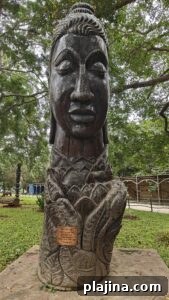
© ARTOFKOSI | DREAMSTIME.
But rapid urban change tells only part of Bengaluru’s story. Long known as India’s Garden City, it still offers many public parks and tree-lined avenues. Lalbagh Botanical Garden, created in 1760, remains a popular spot for morning exercise and evening strolls. Cubbon Park (Sri Chamarajendra Park) in the city center provides shaded green space and a vibrant meeting place on weekends; the park’s eastern edge borders a 40,000-capacity cricket stadium, a reminder that cricket unites people from all walks of life across the city.
The contrasts between old and new, wealth and hardship, can be bewildering to visitors. Bengaluru is a city in the midst of dramatic transformation—rooted in history while rapidly shaping its future.
CHECKING IN WITH AADI CHABUKSWAR
Community Engagement Manager, Sarla Aviation
Tell us about Sarla Aviation.
Headquartered in Bengaluru and named after Sarla Thukral, India’s first woman pilot, Sarla Aviation aims to develop flying cars as a scalable form of mass transportation. Founded in 2023 by Adrian Schmidt and Rakesh Gaonkar, and joined in 2024 by Shivam Chauhan, the company brings together expertise from the global flying-taxi ecosystem with a conviction that India will play a central role in shaping future mobility.
What is the market for Sarla’s flying taxis?
The potential market is large and particularly suited to India’s challenges. Only a small percentage of Indian households own cars, yet several Indian cities rank among the world’s most congested. Roads are saturated, metro systems face scaling limits, and urban space is constrained—making vertical transport an attractive alternative. India is also the world’s fastest-growing aviation market, having tripled air travel over a decade. Sarla sees flying taxis not as a luxury but as a logical evolution in mass transportation.
Do you have a timeline for development and the start of commercial operations?
Sarla is currently in the research and development phase. Flight testing will begin soon, followed by a stepwise path toward certification and production. The company aims to start phased commercial operations by 2029.
What advantages does Bengaluru offer for high-tech startups?
Bengaluru is India’s largest technology and startup hub. For ambitious projects like flying taxis, the city provides access to skilled talent, infrastructure and collaborative partnerships. Its severe traffic congestion also makes it an ideal testing ground for alternative mobility solutions.
What sights and activities do you recommend for those visiting Bengaluru?
Start early at KR Market’s flower market, one of Asia’s largest. Explore Chickpet, the historic trading quarter where narrow lanes hold silk shops, spice stalls and family eateries. For history, visit Tipu Sultan’s Summer Palace, an 18th-century teak structure that feels frozen in time. Evenings are well spent at Bengaluru’s many craft breweries—popular spots include Toit, The Bier Library and Windmills.
DIVERSIONS
Bengaluru has a distinctive beer culture, with a high concentration of pubs and microbreweries, especially on 100 Feet Road in Indiranagar and in Koramangala. Well-known venues include Toit Brewpub and The Biere Club.
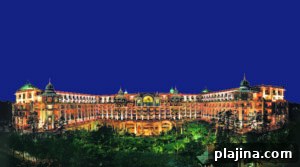
PHOTO: © THE LEELA PALACE BENGALURU
Notable daytime attractions include Vidhana Soudha, the Karnataka state legislative building constructed in 1956 in neo-Dravidian style, which forms part of the administrative complex north of Cubbon Park. Many visitors photograph the impressive façade; guided tours are available by prior arrangement. Bengaluru Palace, the former residence of the Maharaja of Mysore, offers audio guides and occasional concert events. Tipu Sultan’s Summer Palace, dating to 1791 near the historic Bangalore Fort, commemorates the ruler known as the Tiger of Mysore.
LODGING
THE LEELA PALACE BENGALURU
A world-class hotel offering regal luxury. Though originally situated near the old airport and less convenient for the new terminal, its opulent experience draws many travelers.
23 HAL Airport Road, Kodihalli, Bengaluru
$$$$
SOUKYA
A renowned holistic healing resort popular with international guests, offering wellness treatments and a tranquil setting.
Soukya Road, Samethanahalli, Whitefield, Bengaluru
$$$
TAJ WEST END BENGALURU
A historic hotel set in lush gardens that preserves colonial-era charm and provides a peaceful downtown retreat.
41 Race Course Road, High Grounds, Bengaluru
$$$$
DINING
FARMLORE
Chef Johnson Ebenezer leads this farm-to-table restaurant, located in a village setting between the city and the airport.
Survey No. 67, Mohan, Raju Layout, Sathanur Village, Bengaluru
$$$
PHURR
Known for vibrant North Indian vegetarian dishes and lively decor.
40 22nd Cross Road, Jayanagar 3rd Block East, Bengaluru
$$$
SHRI SAGAR (CENTRAL TIFFIN ROOM)
A longstanding establishment serving classic South Indian vegetarian meals in a no-frills setting since 1920.
152 7th Cross Road, 3rd Main, Margosa Road, Bengaluru
$
INFO TO GO
Kempegowda International Airport is located about 22 miles north of downtown. Road transfers are affected by heavy traffic, though a road tunnel due for completion in 2027 is expected to cut journey times by roughly 30 percent. The Namma Metro extension will provide a direct rail option from 2027.
JUST THE FACTS
Time zone: GMT+5 hours, 30 minutes
Phone code: Country code: 91 City code: 80
Currency: Indian rupee
Key industries: IT, biotechnology, aerospace, electronics, automobile manufacturing, floriculture
COMING AND GOING
All U.S. citizens require a valid passport and a visa to enter India. E-visas for tourists are available for single or multiple visits but permit entry only at designated airports. Visa rules change periodically, so check current requirements before travel.
OFFICIAL LANGUAGE
Kannada is the primary local language in Bengaluru, though migration has increased the use of Hindi. English is widely spoken and serves as the business lingua franca.