
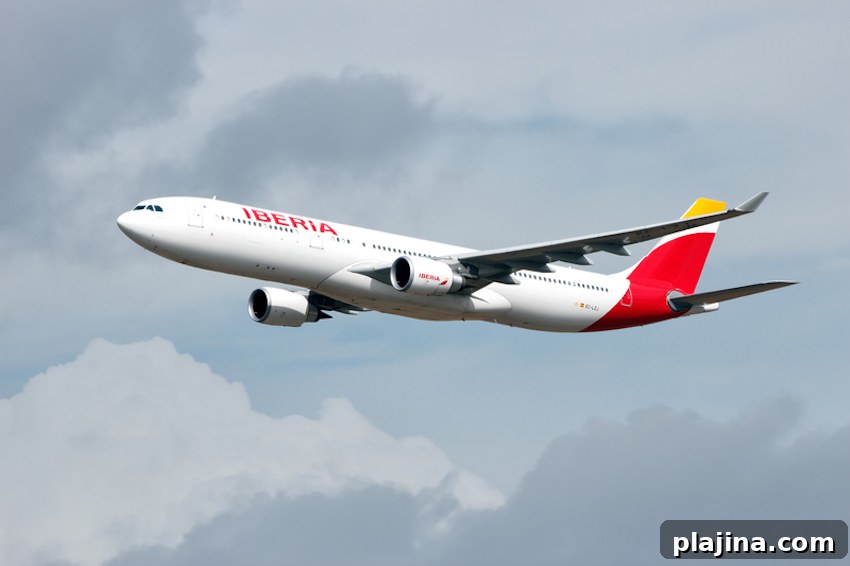
Iberia is testing a new virtual reality headset as part of its in-flight entertainment offering over the next six months.
The headset will be available for rent on select flights between Madrid (MAD) and Vienna (VIE), and Madrid and Tel Aviv (TLV) for a fee of €6. Renting passengers can access a curated library of content including films, documentaries, city travelogues, games and immersive VR experiences such as guided Red Sea dives.
The devices are manufactured by Pico and the content is provided by Inflight VR. Iberia will evaluate passenger feedback and usage during the trial period and, if the initiative proves popular, plans to expand headset availability to additional routes.
Nikolas Jaeger, founder and managing director of Inflight VR Iberia, said the airline sees strong potential in virtual reality to enhance the passenger experience. He explained that VR moves beyond passive viewing: travelers can virtually stroll through the cities they will visit or use relaxing immersive content to unwind before arrival.
Ignacio Toval, Iberia’s director of digital transformation, noted that the collaboration began through Hangar 51, IAG’s startup accelerator. Since 2017, the airline and Inflight VR have worked together to develop a practical onboard VR solution that introduces a fresh entertainment option for customers.
The trial focuses on delivering an intuitive, hygienic and easy-to-manage VR rental process compatible with existing aircraft operations. Headsets are intended to complement, not replace, the airline’s established entertainment services, allowing passengers to choose between traditional seatback screens or a more immersive experience.
During the evaluation phase, Iberia will monitor usage patterns, customer satisfaction and operational factors such as cleaning procedures, storage and distribution logistics. The airline will use these insights to refine content selection, pricing and service rollout plans before making any wider commitments.
Introducing VR on board aligns with broader trends in aviation toward personalized and differentiated passenger experiences. For travelers, the headset offers a compact way to access unique visual content that can both entertain and inform about destinations, while giving the airline a testing ground for next-generation in-flight entertainment technologies.
If the pilot is successful, future deployments could include additional routes and updated content libraries tailored to specific markets and passenger preferences, keeping the overall in-flight offering modern and engaging.