
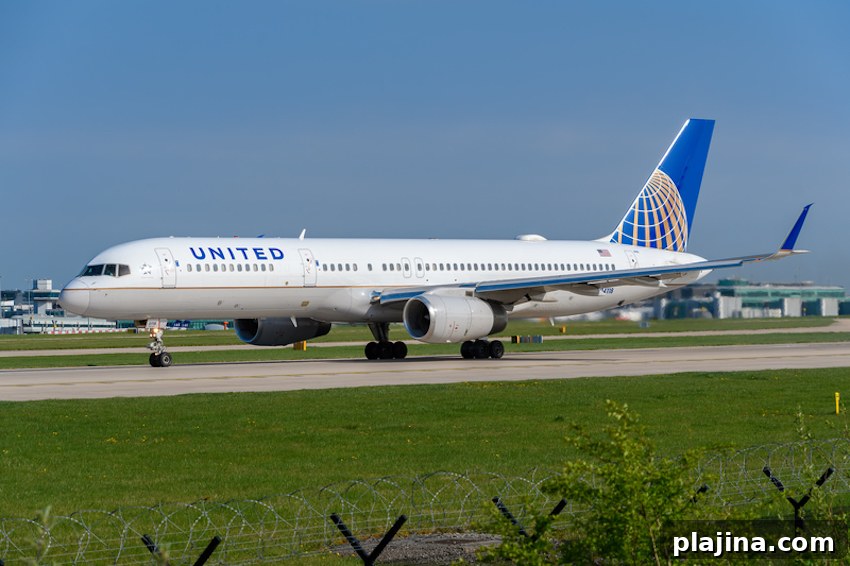
Airlines that aim to improve on-time performance sometimes leave late-arriving passengers behind. New scheduling technology at United Airlines is helping reduce that problem.
According to Fortune, United is testing a program that changes how departure times are managed. Airlines traditionally target a fixed departure time known as D-Zero. United’s tool, called “Dynamic D-Zero,” monitors late-arriving passengers and crew—such as travelers or employees arriving on connecting flights—and evaluates whether the flight can make up lost time in the air. If the software finds that the aircraft can regain minutes during flight without disrupting the schedule, the system recommends holding for those delayed passengers.
The trial is underway at Denver International Airport. United reports that roughly one in four of its flights already arrives at least 10 minutes early, creating opportunities to board sooner and turn aircraft around faster. By selectively holding departures when the expected delay can be recovered en route, the airline can reduce the number of passengers who are left behind while maintaining overall schedule integrity.
United President Scott Kirby says the system has prevented thousands of customers from missing connections even while it remains in the testing phase. A company spokeswoman, Erin Benson, noted the initiative has had a minimal impact on overall performance because flights are still expected to arrive on time despite occasional short holds.
United plans to expand Dynamic D-Zero to additional large airports later this year, with the long-term goal of applying the system across its network. The airline expects broader implementation will help balance punctuality with passenger experience by reducing unnecessary gate departures that strand connecting travelers.