
Comparing his decision to start his own company and launch Empirical to “walking the plank,” CEO and co-founder Lars Williams understood the risks and uncertainties of founding a new brand, yet he pressed on. His persistence and creative approach paid off: Empirical has established a new standard—and carved out a new category—in flavored drinks. The company plans to expand to the United States with a production facility in Brooklyn, New York.
A native New Yorker, Williams did not found Empirical on a whim. He spent many years working in the food world, most notably in research and development at Noma in Denmark, the globally celebrated restaurant led by Chef René Redzepi. While he cherished the creative work there, Williams wanted to build a business focused specifically on flavor and the sense memories that flavors can evoke in a drink. For him, moving from crafting food experiences to designing drinks felt natural: “Switching between a Mac and an IBM computer—there are hardware differences, but fundamentally it’s the same process. It’s about how we democratize a lot of the hard work we do in kitchens.”

© Empirical
Williams and cofounder Mark Emil took time to define Empirical’s direction. Early on, when the company operated out of Copenhagen, they developed inventive spirits. Over time, however, the team shifted from producing spirits to focusing on creating experiences through flavor. “We started with spirits to make experiences shareable. We leaned into the idea of getting more complex and having a full narrative of flavor,” Williams says. That evolution turned Empirical into a flavor company rather than a traditional spirits brand.
Williams has tapped into the universal sensation of tasting something that immediately transports you back to a specific moment from childhood or youth. One recent project, Symphony 6, drew inspiration from the perfume industry. Intrigued by the blurred lines between aromas, flavors and scent, Williams aimed to blend those elements—bringing the sensorial language of perfume into a beverage and creating a fluid dialogue between what we drink and what we smell.
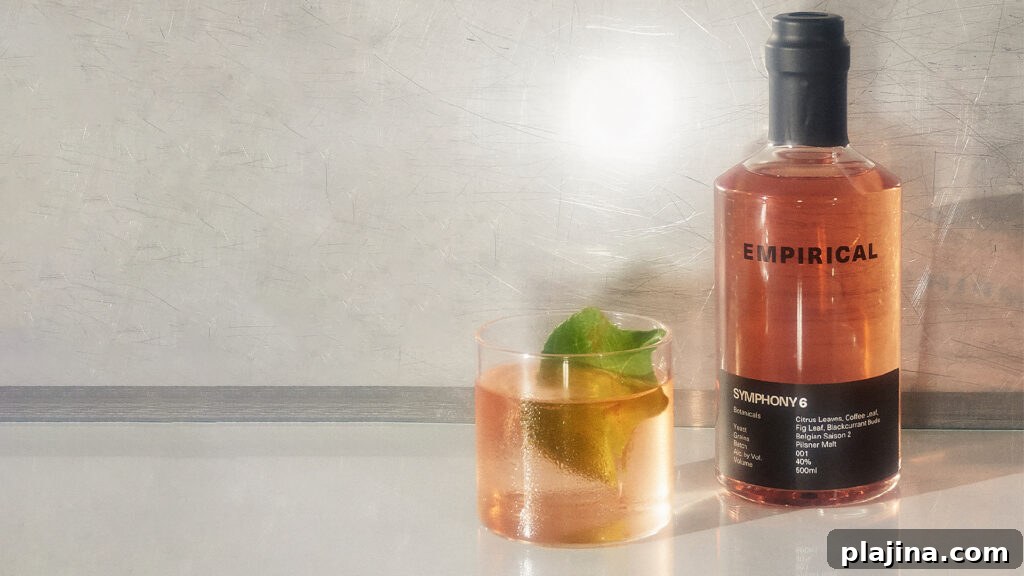
Symphony 6 © Empirical
About Symphony 6, Williams explains: “We used some perfume ingredients and I experimented to build a sense memory that didn’t previously exist. I wanted to create a lost narrative—a memory like a perfect evening by the water, a teen crush, those crystallized moments. It’s about building vignettes that nudge people to remember similar moments in their lives.”
Symphony 6 pairs unexpected and nuanced ingredients: citrus and coffee leaves form a bright base, while vetiver, fig leaves and blackcurrant buds—elements often used in perfume—lend depth and an aromatic, slightly earthy finish.
Another creation drew directly from a personal memory: the scent of a Danish forest in spring. After seeing his sister and nephew for the first time since the pandemic, Williams walked with them through Copenhagen woods and wished he could capture that moment and send it to her. That impulse—“that’s what we should be doing”—became the brief. To recreate the forest floor, Empirical used moss and Douglas fir needles to evoke damp green moss and evergreen needles. Released as a limited, small-batch flavor, the product sold out quickly.

© Empirical
These carefully composed sense memories explain why Empirical often sells out within minutes of a release. To meet demand and scale production, Williams plans to open the company’s first U.S. facility in Brooklyn this summer. “We have very enthusiastic customers, but we want to share these experiences with more people. The Brooklyn facility will focus on the weird and experimental parts—like a playground for us,” he says.
Empirical’s flavors rarely fit neatly into existing categories. One notable example is Anne Bonny, named after the famed pirate. It’s an unusual blend of oysters and green gooseberries. The idea of oysters in a drink might sound surprising, but Williams explains the process: “We fractioned the oyster into its component parts. From hundreds of oyster fractions, we selected sweet notes, brininess, a subtle metallic edge and a shell-like character. Layering those elements created the oyster flavor I imagined—sweet, oceanic, with a precise touch of brine and minerality.”
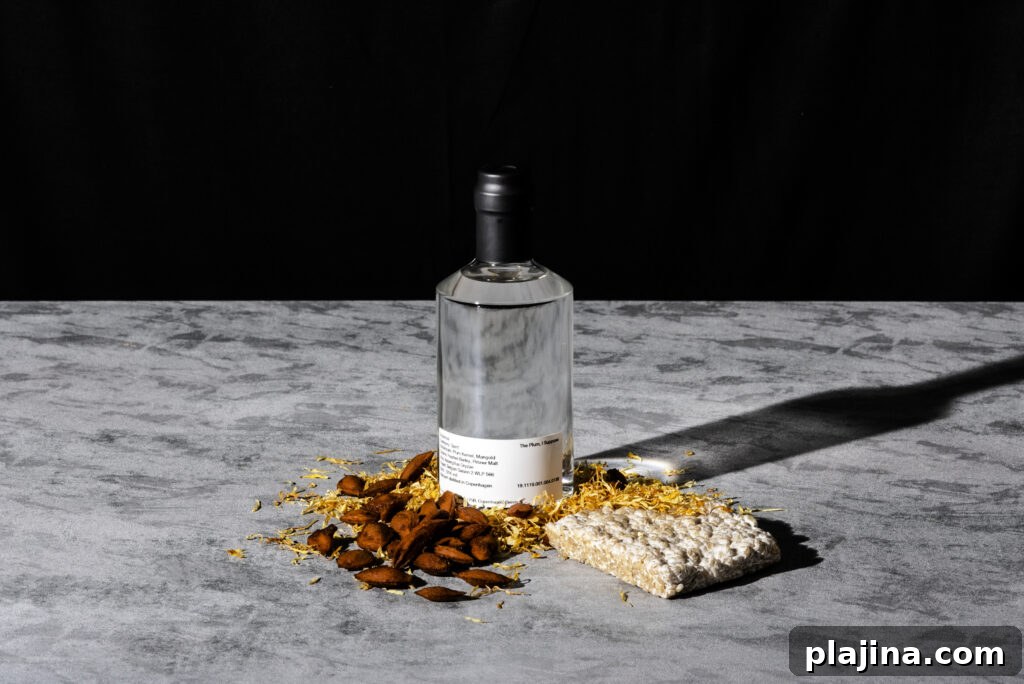
The Plum, I Suppose © Empirical
When Anne Bonny launched online, customers embraced it. Williams reflects on the experiment with a laugh: “Sometimes I’m in a bubble thinking, ‘Of course we should make a spirit with oyster and green gooseberry.’ But when it clicks, it really resonates.”
Williams’ background has shaped a company culture that accepts risk and even failure as part of the creative process. He encourages his team to push boundaries and pursue the strange experiments, because those failures often lead to the moments when everything comes together. “We want to have lots of terrible failures to reach those beautiful moments where something truly clicks,” he says.
Empirical’s success comes from these creative breakthroughs. With the Brooklyn facility opening this June, more of the brand’s distinctive flavors will be produced at scale—bringing evocative, memory-driven drinks to a wider audience and continuing to explore the intersection of flavor, scent and recollection.