
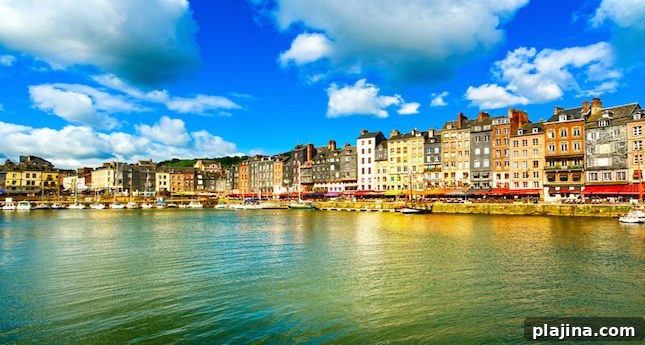
From March 18 to July 25, the Jacquemart-André Museum presents Open-Air-Studio: Impressionists in Normandy, an exhibition showcasing more than 50 important works drawn from private collections and distinguished American and European museums. The show highlights Normandy’s central role in the rise of plein-air painting and examines how this region’s light and landscapes inspired a generation of artists who shifted landscape painting toward modern Impressionism.
Normandy became a favored destination for outdoor painting in the 19th century. British landscape painters such as J.M.W. Turner, John Sell Cotman and Richard Parkes Bonington helped shape a new vision of landscape art that influenced Continental artists. French painters were quick to adopt the plein-air approach, capturing fleeting effects of light and atmosphere directly from nature.
The exhibition traces these developments and presents early subjects that attracted Impressionists. Haras-du-Pin, for example, provided the setting for Édouard Manet and Edgar Degas to paint horse racing scenes; Degas’s early equestrian works helped open a new thematic avenue for the period. Leading figures such as Claude Monet, Pierre-Auguste Renoir, Camille Pissarro, Alfred Sisley, Eugène Boudin and Paul Gauguin are represented, illustrating how Normandy’s coastal vistas, riverbanks and rural interiors became recurring motifs in their work.
Beyond individual masterpieces, the show emphasizes the artistic exchange between French and British landscapists. Visitors can see how techniques, subject choices and approaches to light traveled across the Channel, informing both traditions. The distinctive northern light of Normandy—its clarity, changing tones and interplay with weather—emerges as a decisive factor in the Impressionists’ evolving palette and compositional choices.
Organized to be accessible and engaging, the exhibition assembles paintings that reveal different aspects of outdoor practice: studies made directly from nature, finished canvases capturing transient conditions, and works that document leisure and rural life in the region. Together, these pieces offer a cohesive narrative about the development of plein-air painting and Normandy’s contribution to late 19th-century art.
The Jacquemart-André Museum is open daily from 10 a.m. to 6 p.m., providing ample opportunity for visitors to explore the exhibition and the museum’s broader collection. Whether you are an art historian, a student of Impressionism, or a casual visitor, the show offers a rich perspective on how place, light and cross-cultural dialogue shaped one of modern art’s defining movements.