
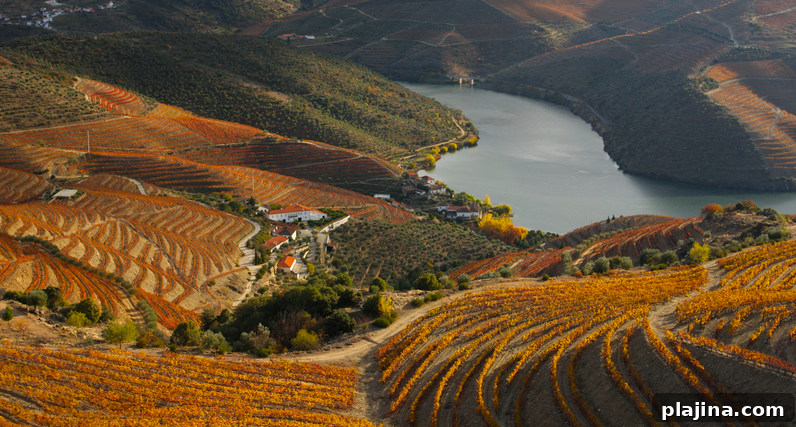
When conflict with France cut off familiar French wines for English drinkers in the early 18th century, the Methuen Treaty between Portugal and England played a pivotal role in popularizing Port in Britain. The agreement lowered duties on Portuguese wine, allowing merchants to import the fortified wines of the Douro Valley affordably. They discovered that these rich, fortified wines traveled well and suited English tastes as a dessert wine. As wine writer Karen MacNeil observed, “If Portugal is the mother of Port, Britain is certainly its father.”
Rising demand for Port across England and the rest of Europe led to the creation of the Douro Wine Company in 1756. Its purpose was to protect quality and to formalize the boundaries of the Douro wine region, effectively establishing the Douro as the world’s first government-recognized regional appellation. While fortified wines made in the style of Port can be produced elsewhere, only wine from the Douro Valley may legally bear the names “Porto” or “Oporto.”
The history of Port illustrates how trade, politics, and taste combined to shape the wine market. When English consumers lost access to French wines, they embraced alternatives that fit their preferences and drinking habits. Fortified Portuguese wines gained favor not only because of taste but also because fortification helped preserve quality during long sea voyages. Merchants, tavern owners, and club members helped establish Port as a fixture of British social life, and its new popularity drove producers and authorities in Portugal to protect the drink’s reputation and origin.
This protection of origin remains important today. Regional appellations convey more than marketing—they reflect specific climate, soil, and winemaking traditions that give a wine its character. The Douro Valley’s steep terraces and hot, dry climate contribute to the concentrated fruit and structure found in true Port. Regulations defining the region and production methods help ensure that bottles labeled “Port” meet long-standing expectations for style and quality.
Over the centuries, Port evolved into a diverse category with styles ranging from youthful, fruity Ruby Ports to mature, oxidative Tawny Ports and the complex, age-worthy Vintage Ports. Despite these differences, the common thread is the historical link between Portugal’s vineyards and the British market. That relationship shaped the commercial channels, regulatory frameworks, and social rituals around Port, cementing its place in wine history.
Today, Port remains both a symbol of regional heritage and a testament to the ways economic and political ties can influence taste. By safeguarding the name and origin of Port, producers and regulators preserve a connection to centuries of viticulture in the Douro Valley, while offering wine lovers a product with a clearly defined identity tied to its landscape and tradition.