
Black History Month is an ideal moment to dive into the stories and contributions of Black Americans, but exploring this history is meaningful year-round. For trips that are both educational and celebratory, consider these destinations that highlight the civil rights movement, cultural achievement and Black heritage.
In Greensboro, North Carolina, visit the International Civil Rights Center & Museum located in the former F.W. Woolworth building, where four college students ignited the sit-in movement by sitting at a segregated lunch counter. The museum features photographs, video reenactments, interactive displays and historical artifacts. For lodging with history, stay at the Magnolia House, a preserved Green Book motel that once hosted performers such as James Brown and Ray Charles. About 90 minutes away, Charlotte offers the Levine Museum of the New South, which presents a comprehensive look at the post–Civil War South, and the Harvey B. Gantt Center for African-American Arts + Culture, a contemporary hub for visual and performing arts.
The Richmond Slave Trail in Virginia is a self-guided route with 17 markers that trace the city’s history with slavery. Nearby Jackson Ward, once a thriving center of Black business and entertainment from the 1920s through the 1940s, is home to the Maggie L. Walker National Historic Site, honoring the first African-American woman to charter a bank and serve as its president. The area also includes the Black History Museum and Cultural Center of Virginia, the Bill “Bojangles” Robinson Monument, the Mending Walls murals and a growing scene of Black-owned restaurants.
Louisville, Kentucky, preserves the atmosphere of the 1950s and ’60s along its Downtown Civil Rights Trail. The Roots 101 African American Museum presents an unvarnished account of the city’s history. At the Kentucky Derby Museum, the Black Heritage in Racing Tour celebrates the Black jockeys who dominated early horse racing before being excluded by Jim Crow. The Muhammad Ali Center and a self-guided Footsteps of Greatness tour—covering his childhood home and final resting place—are essential stops. MELANnaire, a weekly pop-up turned permanent market, showcases Black artisans and makers from the region.
Montgomery, Alabama, was a focal point of the Civil Rights Movement. Key sites include the Rosa Parks Museum, the Freedom Rides Museum, Dexter Avenue King Memorial Baptist Church where Dr. Martin Luther King Jr. preached, and the National Memorial for Peace and Justice along with the Legacy Museum, which confronts the history of slavery, lynching and systemic racism. These institutions provide powerful, often sobering context for the struggle for civil rights.
For a broader itinerary, follow portions of the U.S. Civil Rights Trail, which links more than 120 landmarks across 14 Southern states. The trail provides pre-planned routes and resources to help you customize visits to sites that shaped the movement and American history.
© OLIVIER LE QUEINEC | DREAMSTIME.COM
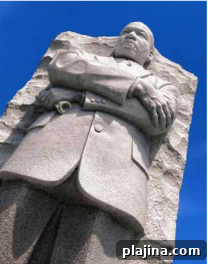
In Washington, D.C., the Smithsonian National Museum of African American History and Culture houses thousands of artifacts that document the breadth of Black life in America. The National Mall is a historic gathering place—the site of the 1963 March on Washington and Martin Luther King Jr.’s “I Have a Dream” speech at the Lincoln Memorial—and remains central to civil rights memory. Explore the Shaw neighborhood, once home to Duke Ellington and long called “The Heart of Chocolate City,” and be sure to visit the Martin Luther King Jr. Memorial.
Memphis, Tennessee, offers a range of experiences that trace African American history and culture. A Tour of Possibilities provides a guided 2.5-hour drive-through tour with audio commentary to sites such as Slave Haven, where the hidden cellar and passages sheltered fugitive enslaved people; the National Civil Rights Museum at the Lorraine Motel, the site of Dr. King’s assassination; Beale Street; Soulsville neighborhoods; the Stax Museum of American Soul Music; and I Am a Man Plaza.
St. Louis, Missouri, connects visitors to musical and scientific legacies. The Scott Joplin House and the National Blues Museum pay tribute to key musical traditions. At the Missouri Botanical Garden, the George Washington Carver Garden honors the scientist’s impact on agriculture and education. The Missouri History Museum offers a walking tour of “The Ville,” a neighborhood notable for its cultural achievements, including a memorial to the Tuskegee Airmen.
Georgia’s history is vividly represented in Atlanta. The National Center for Civil and Human Rights features immersive exhibits and programs that explore civil rights and human rights issues. Nearby, the Martin Luther King Jr. National Historical Park includes the home where King grew up, the original Ebenezer Baptist Church, and The Martin Luther King Jr. Center for Nonviolent Social Change.
Chicago played a major role in the Great Migration and the rise of Black cultural and political life in the North. Start at the DuSable Museum of African American History, the nation’s first independent museum devoted to African and African American history, which preserves more than 15,000 artifacts. In Bronzeville, the Bronzeville Visitor Information Center can point you to sites tied to icons such as Nat King Cole and Louis Armstrong, the Monument to the Great Migration, the Victory Monument honoring African-American service in World War I, and the Bronzeville Walk of Fame, which celebrates the neighborhood’s notable residents and contributions.