
Ninety years after Atlanta Mayor Walter A. Sims signed a five-year lease on an abandoned auto racetrack to establish an airfield, Hartsfield-Jackson Atlanta International Airport — the world’s busiest airport by passenger traffic — is preparing for a $430 million modernization program.
Hartsfield-Jackson already ranks among the most advanced aviation hubs in the world. Its current terminal complex, a 2.5‑million‑square‑foot facility opened in 1980, was designed to handle up to 55 million passengers annually. Yet Airports Council International reported that the airport served 97,288,418 passengers in 2014, making a significant upgrade both necessary and timely despite interim improvements made over the years.
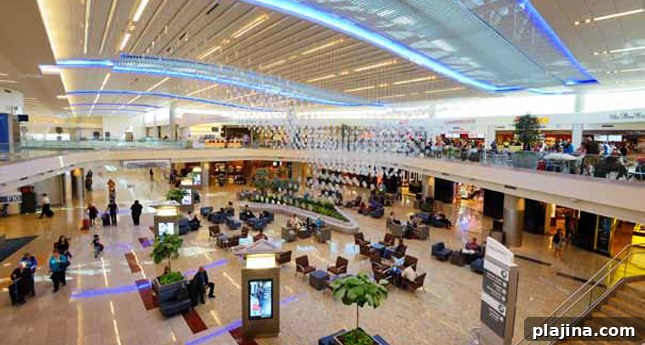
Plans are now moving forward: bids are being accepted for upgrades to the domestic passenger terminal and concourses. In June, the Atlanta Journal-Constitution described the initiative as an effort to give the domestic side a fresh, modern look, with light-filled concourses similar to the Maynard H. Jackson Jr. International Terminal that opened in 2012.
The City of Atlanta released a 325-page request for proposals in June, with submissions due by Aug. 12. The scope outlined includes renovating the domestic terminal and the underground tunnels linking midfield concourses A through D, installing curbside awnings at the departure level, enhancing the airside atrium, and replacing many of the airport’s older jetways.
Once finalized, the modernization effort is expected to take about three years to complete. The majority of the $430 million budget will be covered through commercial financing, with passenger facility charges — estimated at roughly $4.50 per passenger per flight — contributing the remainder.
A critical objective for the project is to carry out construction while keeping the airport fully operational. Maintaining regular service and passenger flow during upgrades will be a major logistical challenge, but it is central to the project’s planning and execution.
When finished, the modernization should improve the traveler experience on the domestic side by providing more natural light, updated amenities, improved wayfinding, and more reliable boarding infrastructure. Replacing aging jetways and refreshing concourses will also support operational efficiency and help the airport meet current and future passenger demands while preserving its role as a primary global aviation hub.
As Atlanta moves forward with this significant investment, the emphasis remains on balancing ambitious capital improvements with uninterrupted daily operations, ensuring passengers continue to move through what is already one of the world’s busiest and most critical airport systems.