
TO THE UNTRAINED EYE, Hanoi seems to move at a gentler pace than many neighboring Asian capitals. Mornings often begin with locals practicing tai chi beside the city’s tranquil lakes, while cyclo drivers and motorbikes share the streets. Vendors line the sidewalks, preparing each dish from scratch, lending the city a timeless, authentic atmosphere. Yet beneath this calm exterior Hanoi is one of the fastest-growing cities in Asia — and change is accelerating.
In 2020 Hanoi opened the Hanoi Motor Sport Circuit to host the Vietnam Grand Prix, marking the country’s first Formula 1 race and the first new addition to the F1 calendar since 2017. Formula 1 represents the pinnacle of single-seat auto racing, with cars exceeding 200 mph, and the Vietnamese Grand Prix joined a prestigious international roster alongside Monaco, Singapore and Azerbaijan. The event brought global attention and helped showcase Hanoi as a dynamic, modern capital.
Hanoi has experienced sustained economic expansion. The city’s Department of Planning and Investment reported nearly 7 percent growth in the first quarter of 2019, reflecting decades of upward momentum that accelerated after Vietnam normalized relations with the United States and joined ASEAN in 1996. While Vietnam remains a one-party state, government policies emphasizing international engagement and market reforms reduced the number of state-owned enterprises and opened the economy to private and foreign investment.
In recent years many entrepreneurs and international firms relocated to Hanoi to take advantage of the vibrant economy and to diversify operations beyond China. Vietnamese is the national language, but English is widely spoken in business circles, easing communication for foreign investors. Liberal economic reforms over the past two decades encouraged foreign capital and helped drive down poverty in a metropolitan area that now exceeds 8 million residents.
Major employers anchor Hanoi’s economy. Samsung employs close to 100,000 people, and firms like LG, Apple (Foxconn), Mobase, Piaggio and Honda operate significant projects in the region. The city also benefits from a skilled tech talent pool shaped by strong STEM education; Google engineer Neil Fraser highlighted Vietnamese students’ competitiveness on technical interviews. Garment brands such as Nike, Adidas and The North Face rely on local manufacturing, while seafood and agriculture remain important exports — Vietnam set a 2019 target of $10.5 billion in seafood exports and was on track to meet it.
Hanoi’s infrastructure is evolving to support growth. A new airport terminal and highway opened in January 2016, improving international connectivity. The city completed a long-awaited metro project and introduced an initial air-train system in early 2019, with further expansion planned through 2021. These improvements ease travel and support expanding business activity.
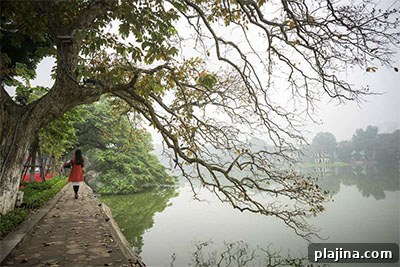
Tree in autumn at Hoàn Kiếm Lake © VINH DAO – DREAMSTIME.COM
The arrival of Formula 1 accelerated preparations and infrastructure upgrades, demonstrating how high-profile events can catalyze development. Yet despite rapid modernization, Hanoi retains its historic character and a healthy work-life balance. Early-morning tai chi at Hoàn Kiếm Lake continues unchanged, a reminder that tradition and progress coexist as the city grows into a global hub.
CHECKING IN WITH ANTHONY PETER SLEWKA-ARMFELT
Director of Sales and Marketing, Sofitel Legend Metropole Hanoi, and Director of Business Development, Accor Vietnam, Cambodia and Laos
What were your initial thoughts about moving to Hanoi?
I was assigned to Hanoi by the company. On early visits the city felt chaotic and often overcast, so I wasn’t immediately enthusiastic. I quickly grew to love it. The close-knit expatriate community, the warmth of the Vietnamese people, the charm of narrow streets and old architecture, and the surprisingly rhythmic flow of traffic all drew me in.
Is WiFi access ever an issue?
WiFi is widely available and generally reliable across the city. I am not aware of current social media restrictions affecting visitors.
What time of day would you arrange a business meeting with someone local?
Power breakfasts are uncommon here. Business lunches are popular, and evenings tend to be for entertaining. For the best results, plan meetings for late morning in a meeting room and follow with lunch.
Where are some of your favorite off-site restaurants?
I often choose non-Vietnamese options, but for varied Vietnamese menus try Cao Go with views of Hoàn Kiếm Lake, and Ưu Đàm Chay for vegetarian fare. Madam Hien (by former Metropole chef Didier Corlou) and Home Hanoi Restaurant on Châu Long are reliable. For eclectic Western-style Japanese fare try PéPé La Poule in Xuan Dieu. Other favorites include La Badiane, Cousins on Ngoc Van, Sun Katz and Chops for burgers, Da Paulo Dragoncello and Cucini for Italian, and Maison De Tet Décor for healthy salads and smoothies close to InterContinental Westlake.
Any surprising finds in the city?
The golf scene around Hanoi is a pleasant surprise, with excellent courses nearby — more options than in many central Vietnamese resort areas.
Things to Do in Hanoi
Hanoi’s streets are alive with the aroma and activity of street food vendors, often regarded among the world’s best. Small, often family-run stalls prepare classics like phở, bún chả and bánh cuốn on tiny stoves, following recipes passed down through generations. Phở Gia Truyền Bát Đàn is one famed example: its team prepares broth in the early hours and serves until they sell out, usually by mid-morning.
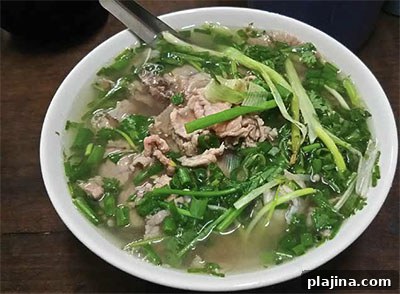
Phở from Phở Gia Truyền Bát Đàn © NPHỞ GIA TRUYỀN BÁT ĐÀN
Street food tours offer a convenient way to sample Hanoi’s flavors without getting lost. Many tours use rickshaws to pass Hoàn Kiếm Lake and its tai chi practitioners before exploring the Old Quarter, sampling cafés like Café Duy Trí and browsing Dong Xuan Market. Some operators include cultural stops such as the Thang Long Water Puppet Theatre or Tran Quoc Pagoda.
Quality street cooking has inspired an elevated restaurant scene where traditional dishes are presented in refined settings with attention to food safety for international diners. Home Hanoi Restaurant, housed in a former French residence in Trúc Bạch, serves authentic dishes including chả cá (turmeric fish with noodles) in a relaxed dining room atmosphere.
The Sofitel Legend Metropole Hanoi is among the city’s most iconic properties. Opened in 1901, the hotel has hosted notable guests and witnessed historic moments. Its Le Beaulieu restaurant represents Hanoi’s French culinary legacy, and the property’s preserved bomb shelter and wartime stories add to the hotel’s cultural significance.
Hanoi Info to Go
Noi Bai International Airport sits about 28 miles north of the city center and is the largest airport in northern Vietnam. A metered taxi into central Hanoi typically takes about 30 minutes, depending on traffic, and usually costs under $14.
Hanoi: Just the Facts
Time zone: GMT +7
Phone code: Country code: 84, City code: 4
Currency: Vietnamese dong
Key industries: Garment and textile, agricultural products and food processing, mechanical manufacturing, electronics and telecommunications, information technology
COMING AND GOING
U.S. citizens must present a passport valid for at least six months beyond arrival and a tourist visa. An e-Visa for single entry (30 days) can be applied for online; it typically costs $25 and takes about three working days to process.
OFFICIAL LANGUAGE
Vietnamese
Where to Stay in Hanoi
HANOI LA SIESTA CENTRAL HOTEL — An elegant Old Quarter hotel with 27 rooms and a rooftop bar overlooking Hoàn Kiếm Lake. 1 Cầu Gỗ, Hàng Bạc, Hoàn Kiếm. $$$
LOTTE HOTEL HANOI — Positioned between the New Business District and the Old Quarter, this 318-room tower occupies the upper floors of the 65-story Lotte Center. 54 Liễu Giai, Cống Vị, Ba Đình. $$
SOFITEL LEGEND METROPOLE HANOI HOTEL — A landmark property with 364 rooms across the historic Metropole Wing and the newer Opera Wing. 15 Phố Ngô Quyền, Tràng Tiền, Hoàn Kiếm. $$$
Restaurants in Hanoi
LE BEAULIEU — An elegant French brasserie at the Sofitel Legend Metropole Hanoi, renowned for its Sunday brunch. 15 Lương Ngọc Quyến, French Quarter, Hoàn Kiếm. $$$$
CHẢ CÁ LÃ VỌNG — A century-old restaurant famous for chả cá lã vọng, turmeric fish served with dill and noodles in a hands-on style. 14 Chả Cá St., Hàng Bỗ, Hoàn Kiếm and 107 Nguyen Truong To St. $
HOME HANOI RESTAURANT — A cozy spot offering traditional home-style Vietnamese dishes. 34 Châu Long, Trúc Bạch, Ba Đình. $