
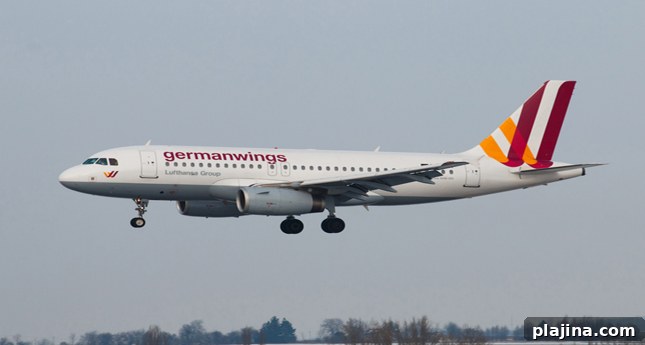
The co-pilot of Germanwings Flight 9525 deliberately crashed the aircraft into the French Alps, officials announced at a Thursday morning press conference.
Marseille prosecutor Brice Robin said the co-pilot, 28-year-old German national Andreas Lubitz, “wanted to destroy the aircraft.” According to authorities, Lubitz prevented the captain from re-entering the cockpit after a bathroom break and initiated the descent that led to the crash, killing all 150 people on board the flight from Barcelona, Spain, to Düsseldorf, Germany.
Germanwings reported the aircraft reached a cruising altitude of 38,000 feet and then began a steady descent lasting roughly eight minutes before contact was lost with French radar at about 6,000 feet.
“We at Lufthansa are speechless that this aircraft has been deliberately crashed by the co-pilot,” said Carsten Spohr, CEO of Lufthansa, the parent company of Germanwings.
Investigators are seeking to understand the motive behind the co-pilot’s actions. Spohr said Lufthansa currently has no indications to explain why Lubitz would deliberately crash the plane.
Data recovered from the cockpit voice recorder indicates routine conversation between the pilot and the co-pilot until the pilot left the cockpit for a bathroom break and asked Lubitz to take control. Robin stated that Lubitz then “through deliberate abstention, refused to open the cabin door” and set the aircraft on a descent.
Authorities stressed that the event is not being labeled a “terrorist attack” or simply a “suicide.” “If a person kills himself and also 149 other people, another word should be used — not suicide,” Spohr remarked.
Robin confirmed Lubitz was not on any terrorism watch list.
Lubitz joined Germanwings in September 2013 and had accumulated approximately 630 hours of flight time. He trained at the Lufthansa flight center in Bremen, Germany, and had around 10 hours’ experience on the specific aircraft type involved in the accident. Officials say he held the necessary certifications and qualifications to pilot the aircraft alone.
Spohr noted the pilot had passed required medical examinations; however, Lufthansa does not conduct routine psychological screening. Analysis of the cockpit audio indicates Lubitz’s breathing was steady during the descent and showed no immediate signs of a sudden medical emergency.
Investigators continue to analyze voice recordings from one recovered black box while the search goes on for the second flight recorder in the ravine where the plane came down, roughly 65 miles from Nice.
An upcoming issue of eFlyer USA will include a report on mental health screening for airline pilots.