
Chances are you haven’t needed to consider quantum mechanics, alternative rock, your neighborhood and hidden treasure all at once—unless you live near a physics lab on a tropical island full of music fans, or you’ve tried geocaching.
The many-worlds interpretation, introduced in the 1950s by American physicist Hugh Everett III (father of Mark “E” Everett, frontman of the band Eels), proposes that multiple realities exist simultaneously. Ever since, physicists have debated and modeled the idea with complex equations. But you don’t need to wrestle with papers to experience another reality—go outside.
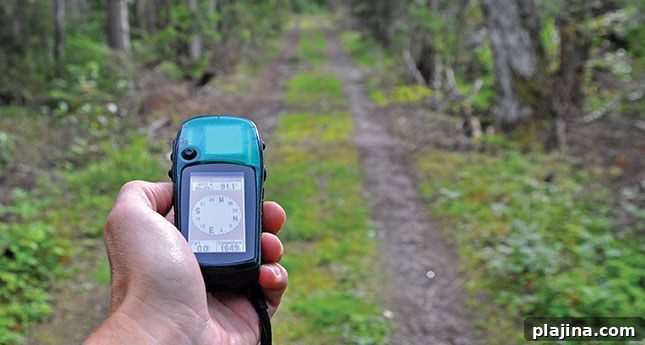
Another world is right here, discoverable with a GPS device (most smartphones have one) and a free account on the geocaching website. In moments you’ll join a global community and begin to see your surroundings in a new way.
Geocaching truly began on May 2, 2000, when the U.S. government relaxed restrictions on public GPS use. That change made it possible for someone to hide a container—a cache—and for others to find it using precise coordinates.
What started with a few local efforts near Portland, Oregon, quickly spread worldwide. Today there are well over a million caches placed across the globe, so chances are there’s at least one within a short walk of you.
Geocachers form a casual, friendly fellowship. People unfamiliar with the hobby are called “muggles,” and part of the game is to avoid drawing their attention while searching. The pastime revolves around secrecy, puzzles and small treasures.
I didn’t notice this parallel reality until my brother and nephew brought me into the hobby a few months ago. Our first cache required decoding a clue. The website instructed us to convert an inscription on a headstone into a string of numbers—those numbers became the cache coordinates.
We followed the clues and found the cache about a mile away, tucked into the roots of a tree I had passed many times. Inside the container was a logbook and pencil for sign-ins, plus a small assortment of swap items. My nephew traded a key ring for a tiny plastic dinosaur and grinned with the thrill of discovery. We carefully resealed the cache and slipped away down the path without alerting a pair of dog-walking muggles.
The scale of this hidden world is visible on the geocaching website. Dots mark cache locations across a global map—mountains, cities and even parts of Antarctica are dotted with finds.
At its simplest, geocaching is an accessible outdoor activity for families and friends. Yet the hobby also scales up: some caches demand serious navigation and endurance in remote or rugged terrain, while others test your puzzle-solving skills.
For me, geocaching offers a tangible way to grasp Everett’s abstract idea. Once you start seeing the landscape through the eyes of someone who knows an invisible network of caches exists, you notice everyday people moving through the same space unaware of that parallel layer of activity.
There really is a parallel world, and you don’t need advanced physics or dense mathematics to encounter it. A smartphone, access to the geocaching site and a spirit of curiosity are all it takes to step into another reality hidden within the world you already know.