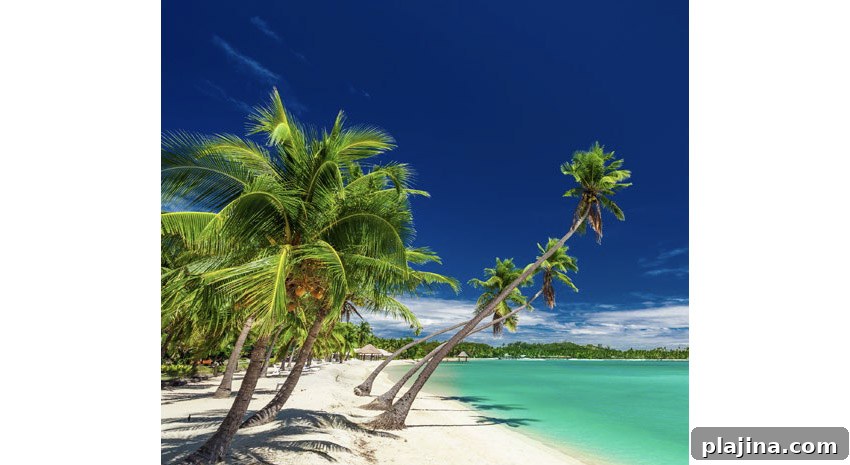
On final approach to Fiji’s Nadi International Airport, the clear blue-green waters, emerald hills and white-sand beaches look as if they belong in a movie such as Blue Lagoon or Castaway, both of which were filmed here. That iconic South Pacific panorama unfolds beneath your wingtip, promising the tropical escape many travelers imagine.
Bula — welcome! Switch your electronics to airplane mode and you can sink into a relaxed island rhythm. With 333 islands in the Fijian archipelago and roughly 100 inhabited, you’ll need to choose where to focus your visit: secluded cayes, lively resort islands, or culturally rich main islands like Viti Levu.
From the U.S., Fiji Airways provides direct flights from Los Angeles and San Francisco and also serves Honolulu, making travel from the mainland convenient. Direct connections are also available from Australia, New Zealand and Korea. Although cruise ships visit Fiji, their itineraries and timing make cruising to Nadi less practical for travelers who want to maximize time ashore—there’s too much to see and do on land to spend most of your trip at sea.
After customs and immigration in Nadi’s comfortable, air-conditioned terminal, several ground-transport options await. Rental cars are plentiful and reasonably priced. Taxis and private drivers are available, and many drivers double as day guides. Local walking guides can provide a more intimate experience on short explorations.
Booking day trips before arrival is a smart move. Popular excursions include swimming in the real Blue Lagoon and hikes to dramatic waterfalls like those on Kadavu. Rosie’s Holidays is one of the well-known tour operators, and most resorts maintain active tour desks and, in some cases, private islands for exclusive day use.
Fiji’s history is complex. Settled by the Lapita people around 1500 B.C., the islands experienced centuries of conflict with neighboring Tonga. European contact intensified after Captain James Cook sailed through the region in 1774, applying the name “Fijians.” Christian missionaries arrived in the early 19th century and had a lasting cultural impact. In the late 19th century, a devastating measles epidemic and subsequent political changes led to Fiji’s incorporation into the British Empire. The colonial period also brought indentured laborers from India to work sugar plantations. Fiji declared independence in 1970, and since 2000 the nation has navigated several coups before returning to democratic elections. Today the population is around 900,000.
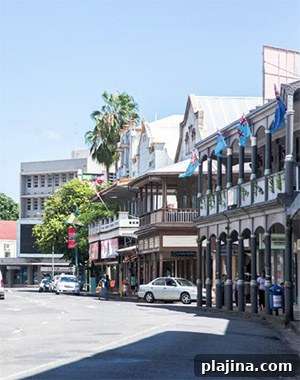
Suva © RAMORAN | DREAMSTIME.COM
Many tours and daytrips depart from Denarau Harbor on Viti Levu, close to Nadi, while Suva—about 100 miles across the island—serves as the commercial and cultural hub. Suva offers the island’s most vibrant live music scene, bars and nightlife, and it’s a good base for exploring urban markets and historical sites.
Independent travelers will find island-hopping easier in Fiji than in many Pacific destinations. Ground transport options include rental cars and taxis; inter-island travel is served by ferries, small aircraft and seaplanes, with private charters also available. For a scenic overland experience, consider the Coral Coast Railway, originally built for hauling sugar cane, which runs from Nadi toward Sigatoka and offers access to Natadola Beach—one of Viti Levu’s most impressive shorelines with dramatic dunes and the historic Tavuni Hill Fort.
About 20 miles south of Nadi is Lautoka and the Garden of the Sleeping Giant, a remarkable botanical collection at the base of the Sabeto Mountains. The garden showcases more than 150,000 orchids across roughly 50 acres and derives its name from the mountain silhouette that resembles a sleeping giant. The reception area provides pleasant views and a relaxing spot for a refreshment.
The Navua River, a short drive from Suva, is ideal for a leisurely day float that often includes lunch. Its calm freshwater stretches make for a cooling and accessible family outing. Suva’s nightlife is easygoing and social: evenings commonly kick off after rugby matches and continue across bars and clubs that welcome a broad mix of visitors. While Fiji is generally welcoming to LGBTQ travelers, nightlife venues are mainstream rather than niche gay-specific establishments.
Souvenir shopping is available at small stalls near major attractions and across tourist islands, but serious shoppers should head to Suva’s municipal market, which fills an entire city block with local goods. Exercise caution with unofficial “guides” offering shopping deals; stick with reputable recommendations to avoid being overcharged.
Diving and snorkeling are among Fiji’s main draws. The Blue Lagoon is legendary for its crystal-clear water and vibrant marine life; it’s an excellent half-day excursion if you want to swim in the iconic setting. Resorts frequently organize dives and snorkeling trips for guests of all skill levels.
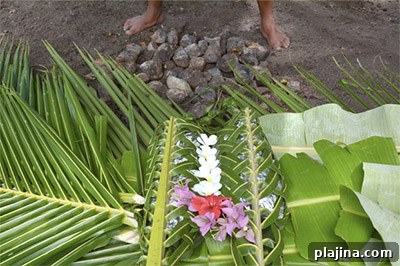
Fijian cooking food underground at a lovo © RAFAEL BEN ARI | DREAMSTIME.COM
For an authentic cultural experience, attend a lovo—a traditional feast where meats and root vegetables are marinated in coconut cream and spices, then slow-cooked in an underground oven. These communal meals often include live music and dance. Afterwards, you may be invited to a kava ceremony, where a mildly sedative drink made from the yaqona root is shared in a communal bowl. Kava sessions are especially common in the Yasawa Islands and are an important social ritual.
Throughout your stay, greet locals with a warm bula and a smile, and when it’s time to leave, say vinaka—thank you—along with a friendly wave. Fijian hospitality is genuine, and simple courtesies go a long way in making meaningful connections.
Fiji Info to Go
Most visitors from the U.S. travel to Fiji by air, with direct flights from Los Angeles and San Francisco on Fiji Airways and service from Honolulu. Flight time from California is about 10 hours. All international flights arrive at Nadi International Airport on Viti Levu, a key hub for onward travel to other islands by ferry, light aircraft or seaplane. Inter-island ferries, scheduled flights and private charters connect the archipelago, making it relatively straightforward to visit multiple islands during a single trip.
Where to Stay in Fiji
FIJI MARRIOTT RESORT MOMI BAY — Overwater-style bungalows and family-friendly amenities create a relaxed tropical setting on Viti Levu. Convenient for day trips and activities. Savusavu Road, Momi Bay, Nadi, Viti Levu $$$$
INTERCONTINENTAL FIJI GOLF RESORT & SPA — A full-service luxury resort featuring an 18-hole golf course, spa facilities and extensive gardens and pools. The property includes meeting facilities and a wedding pavilion. Maro Road, Natadola Bay, Viti Levu $$$$
KOKOMO PRIVATE ISLAND FIJI — A secluded private-island retreat with a house reef just off the beach. With only 21 guest accommodations, most featuring private pools, access is typically by private seaplane. Yakuve Island $$$
Restaurants in Fiji
DAIKOKU — An upscale casual Japanese restaurant offering more than sushi, with family-friendly service and two locations on Viti Levu. Northern Press and Queens roads, Martintar, Nadi; FNPF Place Dolphins Foodcourt, Victoria Parade, Suva $$$
NAVO — Fine dining with lagoon views, a focus on local seafood and an extensive wine list. Private cabanas may be available. InterContinental Fiji Golf Resort & Spa, Maro Road, Natadola Bay, Viti Levu $$$$
PORTS O’CALL — Elegantly styled like a classic ocean liner, this restaurant offers tableside service and a French-European menu in a refined setting. Sheraton Fiji Resort, Denarau Island South $$$$$