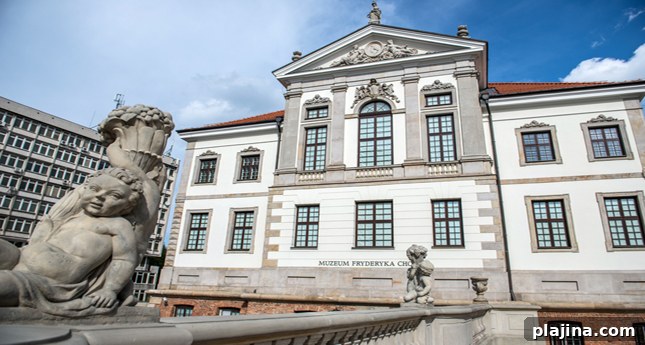
Anyone interested in classical music should visit The Chopin Museum in Warsaw, dedicated to the life and work of the great composer. Spread across four floors, the museum combines historical artifacts with modern interactive displays, allowing visitors to listen to Chopin’s finest works while exploring his letters, schoolbooks and even his death mask. The exhibition is arranged to give a clear sense of Chopin’s personal life, creative development and musical legacy, with thematic rooms that trace his childhood in Poland, his years in Paris and the lasting influence he left on piano repertoire.
The museum’s use of contemporary technology enhances the visitor experience without overshadowing the original objects. Touchscreen displays provide context for manuscripts and personal items, while high-quality audio stations let you hear different performances and interpretations of Chopin’s music. Recorded commentary and curated playlists help newcomers and avid fans alike understand the historical background and stylistic nuances of key works such as the nocturnes, mazurkas and polonaises.
Exhibits include original letters, concert programs, scores and portraits that illustrate Chopin’s relationships with family, friends and fellow artists. The museum also presents documents that shed light on his teaching methods, his health struggles and the social circles that shaped his career. Small-scale personal artifacts—such as writing implements, clothing fragments and household objects—bring a human dimension to the narrative, making the composer’s life accessible and engaging.
Visitors can follow a logical route through the floors, each focused on a different phase of Chopin’s life. The ground level often hosts temporary exhibitions and introductory material, while the upper floors dive deeper into musical analysis and documentary evidence. Curatorial text is concise and informative, guiding the visitor through chronological and thematic linkages without overwhelming detail.
The museum is suitable for a wide range of visitors: music students, historians, casual tourists and families. Educational programs and guided tours are available for groups, and there are opportunities for hands-on learning tailored to younger audiences. Special events such as recitals, lectures and anniversaries are held periodically, connecting the museum’s collections with live performance and scholarly discussion.
Accessibility and visitor amenities are taken into account: clear signage, seating in listening areas and thoughtfully designed exhibits help ensure a comfortable visit. The museum shop offers quality publications and recordings for those who wish to extend their exploration at home, while staff provide helpful information on ticketing and upcoming events.
Overall, The Chopin Museum offers a well-balanced blend of artifacts, scholarly interpretation and audio immersion, making it a rewarding destination for anyone who wants to learn more about Chopin’s music and legacy. Whether you come to hear a beloved nocturne played in a quiet listening booth or to study an original manuscript, the museum provides a rich, immersive encounter with one of Poland’s most celebrated composers.