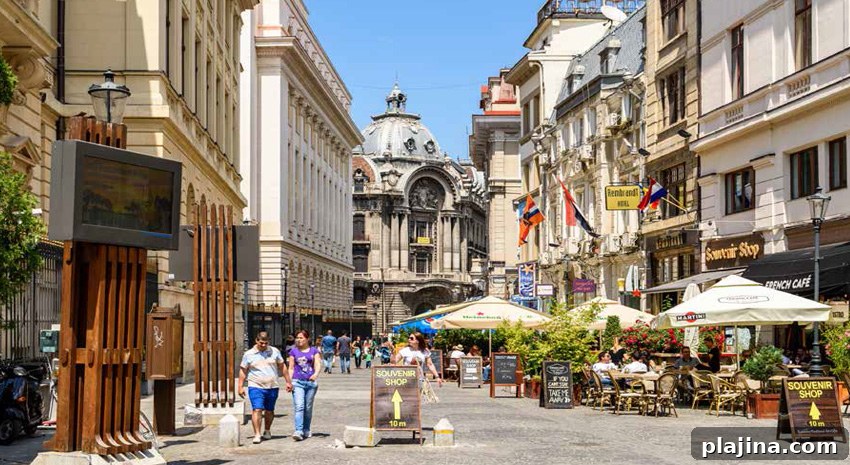
Pockets of Bucharest still show traces of difficult days under Communist rule and a tumultuous past marked by earthquakes and unrest. As Romania’s capital rebuilds and redefines itself, the city and its people move forward with resilience and pride. Once nicknamed “Little Paris,” Bucharest has re-emerged as the nation’s center for industry, finance and culture, honoring its pre-war heritage while embracing a modern renaissance.
Between office towers and conference centers, Piaţa Universităţii (University Square) offers a place to pause. The square was the focal point of large anti-Communist protests in 1990; today it is framed by cultural landmarks such as the National Theatre and Sutu Palace. Nearby, the InterContinental hotel rises above the skyline, while the colorful St. George’s Church surprises visitors with intricate artwork and a distinct architectural presence tucked among the city’s buildings.
Just south of the square lies Bucharest’s Old Town, Lipscani, a neighborhood that has undergone a rapid transformation and now blends historic charm with contemporary life. Stroll the cobblestone streets, enjoy lively cafés and end the day with a cocktail at Pura Vida Sky Bar—the area’s rooftop vantage point offers a relaxed view over the district.
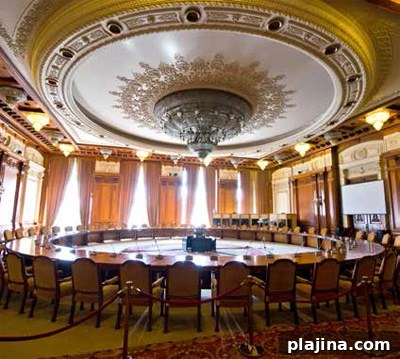
Interior of the Parliament building in Bucharest, Romania © CCAT82 | DREAMSTIME.COM
No visit to Bucharest is complete without seeing the colossal Parliament building. The world’s second-largest administrative building after the U.S. Pentagon sits a few blocks southwest of Old Town; construction began in 1984 and work continues on maintenance and tours. Visits inside the building are only possible with official guides, so purchase tickets in advance to explore some of its 3,100 rooms.
For fresh air and green space, head to Herăstrău Park north of the city center. The park surrounds a large lake and includes a Japanese garden, open fields and walking paths that offer a real escape from the urban bustle. Several restaurants line the waterfront and an open-air theatre hosts seasonal performances—check the local tourism office for schedules.
About 3.5 hours southwest of Bucharest, along the Adriatic coast, Croatia’s Dalmatian Coast unfolds between the mountains and the sea. Stretching from Split to the medieval city of Dubrovnik, this shoreline is studded with scenic islands and seaside towns that combine natural beauty with layered history.
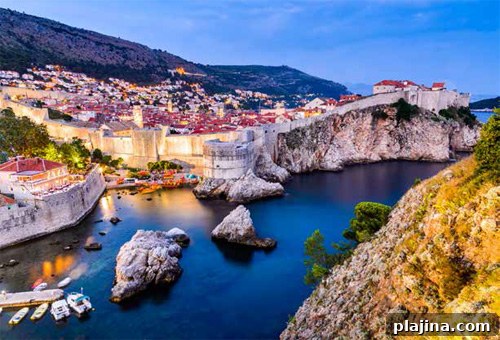
Old Town of Dubrovnik as viewed from Lovrijenac Fortress © EMICRISTEA | DREAMSTIME.COM
Split, the Dalmatian Coast’s central city, offers the familiar seaside scene: markets with local crafts and lavender products, a busy harbor with yachts and a vibrant promenade where visitors stroll beneath the sun. As evening arrives, outdoor bars and restaurants in the Old Town fill with the sounds of traditional Croatian music. For a memorable sunset, climb the stairs to Marjan Park and enjoy a glass of Croatian wine at Vidilica Café with panoramic views of the city, harbor and distant mountains.
No trip to Dalmatia is complete without visiting its islands. Hvar, a narrow island off Split’s coast, is famous for its lavender fields and lively town squares. The Old Town’s open plazas link to winding alleys where visitors can sample lavender gelato, buy lavender oil, or simply enjoy the island’s scents and scenery. Above Hvar Town, a hilltop fortress rewards climbers with sweeping harbor views and a glimpse into the island’s maritime lifestyle.
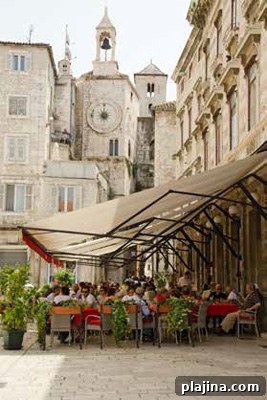
A café in Split, Croatia © ABSENTE | DREAMSTIME.COM
The nearby island of Brač, the largest in the Split archipelago, is known for its limestone and dolomite used for regional architecture since Roman times. Brač also offers distinctive local cuisine; one traditional dish is vitalac, prepared from lamb entrails roasted on skewers and seasoned simply, reflecting the island’s rustic culinary traditions.
Scenic bus routes from Split to southern Croatia present two main options for the roughly 150-mile journey: a coastal route that passes seaside towns and dramatic shorelines, and an inland route that travels through countryside and mountain tunnels. Both routes offer striking vistas and a chance to appreciate Croatia’s varied landscapes.
Dubrovnik appears like a place out of a storybook: a walled city with coral- and salmon-colored rooftops set against the Adriatic. Its origins stretch back to the seventh century, and its well-preserved medieval architecture has earned Dubrovnik a place among UNESCO World Heritage sites. Along the waterfront, seaside restaurants serve fresh catches and reflect the heart of Croatian coastal cuisine.
Outside the Old City walls, the elegant Dubravka café provides a romantic spot to dine with views framed by medieval towers and the sea. For active travelers, a hike up Mount Srđ offers rewarding vistas after about 90 minutes; alternatively, a short cable car ride delivers visitors to the summit for a modest fare. From the top, visitors can see why Dubrovnik became a major Adriatic port. The Srđ Imperial Fort and the Museum of the Croatian War of Independence tell the hill’s layered history, from Napoleonic times to recent conflicts.
At sea level, seek Café Buza, a dramatic cliffside bar tucked just outside the city walls where patrons watch the sunset over the Adriatic. After dark, Dubrovnik’s streets come alive with music and convivial crowds enjoying local wine and the city’s timeless atmosphere.
Although Romania and Croatia differ in landscape and temperament, both countries offer rich histories, cultural depth and memorable experiences that reveal new perspectives across Eastern Europe.
Info to Go
Henri Coandă International Airport (Otopeni) lies about 10 miles north of Bucharest. Bus 783 runs to the city center every 15 minutes on weekdays and every 30 minutes on weekends; the ride takes 45–60 minutes and costs around $1.75. A train departs hourly to Gara de Nord in about 35 minutes for roughly $2. Taxis from the airport average about $17.50.
Split (Resnik) Airport is about 15 miles northwest of the city. Two bus options connect the airport with Split in approximately 40 minutes: Bus 37 and the Pleso Prijevoz airport service.
From Dubrovnik Airport, an Atlas Croatia bus provides service to the Old City and main bus station in about 30 minutes; one-way and round-trip fares vary by season. Bus travel between Split and Dubrovnik typically takes four to five hours depending on route and service. Multiple carriers operate this corridor with frequent daily departures; purchase tickets in advance or at the major terminals.