
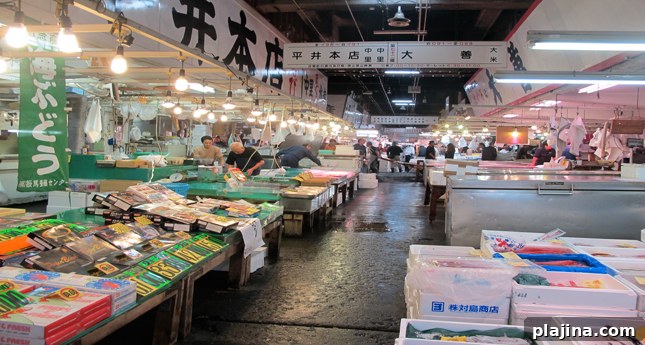
The working day begins long before dawn at Japan’s largest wholesale fish market, where trucks arrive through the night to unload roughly 2,000 tons of seafood. By about 3 a.m., prized tuna are displayed for inspection, and by 5:30 a.m. the famous tuna auction — limited to 120 visitors on a first-come, first-served basis — opens as bidders compete for the best catches. Wholesalers then move their purchases to stalls across Tokyo’s Tsukiji Market, and the market springs into frantic activity.
Knives flash as fish are filleted on chopping blocks. Band saws cut through frozen tuna, forklifts weave through wet, narrow lanes, and hawkers in black rubber boots display their catches like prized treasures, calling out to buyers who supply retail shops and restaurants across the city. From 9 a.m., the market welcomes the general public. It’s a striking sight: tanks of live specimens, curled octopi arranged like colorful blooms, and roughly 450 varieties of seafood — some familiar, many unusual — stretching as far as the eye can see.
Beyond the seafood halls, a section of the market focuses on produce, and nearby rows of compact sushi bars serve some of the freshest sushi imaginable. The wholesale operations wind down by late morning, as much of the market closes around 11 a.m. Just outside the main area, the Outer Market continues to bustle with more restaurants, stalls and shops selling seafood, vegetables, knives and other kitchen tools, drawing both local shoppers and visitors.
In November 2016, the market relocated to larger facilities in Toyosu. The original Tsukiji site was planned for redevelopment in the lead-up to the 2020 Olympics, marking the end of an era for the historic market while preserving its legacy through new venues and the continuing traditions of Tokyo’s seafood trade.