
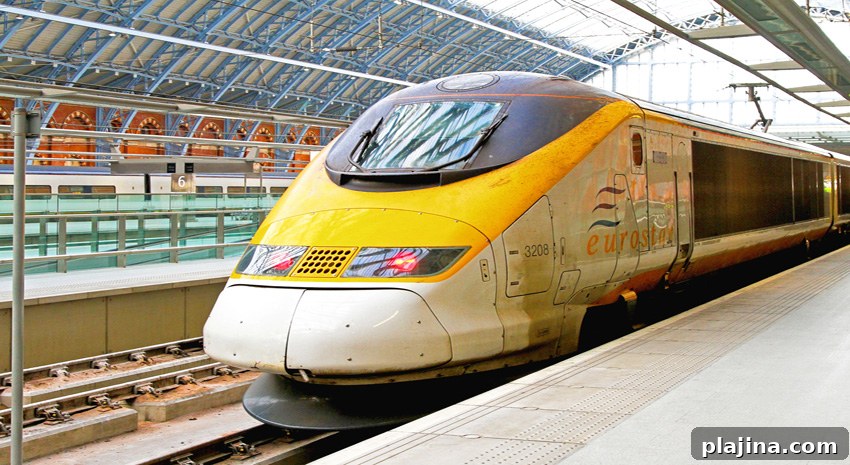
France, the United Kingdom, Belgium and the Netherlands have agreed to launch a pilot program that will pre-screen passengers traveling on Eurostar and Thalys high-speed train services. The participating governments will carry out checks before travelers arrive at stations, mirroring some of the security procedures commonly used in air travel.
The program is designed to identify travelers who may present a security risk, including individuals with profiles that could indicate intent to prepare or carry out violent attacks. Private companies that operate or support rail services will be closely involved in the pilot, which responds to a broader need to strengthen public safety on international rail connections. A joint task force made up of representatives from the four countries will initially define how the new procedures should be implemented.
“Our intention is that the system is operational by the end of the year,” said Belgian Interior Minister Jan Jambon, indicating a rapid timeline for moving from planning to practical application.
Passengers on Eurostar services to and from the U.K. already experience passport and security checks; the pilot would extend those measures by introducing more systematic pre-departure screening. Thalys, which connects Paris, Brussels, Amsterdam and Cologne, currently maintains security arrangements but not to the same comprehensive level proposed by the new initiative.
As part of the pilot, passenger information collected at ticket purchase would be shared among the four countries to support risk assessment and screening activities. This approach aligns with broader European regulations: the transfer and use of passenger name records is anticipated under a European directive scheduled for implementation in 2018.
The trial aims to balance enhanced security with the practicalities of international rail travel. Authorities plan to develop clear procedures that minimize disruption for the majority of travelers while allowing security services to focus resources where they are most needed. By coordinating checks across borders and involving rail operators early in the process, the four countries hope to create a model that improves safety on major high-speed corridors without imposing excessive delays on passengers.
Implementation details, including what data will be shared, how long information will be retained, and privacy safeguards, will be determined by the task force and relevant agencies as the pilot moves forward. Officials emphasize that the pilot is meant to test workable solutions and inform decisions about broader adoption, rather than immediately creating permanent or invasive measures.
With international rail travel growing and high-speed services linking major European cities, the pilot reflects a wider effort to adapt security practices to evolving threats while preserving the efficiency and convenience of cross-border train travel.