
ACROSS THE CHOPPY WATERS from mainland China, Taiwan’s capital Taipei is riding a strong current of creativity that reaches from whiskey distillers to tech entrepreneurs.
Last fall the government launched an ambitious plan called “the Asian Silicon Valley” aimed at turning neighboring Taoyuan City into a high-tech hub by 2023. This year’s budget includes $357.9 million to support startups and R&D in internet industries. At the same time, Taiwanese distiller Kavalan has earned international acclaim—its Solist Vinho Barrique was named “World’s Best Single Malt Whisky” at the World Whiskies Awards in 2015.
But Taipei’s rise hasn’t been without struggle.
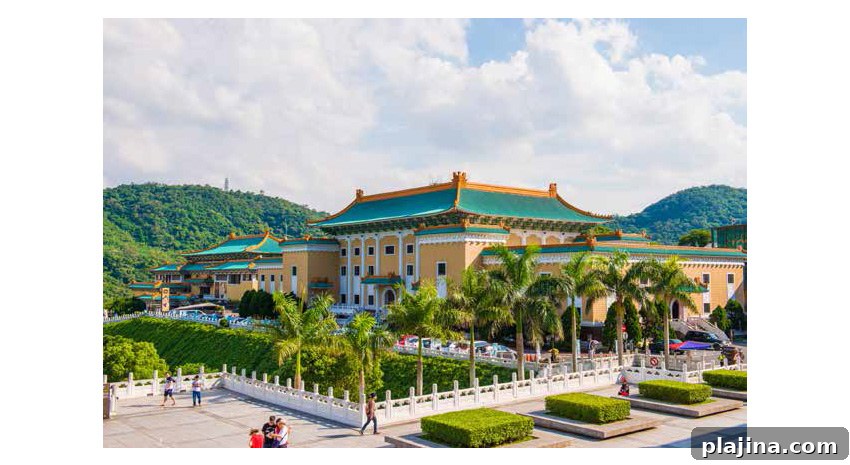
Geographically located in the heart of the Asia-Pacific region, Taiwan is an island shaped by tectonic forces over millions of years and has long been a crossroads for competing powers. It served as a base for early Chinese dynasties and drew European interest when Portuguese sailors labeled it “Formosa.” Taiwan’s modern political identity was forged in 1949 when Chiang Kai-shek and the Kuomintang government relocated to the island during the Chinese Civil War, bringing cultural treasures that are now housed in Taipei’s National Palace Museum.
With a recent leadership change—the island’s first female president sworn in May—Taiwan continues to navigate a complex relationship with mainland China while watching broader regional shifts. At the time of writing, U.S. policy in the region was in flux amid indications that the Trans-Pacific Partnership might be abandoned.
For now, Taipei presses on. The capital sits on the northern edge of the Taipei Basin, surrounded by green mountains dotted with hot springs and a bustling urban core of about 2.7 million people.
Known as a gateway to East Asia, Taipei is well placed for regional trade with close connections to Tokyo, Seoul and Shanghai. Chung-chieh Lin, commissioner of the Taipei City Department of Economic Development, emphasizes the city’s transportation advantages: Taipei Songshan Airport offers frequent flights to major East Asian cities, while Taoyuan International Airport is easily reached by road or high-speed rail. Most regional capitals are within roughly three hours by air.
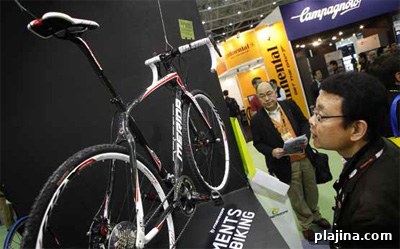
Taipei International Cycle Show © FANG CHUN CHE | DREAMSTIME.COM
Business travelers find Taipei well equipped for conferences and exhibitions. “There is an international conference or exhibition every three days,” says Chung-chieh Lin. Major events include COMPUTEX, one of the world’s largest computer shows, and the Taipei International Bicycle Show. Venues such as Taipei World Trade Center Hall 1, Taipei International Convention Center, and the Taipei Nangang Exhibition Halls host large international gatherings.
Infrastructure supports both tourism and business: the city offers about 35,000 guestrooms across 27 international hotels plus hundreds of smaller properties, broad free WiFi coverage and an efficient mass transit network.
“The rapid transit system throughout the city is utilized by 1.58 million people during daily commutes,” notes Chung-chieh Lin. Combined with the high-speed rail, Taipei has become Taiwan’s central transportation hub and an attractive base for logistics, regional headquarters and innovation centers.
Foreigners notice. InterNations, the global expat network, named Taipei one of the best cities to live in for expatriates, highlighting high-quality health care and relatively low living costs. Forbes contributor Johan Nylander praised Taiwan’s combination of welcoming culture and a modern economy.
Education is another strength. Nearly 70 percent of Taiwanese aged 18–22 attend higher education institutions. For several years Taipei scored very well in education services in liveability surveys. “All the best universities, R&D resources and top businesses are densely concentrated in the city,” says Chung-chieh Lin, adding that Taipei attracts top talent in high-tech fields from around the world.
What comes next for Taipei is uncertain, but the city brims with optimism. Young people, creative entrepreneurs and vibrant shopping districts give Taipei a lively, modern character where East and West converge.
Things to Do in Taipei
Taipei blends technological energy with cultural flair. For nightlife, there are clubs that stay open late and the landmark Taipei 101 offers dinner with spectacular views. Book lovers can visit Eslite Bookstore, one of the city’s literary hubs that stays open around the clock. Explore the city on a YouBike and discover cafés, independent shops and the lively Ximending district, known for its youth culture, the Red House Theater and eclectic street life.
Historic sites like Longshan Temple and traditional markets such as Snake Alley offer insight into Taipei’s cultural roots. Shop and play at Miramar Entertainment Park, which combines retail, restaurants and an IMAX theater beneath one of Asia’s tallest rooftop Ferris wheels.
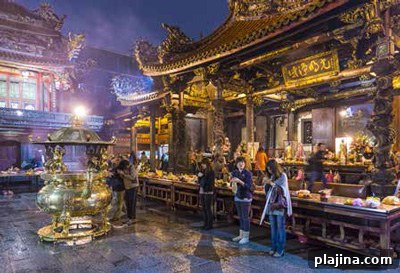
Longshan Temple © SEAN PAVONE |
DREAMSTIME.COM
Nature is close by. Within 30 minutes you can relax in the Beitou Hot Springs or hike misty Yangmingshan. The upscale Hsin Beitou Villa 32 offers mineral-rich outdoor baths for a luxurious retreat. For outdoor activity, try the city’s 20 mountain footpaths like Elephant Mountain or cycle around the Tamsui River basin. A gondola ride to Maokong rewards visitors with tea houses and panoramic views.
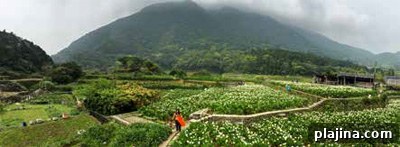
The calla lily field in Yangmingshan National Park © PHUONGPHOTO | DREAMSTIME.COM
Night markets define Taipei’s street-food culture. Shilin Night Market is the largest, offering a vast maze of stalls and local dishes. Popular snacks include fried scallion pancakes and a layered roll known locally as “little bings in big bings.” For sweeping evening vistas, Yangmingshan National Park and Taipei 101 provide memorable panoramas of the city lights.
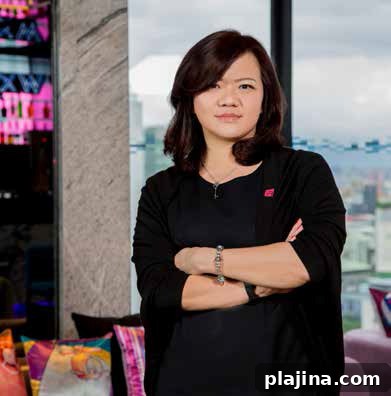
Aloft Taipei Zhongshan manager Tiffany Lin © ZOHAR RON
CHECKING IN WITH TIFFANY LIN
Hotel Manager, Aloft Taipei Zhongshan
What’s new at Aloft Taipei Zhongshan?
The hotel opened on Christmas Eve 2015 as the first Aloft in Taiwan. Guests are intrigued by SPG keyless check-in that turns a smartphone into a room key, and by Live at Aloft Hotels—live acoustic performances at the W:XYZ bar that spotlight emerging musical talent. We’re working to attract more artists to perform on Friday and Saturday nights.
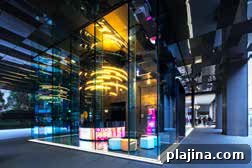
Aloft Taipei Zhongshan lobby © ZOHAR RON
What’s a hot topic in Taipei right now?
Pokémon Go has been a craze recently. The upcoming 29th Summer Universiade (2017) presents opportunities for the city, and the annual Taipei Arts Festival brings international performers that energize Taipei’s creative scene.
Which neighborhood is the current ‘it’ spot?
Xinyi District has grown in popularity, but Zhongshan District—where Aloft is located—remains charming. Da Dao Cheng, just five minutes from the hotel, features century-old buildings and surprising shops that showcase local designers’ work.
How has the city changed in your lifetime?
Born in Taipei, I’ve seen the city become much more traveler-friendly with the expansion of the Taipei MRT, extensive bus routes and the YouBike program that make getting around easy.
Which season do you enjoy most?
Taipei’s subtropical climate gives four distinct seasons. Autumn is my favorite: cooler temperatures and less rain make it perfect for exploring the city outdoors.
Taipei Info to Go
International flights arrive at Taiwan Taoyuan International Airport, about 25 miles west of Taipei in Taoyuan. Shuttle buses and a skytrain link terminals. High-speed rail connects major cities—purchase a shuttle bus ticket at arrivals to reach the THSR Taoyuan Station. Car rentals, tour buses and taxis are widely available. Typical cab fare to/from the airport averages about $31.
Taipei: Just the Facts
Time Zone: GMT +8
Phone Code: Country code: 886 City code: 2
Currency: New Taiwan dollar
Key industries: Manufacturing, tourism, finance, technology, business services, green energy
COMING AND GOING
U.S. citizens need a valid passport with two blank pages for entry and exit. No tourist visa is required for stays up to 90 days. Travelers planning to work in Taiwan must obtain a visa before arrival. For official visa guidance consult the Taipei Economic and Cultural Representative Office.
OFFICIAL LANGUAGE
Standard Mandarin; English is the primary foreign language.
Where to Stay in Taipei
Eslite Hotel Designed by Japanese architect Toyo Ito, this 104-room luxury property blends design and literary culture with books in every room. Songshan Cultural and Creative Park, 98 Yanchang Road, Xinyi District $$$$
Mandarin Oriental, Taipei A luxury hotel with an extensive spa and several restaurants and bars. 158 Dunhua North Road, Songshan District $$$$
W Taipei An acclaimed business and lifestyle hotel with views of Taipei 101. 10 Zhongxiao East Road, Section 5, Xinyi District $$$$
Restaurants in Taipei
Raw Chef André Chiang’s innovative take on Taiwanese flavors offers refined, approachable tasting menus. 301 Le Qun 3rd Road, Zhongshan District $$$$
Vege Creek A popular vegetarian spot serving fresh, made-to-order vegetable dishes. 2 Lane 129, Yanji St., Da’an District $$–$$$
Yen Located in W Taipei, Yen presents modern Chinese cuisine with city views under the direction of an experienced Hong Kong-born chef. W Taipei, 10 Zhongxiao East Road, Section 5, Xinyi District $$$$