
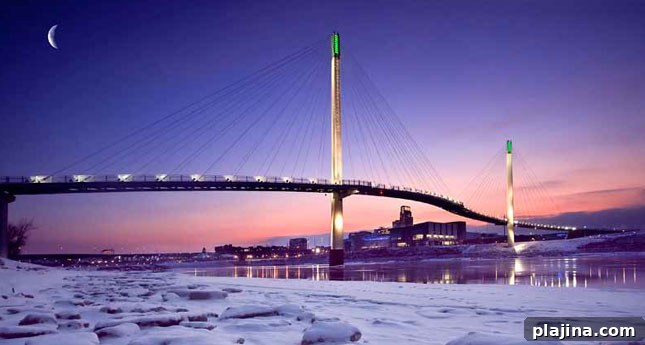
Omaha benefits greatly from being the longtime home of Warren Buffett, and perhaps even more from the many early Berkshire Hathaway investors—friends and family of Buffett who became multimillionaires—who continue to live in and support the city. These investors, along with other local philanthropists and corporations, have made substantial donations to cultural and educational institutions such as the Joslyn Art Museum, the Durham Museum (housed in the former Union Station), the Holland Performing Arts Center, the University of Nebraska Omaha and the Omaha Community Playhouse. Their support has extended to civic projects, research centers, downtown real estate, schools and scholarships, strengthening Omaha’s cultural and economic landscape.
Although Berkshire Hathaway itself employs only 24 people at its downtown headquarters, the company’s local holdings—Nebraska Furniture Mart, Oriental Trading, Northern Natural Gas, MidAmerican Energy and more—together generate an annual payroll of roughly $330 million and employ nearly 8,000 people across Omaha.
“There is so much money in this community, and good things have happened because of the fact that my dad happened to make all this money for people. We have this wonderful group of shareholders who got very lucky and happen to be very generous,” said Susie Buffett, Warren Buffett’s daughter, to the Omaha World-Herald’s Steve Jordon for his book, The Oracle & Omaha.
While Berkshire’s success and investor generosity have been important, they do not fully explain Omaha’s distinctive business climate or its low unemployment rate of around 3.2 percent. Affordability, a well-educated and industrious workforce, and business-friendly state and city policies are key factors shaping Omaha’s reputation as an attractive place to live and work.
Omaha’s rise as a commercial center began in 1863 when the Union Pacific Railroad established its headquarters there and began building the nation’s first transcontinental rail line westward. Brick manufacturing, breweries, smelting, cattle trading and extensive stockyards followed, creating a foundation for more than 150 years of pro-business development.
Today Omaha hosts five Fortune 500 headquarters—Berkshire Hathaway, Union Pacific Railroad, ConAgra Foods, Peter Kiewit Sons’ construction firm and Mutual of Omaha—alongside major corporations such as TD Ameritrade, West Corp., Werner Enterprises, Valmont Industries and Omaha Steaks, founded in 1917. Omaha ranks among the top U.S. cities for billionaires per capita and for the number of Fortune 500 companies with offices, a rare distinction shared by few other cities.
In the past 10 to 15 years, large-scale public and private projects have reshaped the city. Developments like Aksarben Village, the CenturyLink Center (now named CenturyLink Center), ConAgra’s riverfront headquarters and Heartland of America Park initiated downtown revitalization that continued with striking cultural investments. The James Polshek-designed Holland Center, a $92 million performing arts venue, opened downtown and quickly gained national recognition. The Bob Kerrey Pedestrian Bridge, a 3,000-foot, cable-stayed span over the Missouri River that rises 60 feet above the water, links Omaha to Council Bluffs, Iowa. Opened in 2008 and illuminated at night, the bridge has become an iconic symbol of the city’s cultural ambitions.
Other projects have added to the riverfront’s momentum: a 2009 addition to the 400,000-square-foot Gallup University Riverfront Campus, the glass-sheathed Riverfront Place condominiums, and a new $44 million Gavilon headquarters across from Union Pacific’s headquarters tower. Hospitality growth continues with new hotels, including the first Hyatt Place in Nebraska.
West of downtown, the striking Blue Cross and Blue Shield of Nebraska building sits near Aksarben Village, an ever-expanding mixed-use neighborhood with residences, retail and healthcare adjacent to the University of Nebraska Omaha. Midtown Crossing, developed by Mutual of Omaha beginning in 2006, has evolved into a lively urban district featuring restaurants, a five-screen Cine-Dine theater, residential and office space, and an Element by Westin hotel.
Developers have preserved many historic façades while reimagining interiors for loft living and commercial use. Renovated landmarks such as the Burlington Train Station (1898), the Paxton Building (1928), the Barker Building (1929), the Orpheum Theater (1927) and the Northern Natural Gas Building (now the Highline Building) are in demand for offices, residences and retail in established areas like the Old Market.
CenturyLink Convention Center © CenturyLink Convention Center
NoDo (north downtown), once an industrial and underused district, has been revitalized by attractions like the CenturyLink Center, the adjacent Hilton and the 24,000-seat TD Ameritrade Park, home of the College World Series. These venues have spurred hotels, restaurants and new businesses nearby, including the Mastercraft Building—a former 140,000-square-foot furniture factory that now houses many of Omaha’s tech startups. Companies such as MindMixer, q3systems, Vireo and Bingo Studios operate in large, high-ceilinged spaces with historic character and fast internet, contributing to the region’s reputation as part of the “Silicon Prairie.” Together with nearby cities like Kansas City and Des Moines, Omaha offers low rents, accessible angel funding, academic connections and a family-friendly lifestyle, advantages reinforced by Google’s large data center in Council Bluffs.
“I think there’s a collective ‘we’ about building a high-tech community here and feeling like you’re part of something that’s bigger than you, but it’s early enough in the process that you can have a tangible impact,” said Omaha native Jeff Slobotski, co-founder of Silicon Prairie News. Based in the Mastercraft Building, his publication reaches a large audience and covers Midwest tech entrepreneurship and conferences.
SCENIC DRIVES
Explore Omaha’s historic late-1800s boulevard system designed by H.W.S. Cleveland, now incorporated into the city’s Green Streets initiative. The original network of 16 interconnected boulevards retains many original landscapes and streetscapes alongside modern museums, cafés and shops. Maps are available from the Omaha Parks Department.
For a half-day excursion, take U.S. 75 north, passing Fort Atkinson State Historical Park with its riverside hiking trails. The route becomes the Lewis and Clark Scenic Byway and continues about 60 miles through early Nebraska settlements such as Tekamah and Decatur. From Decatur, cross the $1 toll bridge into Iowa, then drive south on I-29 to Exit 75 and follow the Old Lincoln Highway into Council Bluffs before returning to Omaha’s Riverfront District.
Alternatively, head south on U.S. 75 through Bellevue and detour to Papillion, which has been recognized as one of the best small cities in the U.S. Continue to Plattsmouth, a historic trading town with preserved Main Street shops and the 1892 Cass County Courthouse. A short drive further brings you to Nebraska City, known for galleries, museums, apple orchards, farmers’ markets and the Missouri River Basin Lewis & Clark Center—an ideal spot for lunch and a brief exploration before returning to Omaha.