
The Mascarene Islands—principally Mauritius, Rodrigues and Réunion—lie in the Indian Ocean about 400–500 miles east of Madagascar. For millennia they developed in isolation, untouched by humans, until European colonial expansion made them strategically important stopping points in the route to Asia.
Modern Mauritius, which includes Rodrigues and several smaller islets, bears the imprint of that contested history. Over the centuries it was occupied by the Portuguese, the Dutch, the French and, from 1810 until independence in 1968, the British. Each wave of settlers introduced new plants, animals and practices, leading to the extinction of endemic species such as the dodo.
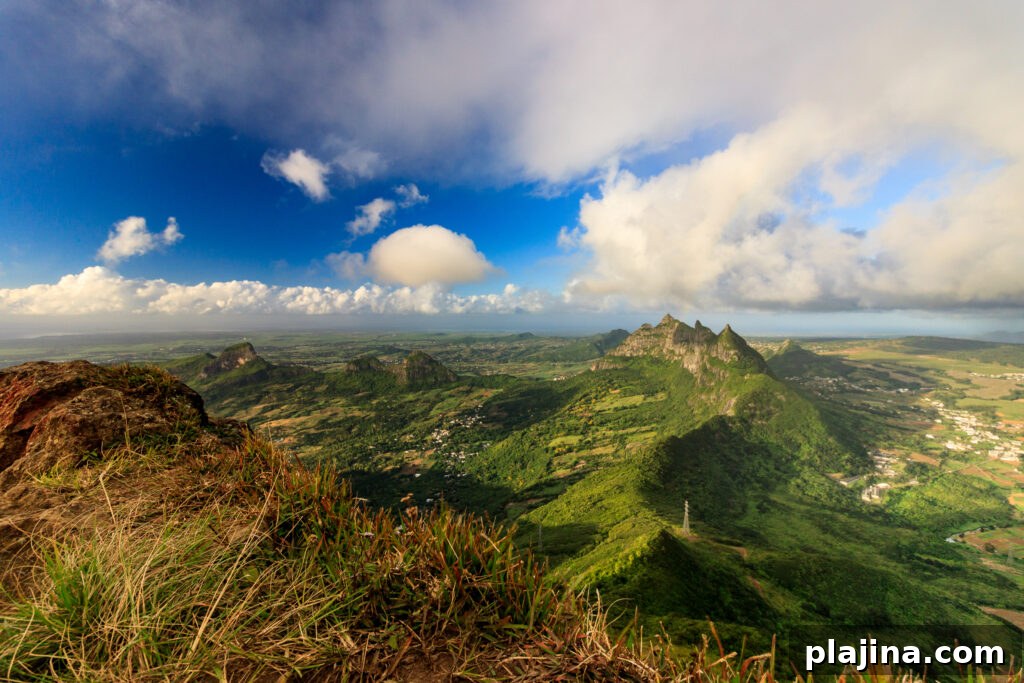
Le Pouce © Nico Kelder | Dreamstime.com
Alongside these changes, a distinct Mauritian identity emerged as people were brought to the island from India, China and Africa. Those diverse influences created Mauritian Creole and a rich culinary tradition that blends French specialties, Indian curries, Chinese noodles and African root vegetables.
The main island of Mauritius measures roughly 40 miles long by 30 miles wide, covering about 790 square miles. From the summit of Le Pouce (The Thumb), a mountain just behind the capital Port Louis, you can see nearly the entire island. The trails are well marked and mostly gentle until the final section known as the thumb. That last 20-minute scramble is steep with sheer drops on both sides, but it rewards hikers with a full 360-degree panorama.
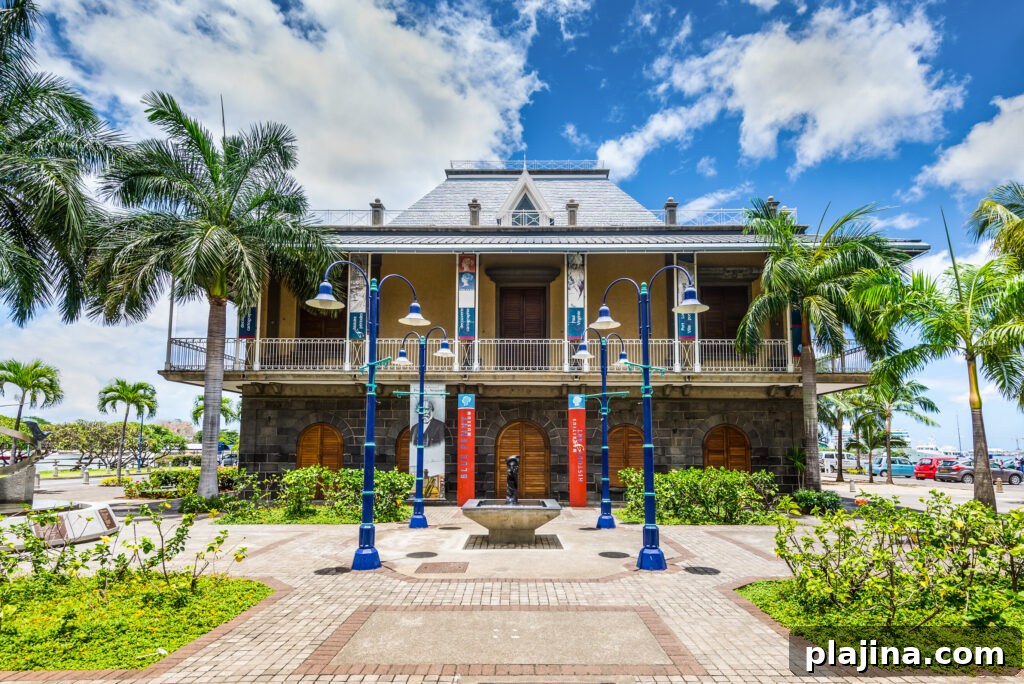
Blue Penny Museum, Port Louis © Byvalet | Dreamstime.com
Port Louis sits on the island’s west coast while the international airport lies on the southeast; resorts are dotted around the coastline. Many visitors never venture into the capital, yet it offers authentic experiences. The Central Market is a sensory crossroads of color, spice and local produce. At the Blue Penny Museum you can glimpse two of the world’s rarest stamps—the Mauritius orange-red and deep-blue—on brief displays to protect them from light.
The Natural History Museum examines the island’s former wildlife, featuring skeletons and reconstructions of the extinct dodo. While much of the interior is now covered in sugarcane plantations, the 66-acre Île aux Aigrettes nature reserve off the east coast preserves a fragment of native habitat. Here the rare Mauritian pink pigeon survives, and introduced giant tortoises help restore ecosystems by performing roles once played by extinct local tortoises. A life-sized dodo statue offers a reminder of what has been lost.
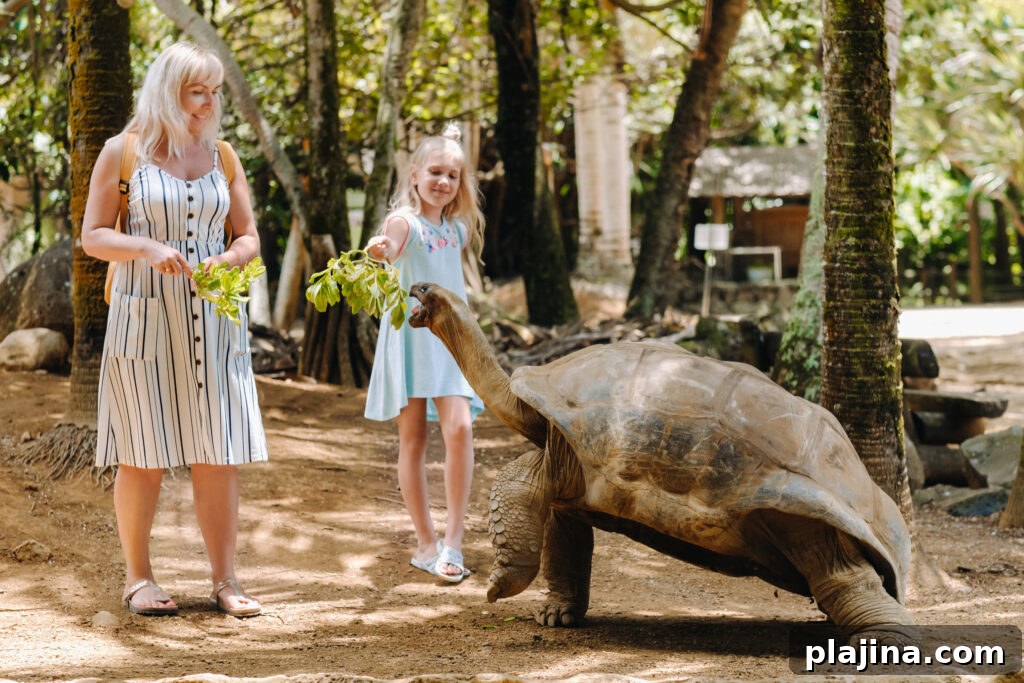
© Aliaksandr Lobach | Dreamstime.com
Beach tourism is Mauritius’s primary attraction. Fringing coral reefs shelter the coastline, creating excellent diving, snorkeling and calm waters for sailing and other water sports. Palm-lined, white-sand beaches present the classic image of tropical paradise.
The north coast is the liveliest area, centered on Grand Baie, with vibrant day and night scenes. Flic en Flac, home to one of the island’s best beaches, is a growing tourist hub and a popular base for short-term rentals. East-coast resorts offer a quieter, secluded atmosphere. Despite centuries of human influence and decades of tourism, Mauritius remains, at its core, a remote island in the Indian Ocean.
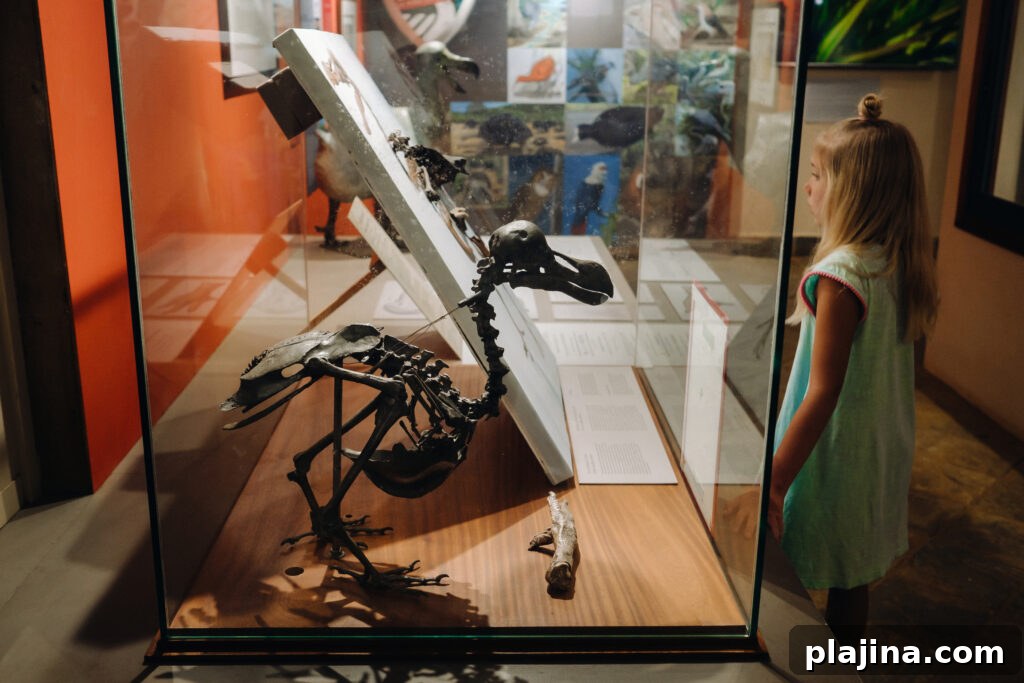
National History Museum © Aliaksandr Lobach | Dreamstime.com
LODGING
Bubble Lodge Bois Chéri
Stay at this futuristic, partially transparent eco-dome resort set on a tea plantation beside a lake in a deer-inhabited forest. It’s an unplugged experience with no Wi‑Fi, ideal for connecting with nature.
Domaine de Bois Chéri, Bois Chéri, Mauritius $$$
One&Only Le Saint Géran
Set on a narrow spit with beaches on both sides, this hotel pioneered luxury on the island and remains one of the finest.
Pointe de Flacq, Poste de Flacq, Belle Mare, Mauritius $$$$
SALT of Palmar
An adults-only boutique resort on the east coast with bold designs by French artist Camille Walala, reflecting contemporary Mauritian style.
Coastal Road, Palmar, Belle Mare, Mauritius $$$
DINING
Le Bois Chéri Restaurant
Located on the same tea estate as the Bubble Lodge, this restaurant focuses on sustainable fine dining with vegetarian and vegan options and locally sourced meat (beef is rarely served because it must be imported).
Domaine de Bois Chéri, Bois Chéri, Mauritius $$$
Château Mon Désir
Housed in a colonial-style mansion north of Port Louis, this elegant venue serves French cuisine with Mauritian influences and is well suited to special occasions.
Martim Resort & Spa, Turtle Bay, Balaclava, Terre Rouge, Mauritius $$$$
Escale Créole
This family-run spot south of Port Louis serves Manze Lacaze—authentic home cooking—and is an excellent place to sample the island’s eclectic flavors. Open for lunch only.
B46 Bois Chéri Road, Moka, Mauritius $$$
INFO TO GO
International flights arrive at Sir Seewoosagur Ramgoolam International Airport on the island’s southeast coast, opposite Port Louis. Many resorts provide transfers to and from the airport. Car rental is widely available; traffic moves on the left-hand side.