
Even if you aren’t religious, Ireland’s spirituality is hard to miss. It is woven into the country’s history and heritage — the number of ancient pagan and early Christian sites scattered across the landscape is remarkable — and it is magnified by the frequent soft rain, pearly light, sudden rainbows and the wild, enchanted beauty of the scenery. Even when you aren’t thinking about it, a quiet sense of the sacred seems to follow you.
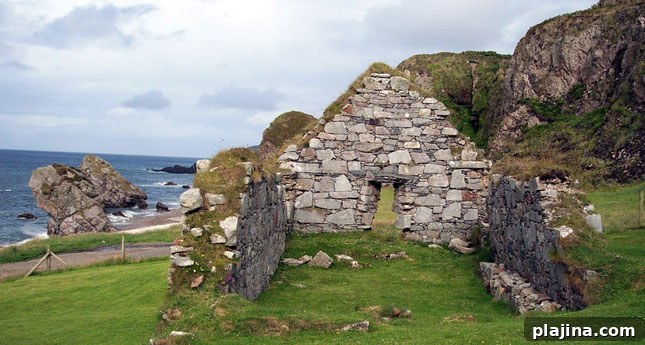
On an afternoon walk in Malin, at the tip of Donegal’s Inishowen Peninsula, I came across the ruins of a holy well and a 16th-century church tucked among grass and weeds on a narrow strip of rocky shore between cliffs and sea. According to local tradition, St. Muirdhealach founded the church beside that natural spring, long valued for its healing qualities, and found shelter in the sea-carved grotto behind it. Villagers still tell how the small cave — known as the Wee House of Malin — always seems to have room for one more visitor.
After exploring the ruins, I walked along the shoreline, listening to the tide batter the rocks and hiss through sea caves. When a patch of rain swept across the headland, I slipped into the Wee House of Malin for shelter. Like others before me, I made a wish, tucked a coin into a crack in the stone and waited as the storm eased. The fierce gusts softened into a gentle, renewing rain, and standing there in the dim calm felt quietly restorative.