
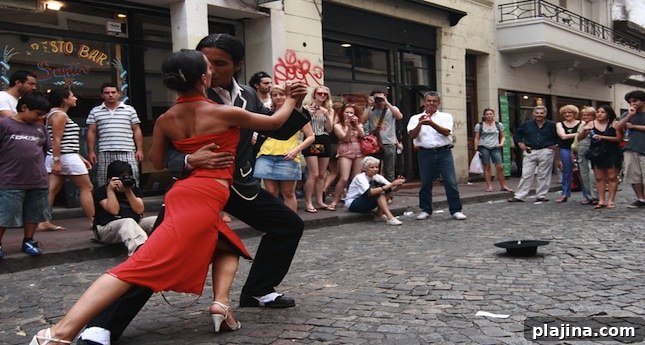
It may only take two to tango, but in Buenos Aires it feels as if the whole city moves to the rhythm. On sidewalks in elegant Recoleta you’ll find young buskers drawing a crowd, while in the cobbled streets of old San Telmo agile octogenarians still glide through the steps. In every barrio where tango is alive, someone is dancing.
Originating in San Telmo in the 1870s, tango spread to the neighboring working-class barrio of La Boca. Born among the porteños of modest means, it gradually evolved from a local dance and musical style into a global phenomenon by the 1920s.
Sensual, sultry and intensely expressive, tango is a quintessential Buenos Aires experience. There are many ways to encounter it here. You can attend a polished theatrical performance—known as tango de salón—often accompanied by a live orchestra; Teatro Astor Piazzolla is widely regarded as one of the finest venues. For a more authentic, spontaneous atmosphere, visit a milonga, the neighborhood dance hall where the milonguero tradition thrives, or head to Plaza Dorrego in San Telmo on Sunday afternoons to watch dancers from all walks of life.
Many milongas, such as El Beso, run by La Academia del Tango Milonguero, offer lessons for visitors who want to learn the basics. If you already dance, milongas welcome experienced tangueros to join the floor—just be mindful of local etiquette and the dance codes that guide partner selection and movement.
Good shoes make a difference. For practical and stylish footwear designed specifically for tango, Artesanal—near the Museo Casa Carlos Gardel—is a trusted choice. The nearby museum honors Carlos Gardel, the city’s legendary tango singer; his influence is visible throughout Buenos Aires, and visitors still leave fresh flowers at his grave in Cementerio de la Chacarita.
Whether you prefer a stage show, an intimate milonga, a street performance or a lesson, tango in Buenos Aires offers a deep, memorable cultural experience rooted in the city’s history and social life.