
Blue skies, gold nuggets, endless wheat and cattle ranches, and Horace Greeley’s famous call “Go West, young man” drew 19th-century ranchers, miners and adventurers across the flat prairie to settle the American West.
When Jack Kerouac arrived in the late 1940s, Denver still had the rough edges of a railroad town. Freight trains rolled through the city, their shrill whistles cutting the thin night air. Ranch hands in wide-brimmed cowboy hats spent paychecks in the smoky bars along Larimer Street, where bright neon signs like Ginn Mill and Gold Nugget promised drinks and entertainment to patrons bundled against the snow. At that time, the silver- and tan-colored grain silos east of the city rose higher than many of the brick Art Deco office buildings constructed downtown in 1930s WPA projects.
Denver’s “cowboy as hero” image did not endure. World War II defense plants and nearby military bases turned Denver into a boom town, and the city has continued to grow. From 1940 to 1950 Denver’s population rose 29 percent, from 322,000 to 415,000. The growth accelerated in the 1950s as large tracts of farmland in Arapahoe, Adams, Boulder and Jefferson counties—stretching toward the Rocky Mountain foothills—filled with shopping centers, residential neighborhoods, light manufacturing, schools and hospitals.
Today the Denver metropolitan area approaches 4 million people and the city and its suburbs host high-tech and energy companies, scientific research and design firms, and a wide array of cultural institutions. Local communities have worked to preserve the region’s natural beauty even amid rapid development. The area offers an extensive network of biking, hiking and cross-country skiing trails; trout streams; equestrian paths; and golf courses with sweeping mountain vistas.
The Brookings Institution ranked Denver among the nation’s most educated cities, noting that roughly 40 percent of residents hold at least a bachelor’s degree. Nearby Boulder has been recognized by the Gallup-Healthways Well-Being Index as one of the healthiest and happiest cities in the country.
Tom Noel, a history professor at the University of Colorado at Denver and a Denver Post columnist, observes that Denver’s mayors have shaped both the city and the state, and that their biographies reflect Denver’s diversity and openness to newcomers.
In the mid-1800s Richard Sopris left the East Coast to join thousands who arrived during the Colorado Gold Rush. He prospected along the Platte River, became an early Denver founder and was elected mayor in 1878.
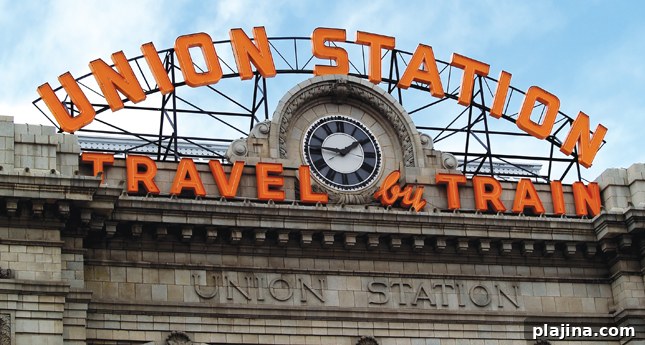
In the early 1900s Robert Speer set out to transform Denver from a modest farm town into a more sophisticated city. In 1905 he dubbed the city “Paris on the Platte,” launched the Denver Mountain Parks system, expanded the zoo and organized free park concerts. Speer’s administration also erected the ornate Welcome Arch so arriving passengers at Union Station would be greeted by a memorable landmark.
Mayor James “Quigg” Newton (1947–1955) established the city’s Health and Hospitals System, now respected among municipal medical institutions. Federico Peña, Denver’s first Hispanic mayor (1983–1991), planted more than 30,000 trees along city streets, including thousands of cherry trees around Cherry Creek. Peña secured the Colorado Rockies baseball franchise and helped finance Coors Field, and he championed a policy that allocates funds for public art in large developments. Today Denver features prominent public artworks such as the 40-foot Blue Bear peering into the Convention Center, a 32-foot rearing mustang at Denver International Airport, and two 60-foot fiberglass-and-steel figures outside the Performing Arts Complex.
Michael Hancock, Denver’s current mayor, was elected to a four-year term and will oversee the completion of major public projects, including the Clyfford Still Museum, the Denver Police Crime Laboratory, the History Colorado Center and the Carr Colorado Judicial Complex.
Although Metro Denver lost roughly 27 percent of its manufacturing jobs over a recent decade, software companies, energy firms, banks and communications providers have established a strong presence downtown and in western suburbs. Since 1990 downtown Denver has attracted over $6 billion in investment, including about $2 billion in public funding. That surge in infrastructure and development has encouraged residential growth near the Central Business District: more than 63,000 people now live within 1.5 miles of the core, an increase compared with prior years. Independent analyses have ranked the Denver/Aurora/Broomfield area among the nation’s strongest local economies.
Major companies headquartered in the region include Chipotle, Dish Network, Western Union, Newmont Mining, HCA-HealthOne and Siemens Energy, alongside numerous mid-size alternative energy and high-tech businesses. These employers benefit from a business-friendly environment, a relatively moderate cost of living, and proximity to world-class skiing and outdoor recreation.
DIVERSIONS
Red Rocks Park and Amphitheater (18300 W. Alameda Parkway, Morrison, tel 720 865 2494), located about 15 miles west of Denver, is the city’s most famous outdoor music venue. The park’s sandstone formations create a natural acoustic setting, and the 9,450-seat amphitheater draws thousands of concertgoers each summer. In the mid-2000s the city invested in upgrades, including a visitor center and the Ship Rock Grille.
Downtown Denver has flourished over the past decade and a half with new and renovated cultural venues. The Museum of Contemporary Art, a tinted-glass structure designed by David Adjaye, occupies a former rail yard now transformed into shops, restaurants and loft residences.
The Denver Art Museum expanded its galleries with Daniel Libeskind’s Hamilton Building, and the Clyfford Still Museum, housed in a striking modern facility, showcases the work of one of 20th-century America’s major abstract painters.
The Ellie Caulkins Opera House, part of the Denver Performing Arts Complex, is home to Opera Colorado. The space, restored and reopened in 2005, offers public tours and a regular performance schedule.
Denver and surrounding communities are known for craft breweries and beer festivals, with many venues offering tours and tastings. The region also supports more than 80 wineries and several wine trails across Colorado.
Info To GoDenver International Airport (DEN), opened in 1995 about 25 miles from downtown, is one of the country’s busiest and largest airports, covering 53 square miles. Ground transportation to the city includes public bus options, shared shuttle vans, taxis and rental cars. A South Terminal redevelopment project plans to add FasTracks light rail service to Union Station, an on-site hotel and an open-air plaza with partial glass canopy. |
LodgingFOUR SEASONS DENVER HOTEL MONACO DENVER HOTEL TEATRO |
DiningBUCKHORN EXCHANGE RIOJA ROOT DOWN |