
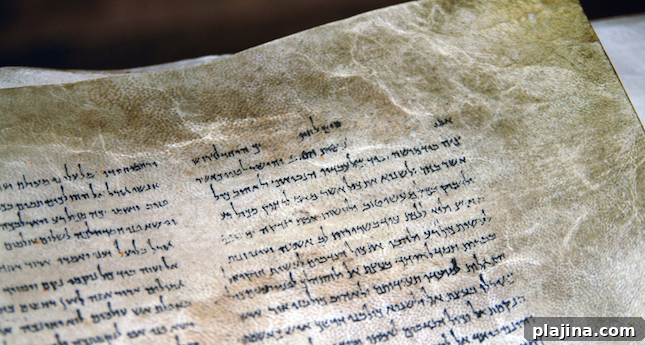
In collaboration with the Israel Antiquities Authority, the California Science Center presents Dead Sea Scrolls: The Exhibition, the largest and most comprehensive display of the scrolls outside Israel. The exhibition features sections of the oldest known copies of the Hebrew Bible (Old Testament), first discovered in 1947 by a Bedouin shepherd in caves along the northwestern shore of the Dead Sea near Khirbet Qumran. Visitors can also see the companion film Jerusalem 3D, narrated by Benedict Cumberbatch, in the center’s IMAX theater.
The multimedia exhibition highlights 20 scrolls, with 10 on view at any given time on a rotating schedule, and includes texts from Genesis, Isaiah, and Psalms. Alongside the manuscripts are a range of archaeological artifacts that illuminate life and belief in the region two millennia ago: a fragment of a marriage contract, ossuaries (small stone boxes used to store human bones), pottery, coins, weapons, and jewelry. Notable objects include a gold-and-pearl earring—dated to at least 2,000 years ago—arrowheads recovered from the ancient battle at Lachish, and a substantial stone from the Western Wall in Jerusalem.
The exhibition is organized to provide historical context and to show how these objects and manuscripts connect to everyday life, religious practice, and regional conflict during the Second Temple period. Interactive displays and explanatory labels guide visitors through the archaeological and textual significance of each item, while rotating scroll presentations ensure preservation and long-term public access to these fragile documents.
Curators emphasize preservation and scholarship, presenting high-quality reproductions and select original fragments under controlled light and humidity conditions. Educational programs and lectures supplement the exhibit, offering deeper insight into the discoveries at Qumran, the scribal traditions reflected in the scrolls, and their impact on biblical studies and cultural history.
By combining rare manuscripts, artifacts, and immersive media, the exhibition aims to engage a wide audience—students, scholars, families, and anyone interested in the ancient world—providing a balanced experience of awe and learning. The rotating nature of the display encourages repeat visits, and the range of objects on view helps visitors appreciate the complexity of the historical period in which these items were created and used.
Whether you come to see the celebrated scroll fragments or to explore the broader archaeological collection, the exhibition offers a unique opportunity to encounter some of the most important discoveries related to the history of the Hebrew Bible and the material culture of ancient Judea.