
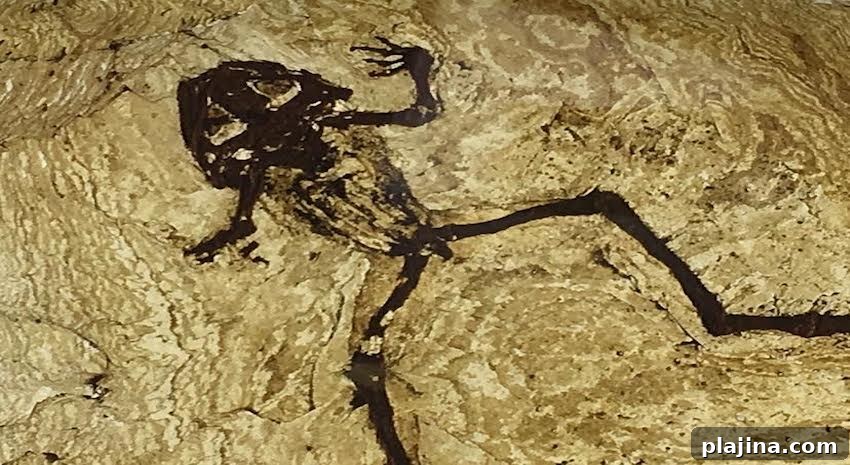
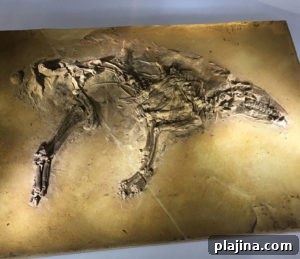
When you think of “old” in Germany, you might picture a crumbling castle—but the Messel Fossil Pit rewrites that idea. Far older than medieval ruins, this extraordinary site preserves a snapshot of life tens of millions of years ago. The fossil-rich deposits were first encountered in 1875 during mining operations in a large depression near the village of Messel, where successive layers of oil shale and brown coal accumulated over prehistoric times.
On a recent visit I toured the site with paleontologist and geologist Pascal Schmitz, who explained that scientific excavations began in the 1920s. Today Messel is considered the most important Eocene fossil site in the world and ranks among the four key paleontological localities globally for that period.
“This site records a moment shortly after a major extinction event, when mammals were taking hold,” Schmitz said. Among the most remarkable discoveries is a fossilized snake that still contains the remains of a lizard in its stomach—and, astonishingly, the lizard had a beetle preserved inside it. Such finds reveal an exceptional level of preservation and provide direct evidence of ancient food chains.
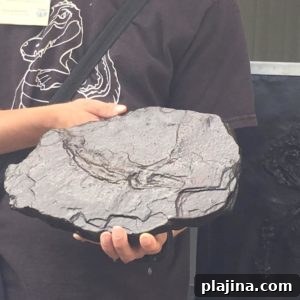 In 1995 the Messel Fossil Pit was designated a UNESCO World Heritage site. Since then scientists have unearthed thousands of fossils dating from roughly 57 to 36 million years ago, including fish, plants, reptiles, birds, insects and mammals. Notable finds include early pygmy horses and ground-dwelling mammals such as Pholidocercus and Macrocranion, scaled pangolins, and Messelastur, a carnivorous bird with parrot-like features. Even early primate remains have been discovered, offering crucial insights into mammalian evolution during the Eocene.
Located about a half-hour drive from Frankfurt, the site is easily accessible and visitor-friendly. A small museum and a welcoming café sit alongside a well-curated exhibition at the visitor center, which showcases many of the most important finds and explains the geology and paleoenvironment of the site. The visitor center is open daily from 10 a.m. to 5 p.m., and guided tours of the pit run several times each day. Because tours can fill up, booking in advance is recommended to ensure a place.
Messel’s combination of scientific importance, remarkable preservation, and straightforward access makes it an essential destination for anyone interested in Earth’s deep past. The fossils found here do more than illustrate ancient life—they capture interactions, behaviors and ecosystems in a level of detail rarely preserved elsewhere, allowing researchers and visitors alike to connect directly with a lost world.