
Though only about a tenth the size of Dublin, Cork—Ireland’s second-largest city—packs a rich mix of arts, education, history, recreation and commerce that often earns it top marks from visitors and residents alike. Built on marshland (its Irish name, Coraigh, derives from corcach, meaning swamp) and cradled by two channels of the River Lee, Cork has evolved into a vibrant metropolitan center with a distinct character.
From the Middle Ages onward, Cork was an important trading hub, exporting hides, wool and cloth worldwide and once becoming the globe’s leading butter exporter. The Great Famine prompted thousands to depart from Cork’s busy port, and the city later endured fierce clashes during British–Irish conflicts that left parts of this “rebel town” damaged. In the late 20th century Cork weathered industrial decline as shipbuilding and major plants closed, then successfully repositioned itself by attracting technology and pharmaceutical industries.
Today an educated, English-speaking workforce of nearly half a million in the greater Cork area draws multinational companies. Global firms such as Amazon, Apple, Avery Dennison, Citco, EMC, McAfee, MVware and Siemens have established a presence, attracted by business parks with modern utilities and telecommunications, available development sites and Cork’s famously welcoming atmosphere.
Pharmaceutical manufacturers like Johnson & Johnson, Novartis, GlaxoSmithKline and Pfizer operate in the region; a significant share of the world’s Viagra is produced here. Local brewing and stout traditions continue with Murphy’s Irish Stout (now owned by Heineken) and Beamish and Crawford bottled in Cork. The city is also home to two national newspapers, the Irish Examiner and the Cork Independent.
Investors praise Cork’s open business environment, aided by incentives such as a low 12.5 percent corporate tax and research and development tax credits up to 20 percent for qualifying projects. The Cork City Enterprise Board supports local entrepreneurs with start-up grants and expert advice, helping new businesses to get established.
Cork’s educational institutions supply a steady stream of skilled workers. University College Cork offers engineering and arts programs alongside the Cork Institute of Technology, the Cork School of Music and the Crawford College of Art and Design. Additional colleges provide training in medicine, nautical studies, commerce and vocational fields. Tyndall National Institute, a world-class research center focused on photonics, electronics and nanotechnology, further strengthens the region’s innovation ecosystem.
Local government combines an elected lord mayor for ceremonial duties with a city manager responsible for planning and administration. Recent initiatives emphasize traffic management to preserve the historic downtown’s vitality and redevelopment of former industrial docklands into a financial services hub. Plans are underway for a digital media district in the city center and an outlying knowledge zone to foster knowledge-based businesses.
Diversions
The city’s historic core is full of color and character, with brightly painted shopfronts and many Georgian bow windows typical of Cork. St. Patrick’s Street, once built on arches over a river channel, has been redesigned as a pedestrian-friendly thoroughfare lined with pharmacies, jewelers, bookstores, boutiques and department stores such as Brown Thomas and Marks & Spencer. The restored Old English Market, dating from 1786 (Grand Parade, Mon.–Sat. 9 a.m.–6 p.m.), offers traditional local foods like tripe, pigs’ feet and buttered eggs, while the Coal Quay Market on Cornmarket Street sits on the site of the city’s original open-air marketplace and attracts bargain hunters and collectors.
Dominating the skyline is the 17-story Elysian, Ireland’s tallest residential building. Visitors can explore surviving gates and sections of the medieval city wall, admire St. Finbarr’s Cathedral—named for Cork’s 6th-century founder—and climb Shandon Church Tower. The tower, with its four-faced clock, salmon weathervane and famous bells, rewards climbers with panoramic views.
Named the 2005 European Capital of Culture, Cork hosts a lively calendar of concerts, exhibitions and performances at venues such as the Cork Opera House, the Everyman Palace and Cork Arts Theatre. The Crawford Municipal Art Gallery, housed in a converted 18th-century customs building, displays works by Jack B. Yeats, William Leech, James Barry and other prominent Irish artists.
The Butter Exchange rotunda has become the Firkin Crane Cultural Centre, a hub for international dance companies and the annual Guinness Jazz Festival held each October. The Cork Butter Museum celebrates the city’s historic role in butter exports, while the Cork Public Museum in Fitzgerald Park chronicles local history. Cork City Gaol offers a sobering, atmospheric experience with restored cells that bring the past to life.
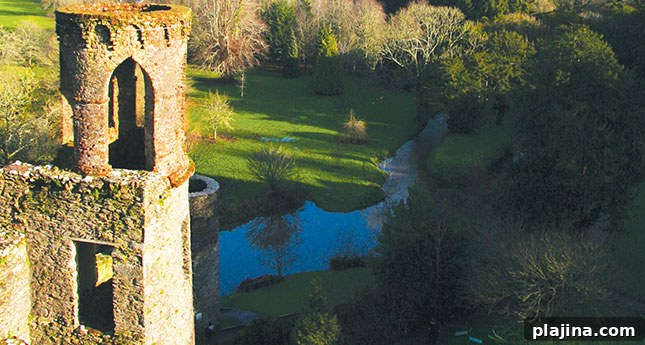
Sports enthusiasts can enjoy rugby, Gaelic football, hurling and soccer, while outdoor activities abound — horse riding, hiking, rowing, cycling, sailing and golf at numerous nearby courses. A short trip brings you to Blarney Castle, where visitors still kiss the famous stone for eloquence.
With more than 30,000 students in the area, Cork’s nightlife is lively and varied. The Opera House’s Half Moon Bar turns into a vibrant late-night venue after performances. Converted warehouses like Bodega Bar on Cornmarket Street are celebrated for their atmosphere, while traditional pubs such as An Bodhran, Counihan’s and Costigan’s frequently host spontaneous live music sessions that capture the city’s convivial spirit.
Info To Go
Cork City benefits from a modern road and rail network, including extensive local and suburban bus service and hourly trains to Dublin. Flights from around 60 European airports arrive at Cork Airport (ORK), which handles several million passengers annually; a new terminal completed in 2006 expanded the airport’s capacity and business park facilities.
Lodging
Cork Clarion Hotel
Located in the redeveloped docklands business district overlooking the River Lee, this boutique-chic hotel has won multiple awards and offers contemporary accommodations. Lapps Quay, tel 21 422 4900, $$$
Hayfield Manor
Set in formal gardens, this elegant manor house blends five-star service with traditional charm, featuring refined public rooms and a carved mahogany staircase. Perrott Avenue, College Road, tel 21 484 5900, $$$$
Imperial Hotel
A 19th-century landmark updated with marble floors and classic fittings, the Imperial offers historic character and modern comforts. 14 Pembroke St., South Mall, tel 21 427 4040, $$
Dining
Greenes
Set beside a waterfall on a patio within a converted Victorian warehouse, Greenes is accessible on foot and showcases the cuisine of French chef Frédéric Desmoreaux. 48 MacCurtain St., tel 21 455 2279, $$$$
Jacobs on the Mall
Housed in a former Victorian-style Turkish bath, this stylish restaurant in the financial district features Chef Mercy Fenton’s eclectic menu. 30A South Mall, tel 21 425 1530, $$$
Jacques
Tucked away on a small side street, Jacques is run by two sister chefs known for imaginative dishes made from locally sourced produce for more than two decades. Phoenix Street, tel 21 427 7387, $$$