
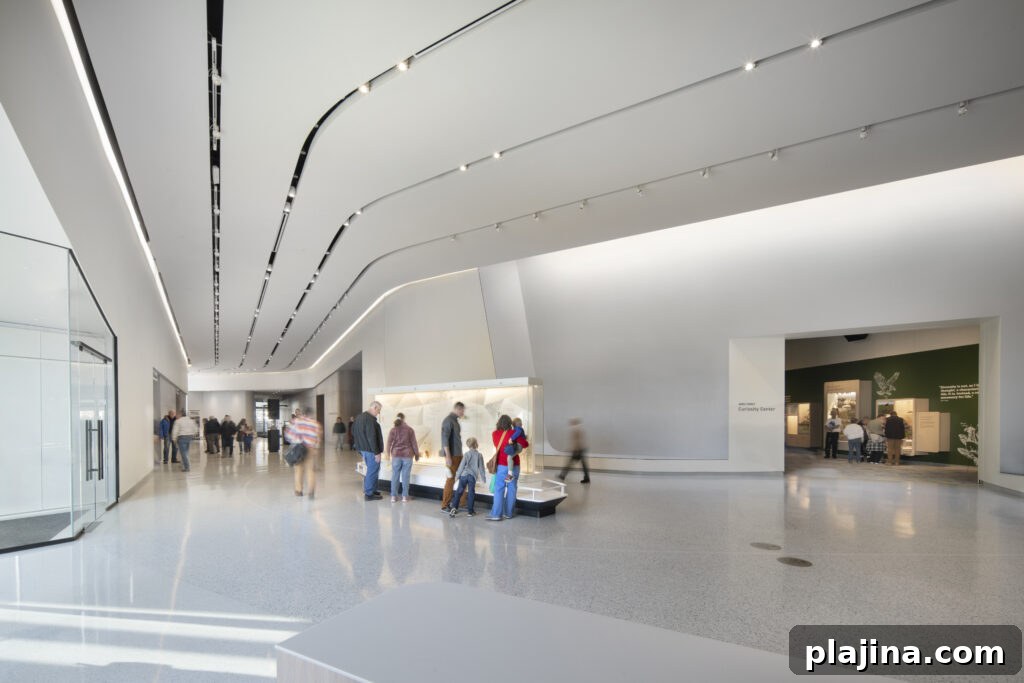
Named to the 2025 World’s Most Beautiful Museums list by the influential Prix Versailles, the Cleveland Museum of Natural History joins a select group of global institutions recognized for excellence in contemporary museum architecture.
© DLR Group | Kevin G Reeves
“Every aspect of our transformed Museum aims to achieve one unified vision: to promote healthy humans, a healthy planet and a better future for all,” said Sonia Winner, president and CEO of the Cleveland Museum of Natural History. “We are thrilled that this commitment to architecture in the service of science has been recognized on an international stage.”
The Prix Versailles, presented annually at UNESCO since 2015, honors architectural and design projects that demonstrate innovation, creativity, respect for local heritage, ecological efficiency, and a commitment to social interaction and participation. The Cleveland Museum of Natural History, founded in 1920, recently completed a $150 million renewal led by its architectural partner, DLR Group. The renovation emphasizes sustainability and earned LEED Platinum certification.
Key sustainability features include a visible solar-panel array, bird-safe glazing, and an integrated stormwater retention system, all designed to reduce environmental impact while making the museum’s green strategies visible and educational for visitors. These measures reflect the museum’s broader mission to connect scientific research, public education, and environmental stewardship.
© DLR Group | Kevin G Reeves
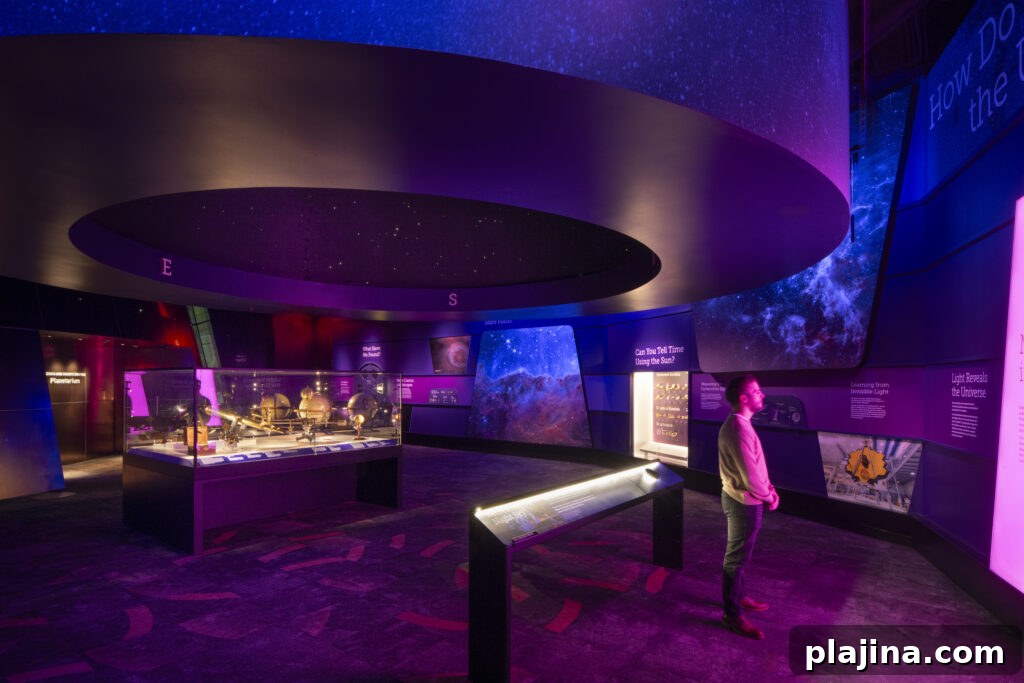
The museum’s galleries begin with a vast, light-filled Visitor Hall that showcases notable specimens such as Balto the sled dog, a prehistoric Dunkleosteus fish, Lucy—an early human relative—and “Happy,” a Haplocanthosaurus dinosaur. Galleries and facilities include the Smead Discovery Center, Shafran Planetarium & Mueller Observatory, the Evolving Life Wing, the Ames Family Curiosity Center, the Larry Sears and Sally Zlotnick Sears Dynamic Earth Wing, and the Ralph Perkins II Wildlife Center & Woods Garden.
Beyond its buildings, the museum advances conservation through its Natural Areas Program, which stewards more than 12,500 acres of protected ecosystems across northern Ohio. This regional commitment complements the museum’s goal of fostering scientific literacy and environmental stewardship among visitors of all ages.
Other institutions named by Prix Versailles on the 2025 list include Grand Palais in Paris, Saka Museum in Bali, Audeum in Seoul, Kunstsilo in Kristiansand, Norway, Dirlyah Art Futures in Riyadh, Saudi Arabia, and the Joslyn Art Museum in Omaha, Nebraska.