
In 1817, New York’s Black Ball Line introduced the first regularly scheduled passenger service between New York and England. The eastward crossing took about 40 days and the return voyage about 23. Accommodations were basic: in-cabin skylights, whale-oil lanterns in the dining room and silver service for meals.
Passenger sea travel evolved dramatically in June 1900 when Victoria Luise, the world’s first purpose-built passenger ship, departed Hamburg for a 35-day voyage through the Caribbean to Venezuela. Designed for comfort, the 240-passenger vessel included a promenade for strolling, a gym and even a darkroom for amateur photographers. Live musicians provided entertainment during meals and social events, marking a new era of leisure cruising.
The owners of Victoria Luise had tapped into a growing market. More than a century later, cruising is a mainstream form of leisure travel. A recent survey by AAA found that 41 percent of Americans are considering booking a cruise. One appeal is the variety of options: roughly 323 cruise ships now operate worldwide, ranging from intimate yachts to ocean-spanning mega liners.
The smallest ships, such as Emerald Azzurra, carry about 100 passengers and focus on boutique, intimate experiences and specialized itineraries. At the other end of the spectrum, Royal Caribbean’s Wonder of the Seas can accommodate nearly 7,000 guests and offers a vast array of onboard attractions. Between these extremes, travelers can choose ships that differ by size, onboard amenities and overall style.
Although the cruise industry lacks formal size classifications, ships are commonly grouped into five categories based on passenger capacity. Larger ships typically offer more amenities, but size alone doesn’t define the guest experience. Comparable-sized vessels from different lines—for example, Disney Cruise Line and Cunard—can deliver very different atmospheres and activities despite similar capacities.
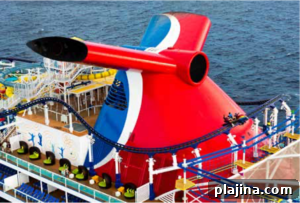
PHOTO:
© CARNIVAL CRUISE LINE
Not long ago, carrying 3,500 passengers on a single ship seemed extraordinary. Today, several cruise lines—Royal Caribbean, MSC Cruises and Carnival Cruise Line—operate mega ships that exceed 6,000 passengers. These enormous vessels, larger than many aircraft carriers, present a wide range of onboard entertainment and dining options. For example, Carnival’s 6,465-passenger Mardi Gras features the first roller coaster at sea alongside multiple themed restaurants.
Slightly smaller mega ships, from operators such as Disney, Carnival and Norwegian Cruise Line, typically carry around 4,000 passengers and still pack action-packed amenities like go-kart tracks, multistory water slides, ice rinks and surf simulators. Princess Cruises, with ships just over 3,500 passengers, leans toward live shows, cultural programming and varied dining rather than extreme attractions, offering a different kind of lively onboard experience.
Large ships—flagged by lines including Celebrity Cruises, Cunard, Disney, Holland America Line, Norwegian, Princess and Royal Caribbean—provide a robust mix of amenities without being the largest afloat. Norwegian’s recent Prima class intentionally favors a slightly smaller footprint: each Prima-class ship carries 3,099 passengers but delivers a dense lineup of onboard experiences, including a 10-story free-fall slide. The first ship in the class, Prima, entered service in August 2022.
Only a few lines—Cunard, Holland America, Norwegian and Royal Caribbean—operate in the mid-sized category. These ships often represent good value: older Norwegian and Royal Caribbean mid-sized ships can offer moderate fares, while Cunard and Holland America appeal to traditionalists who prefer classic lines and a more approachable ship size.
Lines such as Holland America, Oceania and Viking have found a sweet spot in the small mid-size category. These vessels are large enough to provide diverse dining and activities yet intimate enough to maintain a calm, refined onboard atmosphere. Viking, for example, has expanded rapidly in this segment, adding multiple 930-passenger ocean ships since launching ocean voyages in 2015.
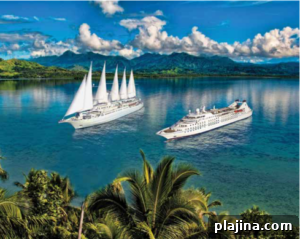
PHOTO: © WINDSTAR
The greatest diversity appears in the small-ship category. This includes boutique cruise ships and yachts run by lines such as Celebrity, Emerald, Oceania, Ponant, Regent Seven Seas, Seabourn, Silversea, Star Clippers and Windstar, alongside expedition-class vessels designed for polar and remote-region exploration. Expedition ships from operators like Ponant, Scenic, Seabourn, Silversea and Viking function like luxury exploration platforms, equipped for Zodiac landings, submersibles, kayaks and specialized gear.
Smaller ships not only offer a more intimate atmosphere but also access to ports and anchorages that larger ships cannot reach. Expedition vessels, staffed with expert guides and outfitted with specialized equipment and protective clothing, let passengers explore pristine natural environments directly from the ship—on land and at sea—creating memorable, immersive travel experiences.