
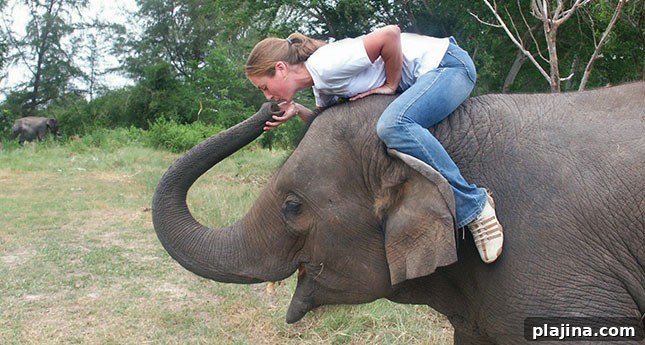
I first met Katherine Connor six years ago at the King’s Cup Elephant Polo Match in Thailand. She arrived with an elephant not to compete, but to raise funds for a nearby elephant sanctuary outside Chiang Mai. At the time her main focus was rehabilitating an injured baby elephant she had rescued and named Babar.
My first encounter with Thailand’s elephants remains my most vivid memory of Chiang Mai. The elephant sanctuaries are the best reason to travel beyond Bangkok into the northern Hill Country, though Chiang Mai offers many other family-friendly attractions. Northern Thailand’s largest city is full of ornate temples, a children’s zoo, go-kart tracks, lively markets, cafés and cooking schools. Hue-and-textured hillside communities feel ancient, while wilderness trails and river routes cut through dense jungle, appealing to outdoor adventurers.
Chiang Mai is the modern capital of the ancient kingdom of Lanna, often called the Land of a Million Rice Fields. Agriculture remains important, but cultural tourism dominates. The city is home to more than 300 Buddhist temple complexes. Wat Phrathat Doi Suthep is Chiang Mai’s most famous temple, but Wat Chiang Man, the oldest, holds a stone tablet describing the city’s founding in 1292 and remains especially memorable. Bright red roofs, gold leaf, mirrored tiles and an elephant-themed pagoda create a dazzling scene, as do Buddha statues dating back centuries. If children grow impatient with temple visits, alternate the sightseeing with rides in a songthaew (a taxi pickup with two benches in the back), a samlor (bicycle rickshaw) or the hair-raising tuk-tuk to move quickly from one wat to another.
The Chiang Mai Zoo is another must-see and will entertain even the youngest visitors. Set on a lush, spacious site, the zoo offers close-up views of animals many other facilities do not, from white tigers and giant pandas to open-range habitats and a Children’s Zoo with its own playground.
Market culture is a cornerstone of Chiang Mai life. The Night Bazaar in the city center is the most colorful and popular market, anchored by a three-story emporium and ringed with stalls selling crafts, wooden carvings, woven baskets and decorative insects and butterflies. For specialized crafts, drive five miles east on San Kamphaeng Road, known as the Handicrafts Highway. The Umbrella Village at Bo Sang showcases traditional paper umbrella making; you can watch artisans at work and buy umbrellas and other souvenirs to take home.
One of my favorite Chiang Mai experiences is attending a Thai cooking school. Even inexperienced cooks find it rewarding to prepare a meal from start to finish. A typical class begins at a wet market to choose fresh ingredients, then moves to a hands-on kitchen session where you grind curry pastes and prepare dishes such as prawns skewered on sugarcane. The class ends with the best test: lunch. With fresh produce and guidance from local chefs, the results are almost always excellent and make a wonderful way to introduce children to Northern Thai flavors and basic cooking skills.
Beyond the city, the hills offer serious adventure. Jungle trekking, highland hikes, ATV rides, mountain biking, zip-lining and bungee jumping can be arranged through hotel tour desks. My preferred day trips are the Hill Country tribal village tours and visits to elephant camps, both found along the scenic Mae Sa Loop.
The Mae Sa Loop often includes the Queen Sirikit Botanical Garden, a diverse collection of plants and blooms, and the Mae Sa Snake Farm, where visitors can see cobras and giant pythons and learn about venom collection. A worthwhile detour leads to Hill Tribe villages near the Myanmar border. One unforgettable community is the Long Neck Karen (Karen Padaung), whose women traditionally wear neck rings from childhood to create an elongated neck appearance. The villagers welcome visitors to stroll their settlements, enter huts and purchase handmade crafts.
The elephant camps along the Mae Sa Loop are among the region’s highlights. The Mae Sa Elephant Camp combines conservation efforts with family entertainment. Since 1976 its breeding program has supported the Asian elephant, while public performances raise funds. Elephants here perform a variety of trained behaviors—moving logs, playing soccer, painting on canvases—and visitors can feed them and take guided rides through the forest.
For a different approach, the Elephant Nature Park focuses on rescue and conservation. There are no performances or rides; instead, the park emphasizes humane mahout training and offers visitors the opportunity to feed elephants and help escort them into the river for bathing.
Katherine Connor’s work has continued in the same spirit. After her early rescue efforts and despite Babar’s inability to recover from severe injuries, Connor persisted. She created the world’s first elephant wheelchair for Babar and later founded a sanctuary in his memory, Boon Lott’s Elephant Sanctuary (BLES). BLES offers a low-key refuge for rescued elephants without chains or hooks. It is not open to casual tour groups, but does maintain three teak guesthouses for visitors who wish to stay and experience sanctuary life.
Since I first met her in 2003, Katherine Connor has expanded her efforts, married a mahout named Anon and had a child, Hope. She has also been recognized for her dedication to animal welfare, receiving an award from the International Fund for Animal Welfare. Her work stands as a powerful example of individual commitment to protecting Thailand’s iconic animal.
Info To Go
Chiang Mai International Airport (CNX) lies about two miles southwest of the city center. Most international flights connect through Bangkok. Many hotels offer complimentary airport shuttles; taxi fare to the city is typically around $4.
Lodging
The Chedi Chiang Mai
Located on the Ping River in downtown Chiang Mai, this elegant 84-room modern Asian-style hotel features private courtyards, teak floors and a Thai spa.
Mandarin Oriental Dhara Dhevi
Offering traditional Lanna- and Burmese-style rooms and villas, this grand resort east of the city includes an extensive spa and a children’s club.
Shangri-La Hotel, Chiang Mai
A deluxe downtown hotel near the Night Bazaar, with a full business center, spa and executive floors suited to both families and business travelers.
Dining
Le Grand Lanna
An all-teak Lanna-style house on stilts with its own garden and candlelit dinners, known for homemade lychee ice cream.
Old Chiang Mai Cultural Center
A tourist-friendly venue where families can sample khantoke—Northern Thai cuisine—while enjoying classical music and dance performances.
The Riverside
A popular riverside restaurant with terrace seating, casual Thai fare and the option of a dinner cruise—ideal for families and visitors seeking a relaxed meal.