
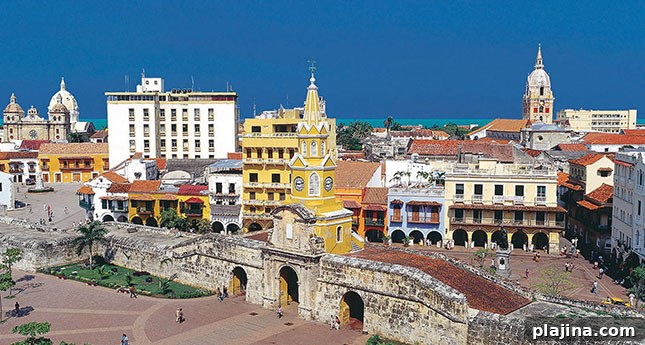
With guidebooks calling it the “crown jewel of Colombia,” “the belle of the ball,” and “one of the greatest cultural treasures in America,” first-time visitors may be skeptical — can any city live up to such praise? Cartagena does. This Caribbean seaport delivers a blend of history, color, music and coastal charm that makes it one of South America’s most alluring destinations.
Cartagena’s walled colonial center is impeccably maintained: colorful domes and steeples rise above a sparkling sea, and an eight-mile ring of 16th-century stone walls still protects the old town. Horse-drawn carriages (huelepedos) ferry visitors past restored mansions painted vivid pink, turquoise and ochre, their balconies overflowing with bougainvillea. Leafy plazas host outdoor cafés where people sip coffee or Club Colombia beer amid street performers, flower sellers and artisans.
The tropical climate is reliably warm year-round, with average temperatures near 80°F (27°C) and cool breezes at night that temper the humidity. October is the main rainy month, making the city a favorable choice for most of the year.
Founded in 1533, Cartagena de Indias quickly became one of the New World’s most important ports, a gateway for gold, silver and other riches bound for Spain. That wealth made Cartagena a target for pirates; after Sir Francis Drake attacked the city in 1586, European military engineers designed the fortifications that survive today. Following a devastating fire in 1552, a decree banned wooden buildings, and the city was rebuilt in brick, stone and tile—many of those structures remain.
As a major trading port, Cartagena also played a central role in the transatlantic slave trade. The result is a culturally rich city where African rhythms and customs blend with Catholic traditions and influences from mestizo, mulatto and Amerindian communities. A lively student population at the local colleges further fuels Cartagena’s energy and creativity.
Cartagena served as the de facto capital of the Viceroyalty of New Granada in the 18th century, though its prominence faded after independence when economic focus shifted toward Barranquilla. The discovery and development of petroleum fields in the early 20th century helped revive the economy, and from the 1960s onward, concerted restoration of forts, bulwarks and mansions returned historic Cartagena to its former splendor.
Declared a National Monument in 1959 and named a UNESCO World Heritage site in 1984, the historic district now anchors a modern city that hosts festivals, film events, Independence Day celebrations and the national beauty pageant that selects Miss Colombia. The city also stages an international literary event in January that attracts writers and artists.
Beyond tourism, Cartagena’s economy includes chemicals, petrochemicals, plastic manufacturing and logistics. Medical tourism is growing, with clinics offering plastic surgery, dental care and bariatric procedures. The port and industrial sectors handle exports such as petroleum, coal, coffee, sugar and tobacco.
Cartagena is effectively two cities. Inside the walls lies the atmospheric old town—El Centro and the adjacent Getsemaní—where cobblestone lanes, ornate plazas and flowering courtyards invite leisurely exploration. A 20-minute walk south of the historic district is Bocagrande, a reclaimed strip of land that has become a commercial hub of high-rise hotels, restaurants, shops and the Cartagena de Indias Convention Center, catering to guests and business travelers.
The clock-tower gate, Puerta del Reloj, marks a principal entrance to the old city and leads to Plaza de los Coches, the former slave market where vendors sell sweets and local treats under the arcade. Several museums are housed in historically significant buildings: a Modern Art Museum in the reclaimed Customs House, a Gold Museum in a Baroque mansion, and the Inquisition Museum in the Plaza de Bolívar, which preserves artifacts from the colonial tribunals. Nearby, the Naval Museum illustrates the evolution of the bay and the city through detailed models and displays.
Along the streets, palenqueras—women in bright turbans carrying fruit baskets—offer mangoes, papayas, guavas and other tropical fruits. Music is everywhere: the sounds of vallenato—accordion, caja drums and guacharaca—drift from plazas, cafés and doorways, creating an unmistakable soundtrack to daily life.
Fans of Gabriel García Márquez can see sites connected to Love in the Time of Cholera and visit the neighborhood surrounding the Nobel laureate’s home. Yet the city’s true appeal is less about ticking off sights than about savoring its atmosphere: slow strolls through winding lanes, coffee in shaded plazas, dinners at excellent restaurants, and nights spent dancing in lively clubs.
Diversions
A colorful open-air chiva bus is a fun way to get oriented: four-hour city tours depart in the afternoon and evening, with rumba chivas offering lively, all-you-can-drink night rides. Bocagrande’s casinos provide gaming and live events for visitors seeking nightlife beyond clubs.
For beaches, catch a boat from the Muelle de los Pegasos near the clock tower to nearby islands. Popular spots include Playa Blanca on Barú Island and the Islas del Rosario, where visitors can spend the day swimming, snorkeling and enjoying fresh seafood on the sand. Closer options include Marbella and the fishing village of La Boquilla for quieter stretches of coastline and seaside restaurants.
Cartagena truly comes alive after dark. Clubs across the city play merengue, salsa, Cuban rhythms, champeta and reggaetón. Many venues stay open until dawn, and cover charges often include drinks. Local aguardiente—a sugarcane spirit—is a popular choice for those sampling Colombian flavors. Notable nightlife spots include big-band salsa at Café Havana in Getsemaní, the vibrant atmosphere of Babar in the center, and the long-running energy of Tu Candela. For a memorable sunset, head to Café del Mar on the fortress wall to sip a cocktail while watching the sun sink over the Caribbean.
Info To Go
Rafael Núñez International Airport (CTG) is about two miles northeast of the city and serves domestic and international flights. Taxis into town typically charge between $5 and $10. When returning to the airport, some travelers avoid the airport pickup surcharge by asking the driver to drop them at the Green Church and walking across to the terminal.